


Your ski boots are finally off. Woodsmoke drifts across the parking lot, somebody's wrestling a cooler out of the hatchback, and you're deciding whether that neon jacket looks excellent or like you've escaped a vintage aerobics tape. Your phone buzzes. Your friends wave you over.
Keep the jacket. 80s ski attire works best when the color makes the statement and the clothing handles the transition, from cold mountain air to the first drink after the lifts close. You don't need to recreate an entire decade. You need something warm, expressive, and easy to live in once the skiing stops.
The 80s Ski Look at a Glance
Fresh neon nylon squeaks in the lift line. A lodge chimney sends woodsmoke across the snow, and the afternoon light makes an electric-blue sleeve look almost unreal. If your weekend started with salt air on the coast, this is the mountain version of the same ritual: finish the activity, find your people, stay awhile.
The recognizable 80s ski look combines fluorescent color, geometric patterns, generous outerwear, and fitted stretch pieces. For a modern après kit, keep those proportions and replace any questionable weather protection with clothing suited to your actual plans.
This is the visual reference, not a requirement to wear every color at once.
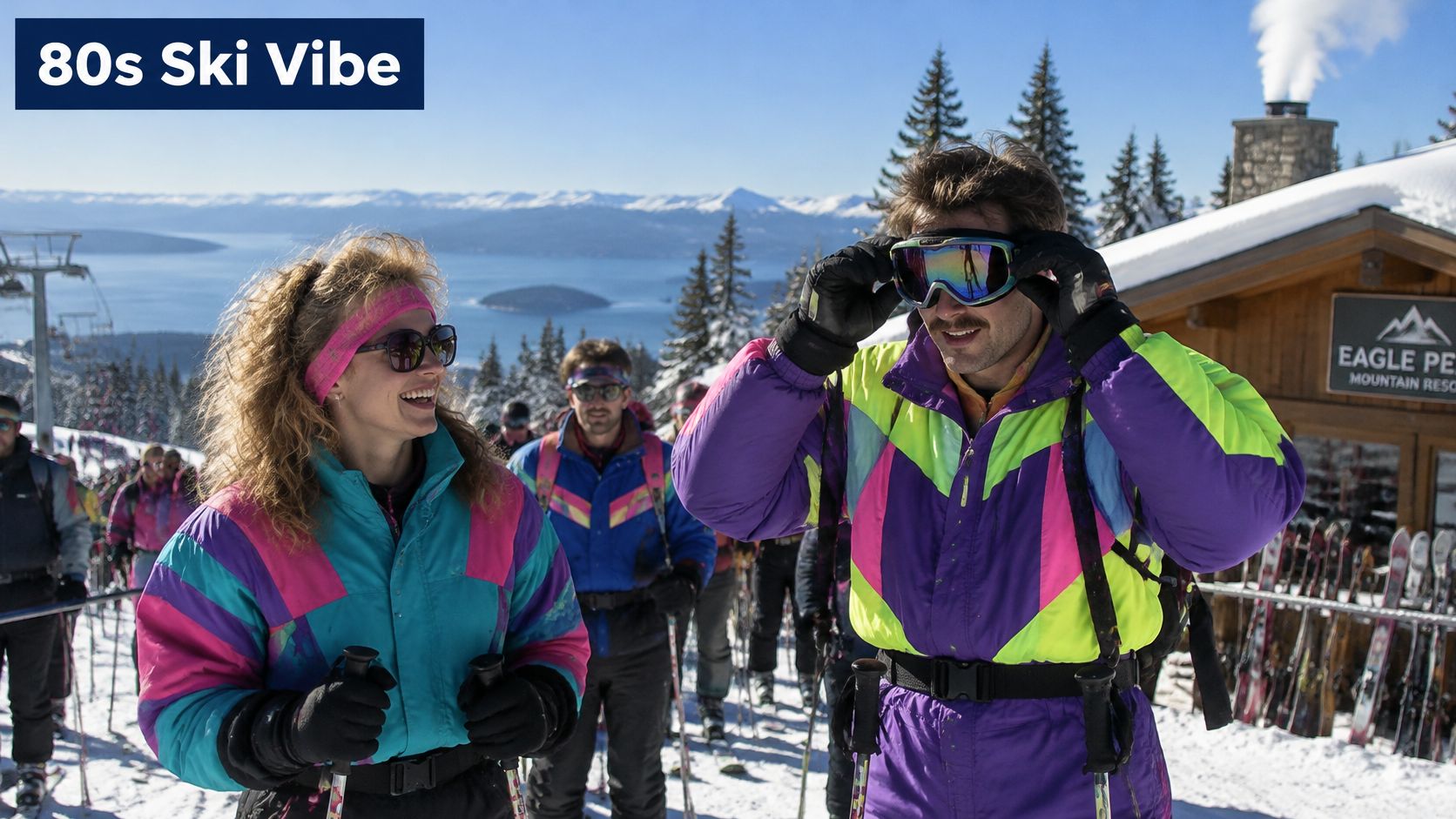
Signature 80s Ski Pieces at a Glance
| Piece | 1980s Look | Modern Take |
|---|---|---|
| One-piece suit | Neon coral or electric blue with stretch fabric | Stretch softshell in a bold solid, zipped and lined |
| Puffer jacket | Oversized blouson with bright contrast trim | Lightweight insulated puffer with a waterproof shell |
| High-waisted ski pants | Stretch fabric with stirrup or tapered leg | Waterproof stretch pant with reinforced cuffs |
| Geometric sweater | Bold geometric pattern in fluorescent colors | Fleece or knit midlayer in the same palette |
| Stirrup leggings | Thin stretch layer under shorts or skirts | Merino or synthetic thermal base layer |
The look still lands because high-visibility color and practical mountain clothing belong together. You can dress loudly without dressing badly for the cold, provided the garment's construction matches the conditions.
Say you've already got dark ski pants and a dependable shell. A raspberry midlayer peeking above the collar gives you the reference without making breakfast feel like a costume fitting. At the lodge, the shell comes off and the color stays.
The renewed interest isn't limited to vintage racks: an Accio ski-fashion analysis identified retro 1980s and 1990s aesthetics as a major trend in its 2025 outlook. That's useful context, but your mirror is a better buying committee than a trend forecast.
For the quieter version, make High Sierra shirts your starting point: color and pattern, minus the full snowsuit commitment. Maximum lodge energy. Manageable breakfast energy.
Where 80s Ski Attire Came From
Someone unzips a bright one-piece outside the lodge, revealing a sweater that's almost as expressive. The outfit belongs on the mountain, but it also belongs in the room where everyone's ordering another round. That overlap is the important part of the story.
By the mid-to-late 1980s, ski clothing had become a visible fashion category as well as protective equipment. The Colorado Snowsports Museum's ski-fashion timeline documents the fluorescent palette, exaggerated silhouettes, stretch pants, and one-piece suits, including a November 10, 1985, Denver Post Magazine feature titled:
“Electrifying Skiwear”
The feature connected the neon look with new-wave and post-punk influences. Women's garments prominently used dayglo orange, electric blue, raspberry fuchsia, yellow, and purple; men's pieces more often retained navy, black, or gray foundations with bright contrasting trim.
That distinction offers a useful styling choice today. Go fully saturated, or keep the foundation dark and put the party at the collar.
Ski Apparel Milestones, 1976 to 1988
The engineering developed alongside the appearance. GORE-TEX's ski-clothing history traces the commercial membrane order, insulation developments, fleece, protective shells, and later ventilation details summarized below.
| Year | Milestone | Why it matters |
|---|---|---|
| 1976 | First GORE-TEX commercial order | Breathable waterproof fabric begins the path toward lighter protective gear |
| 1978 | 3M Thinsulate and GORE-TEX recognized for ski insulation and weather protection | Warmth and protection without heavy traditional materials |
| 1980 | Blanket fleece developed with Fortrel polyester | Synthetic fleece offers an alternative to bulk |
| 1981 | Synchilla fleece from Patagonia | Lightweight midlayer that dries fast |
| 1985 | Denver Post Magazine feature Electrifying Skiwear, November 10 | Neon ski style becomes fashion news |
| 1985 | The North Face Mountain Jacket with GORE-TEX | Protective shells support modular layering |
| 1986 | Synchilla renamed Polartec | Fleece gains its lasting brand name |
| Late 1980s | Ventilation zips and ski-edge scuff shields | Heat control and durability join the look |
| 1988 | Sport Obermeyer neon-coral one-piece with Gore-Tex Z-liner; NILS neon stretch pant suits | Museum-recorded examples unite expressive styling and functional construction |
The museum records include the neon-coral Obermeyer suit and NILS suits with neon or iridescent fabrics and usable pockets. These weren't just colorful wrappers. Designers were combining coverage, stretch, storage, and weather protection.
For another way to borrow sportswear history without dressing for a reenactment, consider the proportions in our vintage rugby styling guide. The same editorial choice applies: preserve the distinctive shape, then make the rest wearable.
The decade's lasting contribution was social versatility. Technical outerwear became lifestyle apparel that could move from slopes to lodges and bars without requiring a complete personality change.
The Layering Logic Behind 80s Ski Pieces
You step outside carrying coffee, then return indoors to help with breakfast. A heavy, all-in-one insulation setup can make that small journey unnecessarily sweaty. A removable midlayer and protective shell give you more control.
The oversized silhouette wasn't necessarily wasted volume. It provided room to combine garments with different jobs, rather than asking a single coat to handle warmth, moisture, wind, and every indoor temperature.
Skiing History's account of the era describes polyester fleece commercialized as Synchilla in 1981 and later renamed Polartec in 1986, emphasizing its rapid drying and insulating performance when damp. Paired with waterproof-breathable shells, it helped reduce reliance on bulky sweaters.
Give Each Layer a Job
The base layer manages moisture next to your skin, so choose a close-fitting synthetic or merino thermal that won't bunch under your next layer. A loose everyday cotton tee is a poor substitute for active skiing because it can remain damp against you.
The midlayer supplies warmth, so select fleece or a suitable knit that fits comfortably beneath your outerwear. For cabin wear, prioritize easy movement through the shoulders and enough length to stay covered when you sit.
The shell blocks wind and precipitation, so assess its protection separately from its appearance. A glossy finish, thick quilting, or dramatic collar doesn't establish waterproof performance.
Practical rule: Try the whole outfit on together. A beautifully fitting jacket isn't useful if it compresses your insulation or fights your elbows.
For the transition indoors, unzip or remove the shell before you're overheated. On a wet walk back to the cabin, put the protective layer back on rather than expecting an absorbent sweater to do its job.
Our thermal layering guide for ski trips offers another way to organize that system around activity and downtime.
Label Checks Before You Buy
- Fleece weight: Choose a lighter midlayer for active use and a warmer option for long, stationary outdoor hangs.
- Membrane rating: Look for an explicitly stated waterproof-breathable construction, not just a water-repellent finish.
- Reinforced cuffs and seat: Inspect abrasion-prone areas, especially if you'll sit on rough benches or wear the trousers skiing.
- Vent zips: Check that you can reach and operate them while wearing the outfit.
- Insulation compatibility: Make sure removable or zip-in components attach as intended and don't restrict movement.
The modern après formula is straightforward: a moisture-tolerant midlayer plus a wind- and water-resistant outer layer when conditions require it. Save the drama for the palette.
How to Rebuild the 80s Ski Look Today
You've found a coral jacket. Excellent. Before adding purple pants, a fluorescent headband, and something involving mirrored lightning bolts, decide where you're wearing it.
Use the visual cues below as editing prompts, not a shopping mandate.
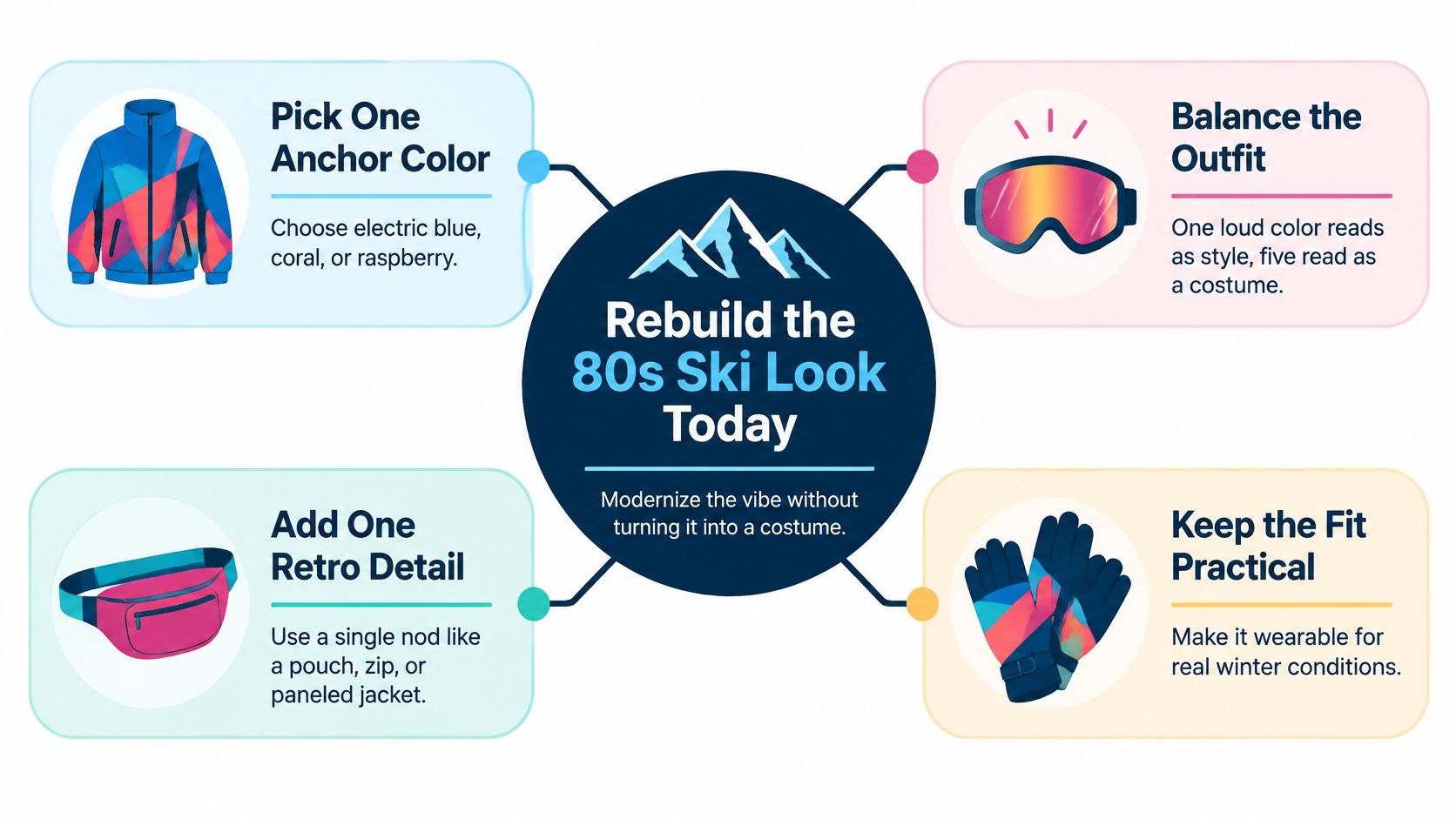
Build the Outfit, Then Test It
- Pick an anchor color. Electric blue, coral, or raspberry gives the outfit a clear focal point; competing fluorescent shades can make the whole thing harder to wear. The usual slip is buying individually exciting pieces that don't get along.
- Choose a silhouette you'll enjoy moving in: a blouson puffer, a one-piece, or high-waisted stretch pants. Balance volume with a cleaner-fitting companion piece, rather than stacking oversized garments until you resemble the cabin's spare bedding.
- Match fabric to exposure. Use a waterproof-breathable shell for snow, with fleece or merino supplying warmth underneath; don't make cotton your weather-facing layer in wet conditions. The common mistake is confusing a snow-themed garment with actual snow protection.
- Think through Social Technical storage before you add more accessories. A zippered phone pocket, a dedicated bottle pocket, and a sunglasses loop can reduce the small juggling act at a standing gathering, but verify which features the particular garment has.
- Edit the contrast. Add a contrasting trim or geometric print, then use neutrals underneath to give it room. If you choose a patterned sweater, let that be the reference rather than adding another unrelated pattern.
- Finally, perform the lodge test: sit, reach, pour, and retrieve your phone. Your puffer should close over the midlayer without pulling at the zipper, and your stretch pants should let you squat comfortably; stiff shoulders and straining seams aren't retro charm.
Social Spec and Social Anatomy
Social Spec
Why a dry pocket changes the tailgate game: A dedicated zippered compartment gives your phone a consistent home while you handle gloves, snacks, and introductions. Don't assume the word dry means submersible protection, and don't store a leaking bottle beside electronics.
Social Anatomy, a conceptual shirt diagram
| Shirt zone | Feature label | Practical purpose |
|---|---|---|
| Inside storage area | Zippered dry pocket | Dedicated phone storage |
| Rear or low-back storage area | Beer or bottle pocket | Separate beverage storage while standing |
| Upper-front attachment area | Sunglasses loop | A place to secure sunglasses when you head indoors |
This is a feature map, not a claim that every shirt includes every detail. Check the actual garment's construction and placement, especially before sitting with anything in a rear pocket.
A bold knit can handle the visual work if you don't want bright outerwear. Use our ski sweaters for men guide to consider that softer, lodge-first approach.
For another visual reference, use the video below alongside your own movement and fit checks.
The principle is 80s-inspired, not 80s-inefficient. Start with High Sierra shirts if you want an après-first foundation, then add the weather protection your weekend needs.
Après-Ski Apparel Outfits for Every Stop
Say the lift closes and the plan changes from a tailgate to dinner. A good 80s-inspired outfit can follow along: bright enough to make a statement, practical enough for a cool walk between stops.
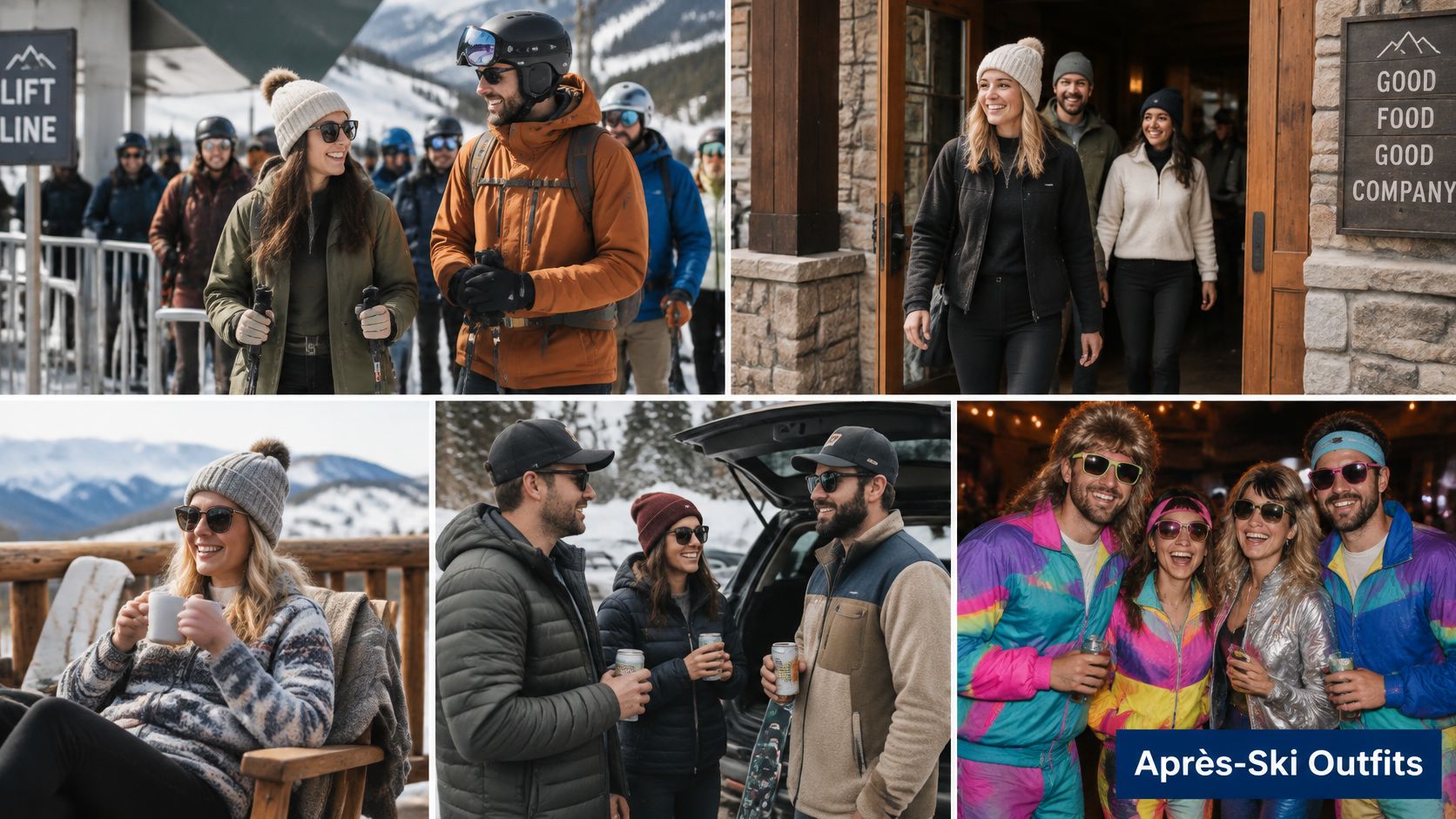
Outfit Builder by Occasion
| Occasion | Base Piece | Layer | Accessory |
|---|---|---|---|
| Lift line and runs | Thermal under a ski layer | Puffer or shell | Beanie and neon goggle strap |
| Lodge after-ski | Plaid flannel over thermal | Fleece hoodie | Knit hat and koozie |
| Cabin deck, morning coffee | Robe over thermal | Wool-blend sweater | Mug and sunglasses |
| Tailgate in the lot | High Water shirt | Zip hoodie | Koozie |
| Themed 80s party | Bold stretch top or neon one-piece | Puffer vest | Retro headband |
On actual runs, wear appropriate ski outerwear, a properly fitted helmet, and goggles. Keep the beanie for after the helmet comes off. A bright layer can carry the retro color story without asking an après shirt to do a shell's job.
At the lodge, plaid, thermal, fleece hoodie, knit hat, and koozie make an easy change of pace. A flash of color in the plaid nods to the decade while the rest of the outfit stays comfortable for the evening.
For slow cabin mornings, pair a thermal with a wool-blend sweater and an El Garibaldi Robe. Add suitable footwear and an outer layer if the deck is wet or exposed.
Coordinated, Not Uniform
At the tailgate, a High Water shirt and zip hoodie keep the outfit relaxed. Keep any bottle pocket empty while seated, and wait until you're parked and done driving before setting out a drink.
For a themed party, let the neon one-piece take the lead. Friends who prefer a quieter look can coordinate with shared colors or matching hats, then add their own statement piece. For more casual options to wear on the journey or during downtime, browse Gym Snack apparel.
Use après-ski outfit ideas for more occasion-based combinations. Then put your phone away and enjoy the company.
What to Pack for an 80s-Inspired Ski Weekend
Say you're packing for a three-day trip, and the neon statement piece is already draped over your suitcase. Build the useful clothing underneath it before adding another outfit for an imaginary party.
This is the clothing capsule, not your complete skiing equipment list. Pack or arrange your helmet, goggles, gloves, ski socks, equipment, and appropriate footwear separately.
What to Pack
- Thermal or merino base layers: Pack two sets so you have a dry change available.
- Fleece midlayer: Bring one that works beneath your shell and around the cabin.
- Waterproof-breathable shell: Keep reliable wind and wet-weather protection available.
- Statement piece: Choose a neon one-piece or bold-print shirt, rather than competing headline garments.
- Après layer: A robe or hoodie makes changing out of your ski kit feel deliberate.
- Beanie: Use it for the walk to dinner and the morning coffee run.
- Sunglasses: Pair them with a compatible loop or retainer for easy indoor transitions.
- Koozie: Give your beverage its own insulation.
- High-altitude sunscreen: Bring broad-spectrum protection and use it according to the label.
If you're coordinating children, equipment, and travel as well as clothes, the planning guide to family ski trips with Approved Experiences Traveler provides a separate resource for trip logistics. Our cabin trip packing list can help organize the stay itself.
Coastal Weekend Additions
- Terry-lined shirt: Bring an easy layer for the transition from the surf toward town.
- Light zip hoodie: Add removable warmth without committing to a winter jacket.
- Shorts or joggers: Pack a dry change for post-surf comfort.
- Towel: Keep drying off separate from getting dressed.
Pack for changing conditions, not just the sunny photograph in the forecast.
For a bachelor or bachelorette weekend, choose a shared accessory such as hats or koozies instead of requiring everyone to buy an identical wardrobe. Socially confident doesn't have to mean visually synchronized.
Finish your bag with the beanie and koozie picks from Hats and Accessories. Small pieces are easier to forget, and far easier to coordinate.
Build Your Complete 80s Ski Look Before the Trip
Lay the outfit on your bed before departure: statement garment, useful layers, suitable footwear, and the accessories you'll carry. Then remove anything that exists only because you're nervous the outfit isn't loud enough.
The point isn't to win an authenticity contest. It's to arrive with luxury après-ski apparel that feels comfortable at the cabin, practical during the walk to dinner, and expressive enough to start a conversation.
Complete the Look
Build around the way you spend downtime. Our Women's High Sierra shirt is lined with throwback thermal and has a zippered dry pocket for a phone and a beer pocket, combining a warm foundation with dedicated storage.
The Out of Pocket Pouch fits into the zippered dry pocket of all our technical apparel. Use that compatibility to organize your small essentials rather than distributing them across every available pocket.
For cabin mornings and fireside lounging, the Men's El Garibaldi has a sunglasses clip and a built-in bottle pocket with a beer koozie and brass-coated bottle opener. It's a different kind of technical clothing, designed around what happens after the exertion.
Add a hat that picks up the statement color, a tee for indoor downtime, and a koozie that's easy to distinguish from everyone else's. These are useful finishing pieces, not reasons to bring another suitcase.
- Choose High Sierra shirts: Build your flannel-based mountain outfit around the color or pattern you'll wear beyond this trip.
- Choose the El Garibaldi Robe: Give cabin mornings and evening downtime their own comfortable layer.
- Choose Hats and Accessories: Finish with a hat and koozie that work with the outfit you've already built.
Join the Vital Few newsletter for first access to product drops. Make that your next move if you're planning future weekends rather than buying another garment just to fill a bag.
The best 80s ski attire leaves you free to talk to strangers at the bar. Preferably before anyone asks whether your jacket has its own lift pass.
California Cowboy makes shirts, robes, and post-adventure layers with thoughtful storage and laid-back West Coast style. Visit California Cowboy to build your neon-inspired après kit, then join the Vital Few newsletter for first access to product drops. Pack for the cold, dress for the company, and leave room for an unexpected invitation.

