


You're standing on a cabin deck at dusk, woodsmoke in the air, salt still stiff in one sleeve and a cold drink sweating in your hand. The shirt you're wearing has pine trees on it, so it must be nature inspired fashion, right? Not necessarily. A print is the easiest part to fake. The true test is whether the garment copies how nature works, holds up after the activity, and helps you stay in the moment instead of fiddling with wet pockets and a dead phone.
What Nature-Inspired Fashion Really Means
Own a shirt long enough and the question answers itself. The print fades into background noise by week three. What you keep noticing is whether the thing dries overnight, packs to the size of a burrito, and stops smelling like a wet dog in a hot car. Nature-inspired clothing earns the label in that unglamorous second phase, not on the hanger.
Copy the system, not just the scenery
At the root sits biomimicry, the practice of studying biological systems and translating their principles into human design. A forest doesn't manufacture landfill. It runs on renewable inputs, and decomposition plus regeneration turn yesterday's leaf into tomorrow's soil. Clothing built on that logic asks two questions at the care label: where did this fiber come from, and where can it safely go at end of life.
The default system runs the other way. A 2023 review in the National Institutes of Health's PubMed Central database reported that polyester represented 54% of fibers generated globally in 2021. That same review noted U.S. consumers discarded nearly 13 million tons of clothing and footwear in 2018, compared with 1.36 million tons in 1960. The volume climbed while the fibers grew more permanent.

The three layers to test
Run any garment through three layers, in order:
- Visual layer: Prints, plaid, and color borrow how a place looks. Pleasant, but decoration until proven otherwise.
- Material layer: Fibers renew, biodegrade, or recirculate instead of persisting. Designers are developing compostable bio-based leathers for footwear and apparel, so this layer moves faster than any single product launch suggests.
- Structural layer: The build copies a function. Loft traps air for warmth. Loops absorb water. A tight weave sheds spray so you wash the piece less often.
Layering the checks in that order matters because each one is cheaper to verify than the next. Fiber content sits printed on the tag, which makes the material layer a thirty-second read. Function takes a season to judge, and it's the layer that decides whether a jacket survives a winter of chairlifts or quits at the parking lot.
Quick test: Hold the piece at arm's length and ask which layer is doing the real work. If only the print answers, you're holding a costume for the outdoors, not clothing designed from it.
Earthy color helps pieces mix, and our guide to working with earth tone colors for clothes shows how to build that palette without replacing a whole closet. Color is the invitation. Material and structure are the proof.
The Four Elements to Read on Any Garment
A garment gives you four chances to check it before you spend: the print from across the room, the texture under your fingers, the color against your closet, and the fiber line on the care label. Shoppers stop at the first two all the time. The last two decide whether the piece keeps working after the shine wears off.
What your eyes and hands catch first
Prints signal place. A wildflower repeat in forest green on cream, a wave repeat, or a muted plaid shows the designer thought about scale and placement. Wear one loud print per outfit and let everything else stay quiet. Two competing prints turn a person into wallpaper.
Textures tell the truth your eyes miss. Rub the fabric and squeeze it. Terry loops feel thirsty, which is what you want after a swim. Brushed flannel feels fuzzy because raised fibers trap warm air near the bar. Ribbed knits stretch and breathe on a warm cabin morning. Plain cotton feels fine dry and clammy damp, so imagine it after a spill or a sweaty drive. A print can copy a scene from the outdoors. Texture shows whether the fabric can handle the weather in that setting.
Color decides repeats, the label decides performance
Palettes determine whether a piece earns repeat wears. Pine, indigo, sea glass, sand, and rust mix with each other and with denim, khaki, and black. Generic brights rarely do. Before buying, name three things you already own that the color works with. If you cannot, leave it on the rack.
Materials matter most and hide best. Flip to the care label and look for a named fiber with a percentage, such as merino wool or organic cotton. A vague word like natural tells you nothing about performance, care, or end of life. The label is the receipt for the print's promise.
| Element | Nature Cue | What You See on a Garment | Why It Matters |
|---|---|---|---|
| Prints | Leaves, bark, waves, wildflowers | Botanical or plaid repeats in muted tones | Signals place; works best as one loud piece per outfit |
| Textures | Bark, pelt, sand, woven grass | Terry loops, brushed flannel, ribbed knits | Comfort when damp or cold, and how a fabric feels after a wash |
| Palettes | Pine, sea glass, rust, dune | Forest green, indigo, sand, rust | Decides whether pieces mix with the rest of the closet |
| Materials | Wool, cotton, linen, bamboo, recycled fiber | Fiber name and percentage on the care label | Sets performance, care needs and end-of-life options |
A nature cue counts as design only when it changes how the garment performs, feels, or lasts.
See that rule up close in the High Sierra Shirts category. Pick up a flannel, squeeze the fabric, and read the care label before the print pulls you in. Start with touch and end with the fiber line. On any High Sierra flannel, read the care label before you buy.
Fibers That Earn Their Place on Your Back
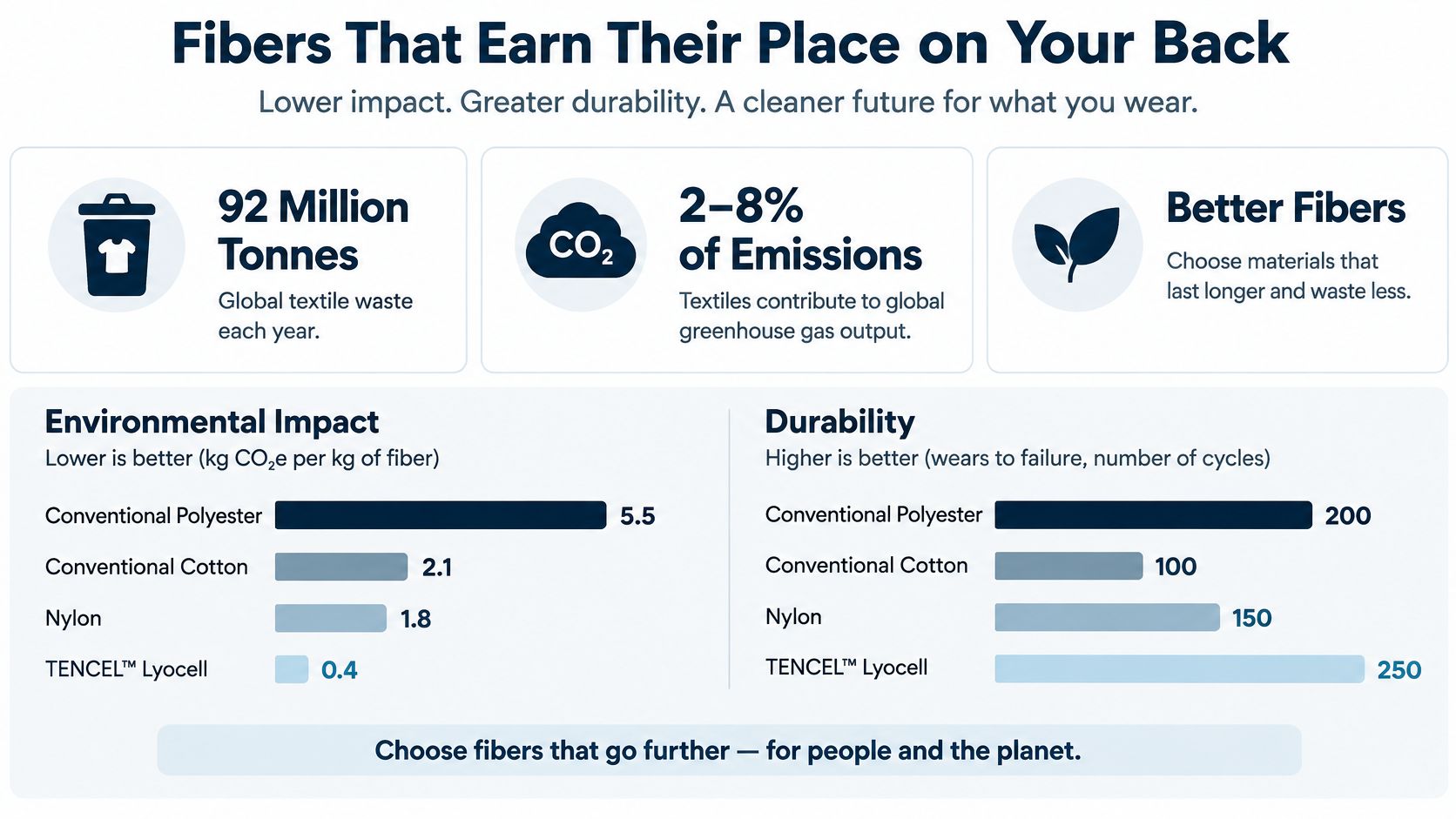
The scale makes fiber choice more than a taste call. UNEP's sustainable fashion highlight reported global textile waste reaches approximately 92 million tonnes annually, and the sector is estimated to generate 2 to 8% of global greenhouse-gas emissions. Buying fewer, better matched fibers is how a shopper pushes back.
The honest trade-off
Natural doesn't automatically mean lower impact. Natural fibers can draw heavily on land, water, and chemicals, and a fragile natural shirt you replace twice loses to a sturdy one you keep. Recycled synthetics cut waste but still shed microfibers in the wash. Judge each fiber on four things: how it behaves damp, how much care it demands, what happens at end of life, and which layer it suits. If you want a deeper primer before shopping, explore shirt fabrics with Cobra DTF for a plain breakdown of common shirt materials.
| Fiber | When Damp | Care Needs | End of Life | Best Use |
|---|---|---|---|---|
| Wool | Insulates even when damp | Low wash frequency, air dry | Biodegradable if untreated | After-ski layers and cabin knits |
| Cotton | Absorbs water and dries slowly | Machine washable, shrinks with hot drying | Biodegradable | Tees and casual shirts |
| Linen | Dries quickly and cools the body | Creases, gentle wash | Biodegradable | Warm coastal evenings |
| Bamboo-blend knit | Soft and breathable, dries at a moderate pace | Gentle cycle | Processing determines breakdown route | Lounge wear and tees |
| Terry cotton | Absorbs a lot, heavy until fully dry | Wash warm, dry completely | Biodegradable | Post-surf layers |
| Recycled polyester | Dries fastest | Low maintenance, sheds microfibers | Persists; recycling cuts waste but not shedding | Technical shells and surf layers |
Match the fiber to the transition
- Wet to dry: Pick wool for cold damp air and terry for actual water on skin. Both stay comfortable while you dry instead of turning into a cold rag.
- Warm evenings: Linen vents heat and dries fast, so it wins on a coastal patio.
- Hard rotation: A durable synthetic blend can be the responsible pick when a piece gets washed constantly and needs to survive it.
A garment worn for years across beach, bar, and cabin can beat a lower-impact material bought for one trip. Our notes on sustainable men's beachwear choices apply that longevity lens to coastal pieces. For the wet-to-dry idea in practice, look at the terry-lined High Water Shirt on its product page and check the lining, not just the print. That's nature inspired fashion you can feel with wet shoulders.
Telling Real Nature Cues From Vague Marketing
You've seen the tag. It says natural in leafy script, maybe with a little fern, and nothing else. That word proves almost nothing, because it describes a vibe instead of a fiber, a process, or a test result.
Shoppers sense the gap. Consumer research across the United States, France, Germany, and Italy found 82% of respondents would choose natural fibers over synthetics when price, style, and fit were equal, while 71% considered independent certification or verification of fiber content and quality important.
A six-point check you can run in the aisle
- Fiber name and percentage: The care label should name the fiber and its share, not just a material family.
- Where it's made: Ask which pieces come from where. Our products are hand sewn, some are made overseas while others are made in California, and our robes are made in China, so the answer should be specific to the item in your hand.
- Independent certification: Look for a certifier that checks composition or processing, and confirm it isn't the brand grading its own homework.
- Care that matches the claim: A supposedly gentle natural piece that demands hot drying undercuts its own story and will cost you energy every wash.
- End-of-life notes: Compostable, recyclable, or take-back should be stated plainly. Silence usually means landfill.
- Performance evidence: The page or tag should say how the fabric behaves when wet or after repeated washing, not just how it photographs.
Contrarian rule: A durable synthetic you'll wear for seasons can be the more responsible buy than a delicate natural piece you'll replace by spring.
That evidence-first mindset is also how we think about heritage brand clothing built to last, where construction details outlive trends. Run the six points on any product page in our shop and check the origin details listed for that exact piece before you buy. If a brand can't answer points one and five, holster your wallet.
Where the Social Features Sit on a Shirt
Read a well-built shirt like a map, collar to hem. Near the collar sits the sunglass loop, so your glasses hang on you instead of getting set down on a wet bar. A zippered dry pocket on technical apparel guards a phone and keys through a surf session. At the low back sits the beer bottle pocket, which frees a hand for the grill tongs, the handshake, or the dog that just arrived.
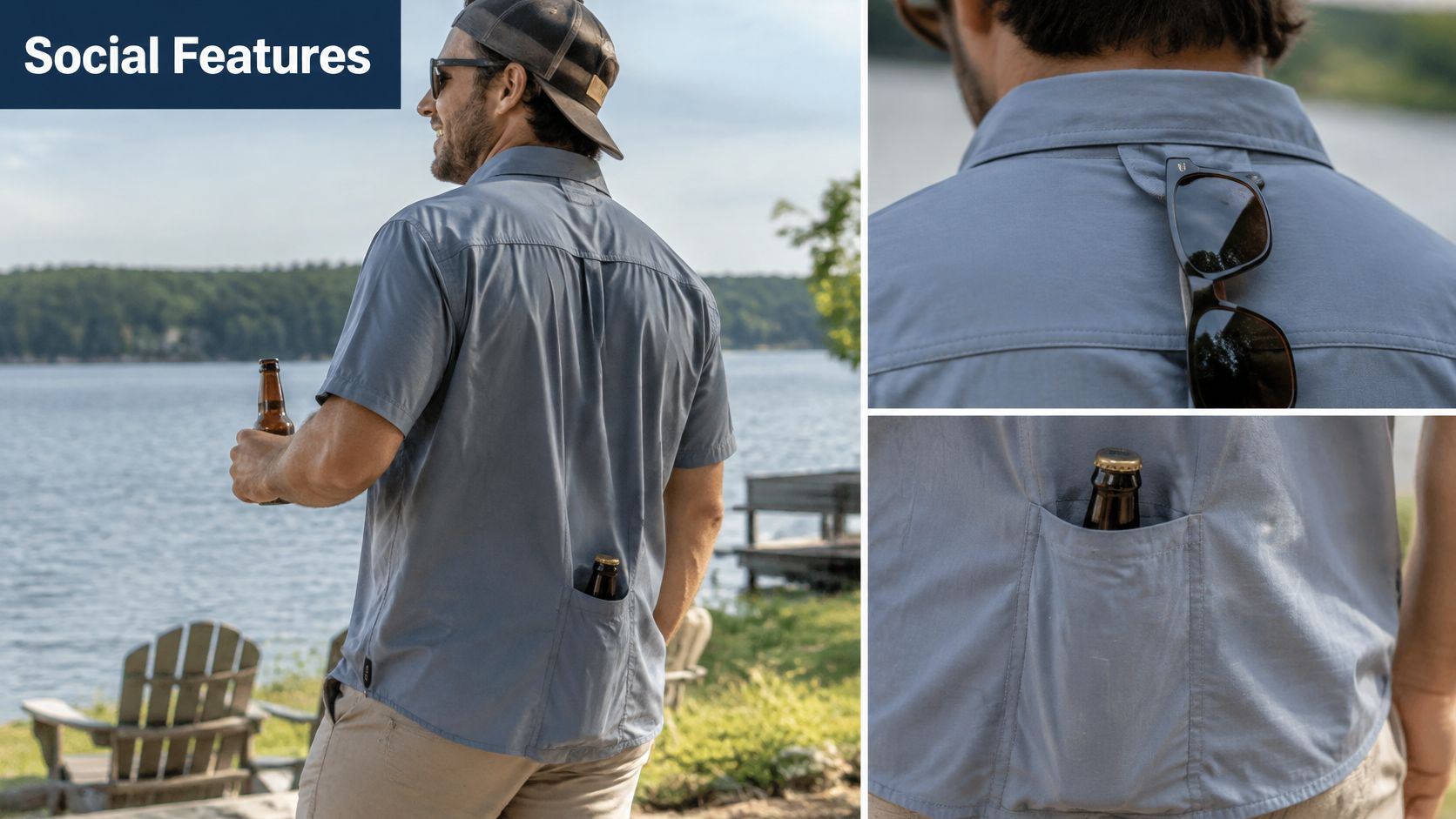
Social Spec: why a bottle pocket changes the tailgate game. It keeps a bottle upright and hands free in a crowded parking lot. That means you can actually talk to people, socially confident and empty-handed, instead of babysitting glassware.
Call it social technical design. The features exist so you can holster your tech, keep essentials dry, and stay open to serendipitous encounters, which tracks with the company's mission to inspire meaningful human connections by helping bring out the extrovert in everyone. Our breakdown of water-resistant pocket apparel explains how those dry pockets are placed and sealed.
Test a feature before you trust it
In the store, load the pocket with your own phone. Check placement when you sit, check the closure with one hand, and check whether it bulges under a layer. A feature that annoys you in the fitting room gets ignored at the beach, and an ignored pocket is just extra fabric. Do the same with the sunglass loop: hang your actual frames and tip your head down. If they slide off, the loop is decoration.
What to Pack
- Dry pouch: Sized for the zippered pocket, for keys and cards.
- Sunglasses: They live on the loop, not on the bar.
- Bottle opener: Small enough to ride in the dry pocket.
- Hat: For glare now and warmth later.
If you sew or customize your own gear, OESD Abundant Nature embroidery designs offer one way to add a botanical cue to a plain piece you already love. For ready-made storage, the Out of Pocket Pouch fits the zippered dry pocket found on all technical apparel, which turns loose small gear into one grab-and-go bundle.
Layering for Slope, Surf and Cabin Nights
The first drink after the lifts close is the hardest outfit problem of the day. Your body is still warm from the climb, your base is damp, and the deck air is cooling by the minute. Layering solves it when each piece has one job.
Three jobs, three layers
A base layer manages moisture against skin. A mid layer insulates. An outer layer blocks wind and weather. Swap one layer at a time as conditions change, and you stay comfortable without a full costume change in the lodge bathroom.
Insulation follows a simple principle borrowed from polar-bear fur. Hollow, porous fibers trap still air, and trapped air resists heat loss, so loft beats mass. A light, puffy mid layer can warm you more than a heavy, flat one. The catch is that porous fabric loses warmth when you compress it under a tight shell or soak it through, so test the combo on a short outing before a big trip.
| Occasion | Base Layer | Mid Layer | Outer Layer | Feature to Check |
|---|---|---|---|---|
| Après-ski on the deck | Long-sleeve henley or tee | Flannel or fleece | Insulated outer layer | Sunglass loop and a pocket that closes |
| Surf to sand to bar | Quick-dry tee | Terry-lined shirt | Light shell or robe | Zippered dry pocket for keys and phone |
| Cabin morning coffee | Soft tee | Knit or hoodie | Robe | Deep pockets for a mug-free walk |
| Group weekend | Matching tee | Coordinated flannel | Shared outer layer | Consistent color family across the group |
Read the table by picking the row closest to your day, then ask whether the same kit survives the next setting. Our guide to thermal layering for ski trips goes deeper on the mountain rows.
Pro-Tips
- One sharp warm layer: Keep a flannel or fleece that still looks right at the bar, so you don't choose between warm and presentable.
- Robe for the deck: Morning coffee outside is better in a robe with real pockets than in yesterday's ski shell.
- Skip heavy cotton hoodies after surfing: Cotton holds water, gets heavy, and stays cold on the drive home.
Fit shifts with wear, too. Drying shrinks the gear back a bit, and wovens and knits can stretch out after a couple wears, so size for the garment after its first wash, not off the rack. When you're ready to fill the cabin row, check the robe category page and compare pocket depth and weight first.
Build a Nature-Inspired Wardrobe for Every Crew
Map the outfit to the crew, not the catalog. Start with who's showing up, then pick one palette and one fiber family so the pieces mix without a planning meeting.
- After-ski crew: Pair a wool-blend knit or flannel with a robe, so the layer that kept you warm outside becomes the layer you lounge in.
- Surf-to-sand crew: Choose a terry-lined shirt in sand or sea glass that absorbs the drip and dries on the drive home.
- Group outfitting: Give everyone the same palette and one shared print for bachelor party outfit ideas or wedding robes, but mix fibers so each body gets the right weight.
- Social living: Buy one loud print and keep the rest solid. A shirt worth commenting on gives a stranger at the fire an easy opening line.
- Gifting: Pick a single robe or tee style in several sizes for unique groomsmen gifts, and count the crew before you order so nobody gets the sad backup size.
- Remote-work leisure: Keep one linen shirt or soft tee that looks sharp on a video call and right at home on a porch step an hour later.
Build in that order. One neutral base first, one textured mid layer second, one print last. Each new piece should answer a segment of your actual life, not a trend you saw once. That's how coordinated group gear and a quiet Tuesday tee end up in the same small, hardworking closet.
Complete the Look and Join the Vital Few
Put it together on one body, in the order the day happens. You come off the beach damp, drive down with the windows cracked, walk into a warm bar, and end on a cold cabin deck. One outfit can cover all four if each layer has a job.
One outfit, four settings
Start with a terry-lined shirt for the wet-to-dry moment. The Men's High Water, for example, has a soft modal lining, a classic plaid print, and a low-back pocket designed to carry a beer bottle, and the High Water shirt also has a sunglass loop. It handles wet shoulders at the beach and still reads as a real shirt at lunch.
Add a flannel when the bar's patio heaters lose to the evening air. It layers over the tee you already have on and brings the warmth without a trip back to the car. Finish at the cabin with the El Garibaldi Robe for the morning deck, coffee in hand, phone holstered in a pocket where it belongs.
If you like planning outfits visually before a trip, an ai fashion lookbook can help you test palette combinations against pieces you own. Use it as a sketch, then trust the fitting room test for texture and pocket placement. For storage, the Out of Pocket Pouch fits into the zippered dry pocket of all technical apparel, so your keys and cards move from shirt to robe as one unit.
Complete the Look
- Hat: Cuts sun at noon and snow glare at altitude, then covers helmet hair without apology.
- Plain tee: The quiet base under the flannel, in a color from the same palette family.
- Koozie: Keeps the drink cold and your hand dry at the cooler, tailgate, or fire ring.
The El Garibaldi Robe is the hero piece here because it owns the transition nobody else designs for, the slow morning and the last drink outside. Check its product detail page for weight, pockets, and sizing, and picture it over the tee you'll already be wearing.
Then join the Vital Few newsletter for first access to new drops and styling notes built around slopes, surf, and cabin days. Holster your tech, grab the good layer, and go find the bar, the fire, or the water. Life's better offline, and better dressed for it.
California Cowboy builds nature inspired fashion for the transition, from terry-lined surf shirts and High Sierra flannels to robes made for cabin decks and fireside nights. Every piece pairs West Coast ease with Social Technical details like dry pockets and sunglass loops, so you can stay present with your crew. Visit California Cowboy to find your layer and join the Vital Few.

