


The lifts have stopped, your boots are clicking on frozen pavement, and woodsmoke is drifting from somewhere you cannot quite see yet. You're warm from the last run and cold at the same time. That in-between hour is where good ski days either turn into great nights or fall apart because you're damp, overdressed, and carrying everything in your hands.
Best Apres Ski Clothes Start After the Last Run
Boot buckles pop open. Someone's already got a cooler out in the parking lot, someone else is lobbying for the heated bar by the base lodge, and the wind coming off the ridge just found the gap at your neck. You're not skiing anymore. You're also not home.
That's the whole problem with the best apres ski clothes. They don't get judged on the chairlift. They get judged on a windy walk, a crowded deck, a cabin porch, and a fireside hour where you want to be socially confident, not swaddled in technical gear or shivering in something pretty.
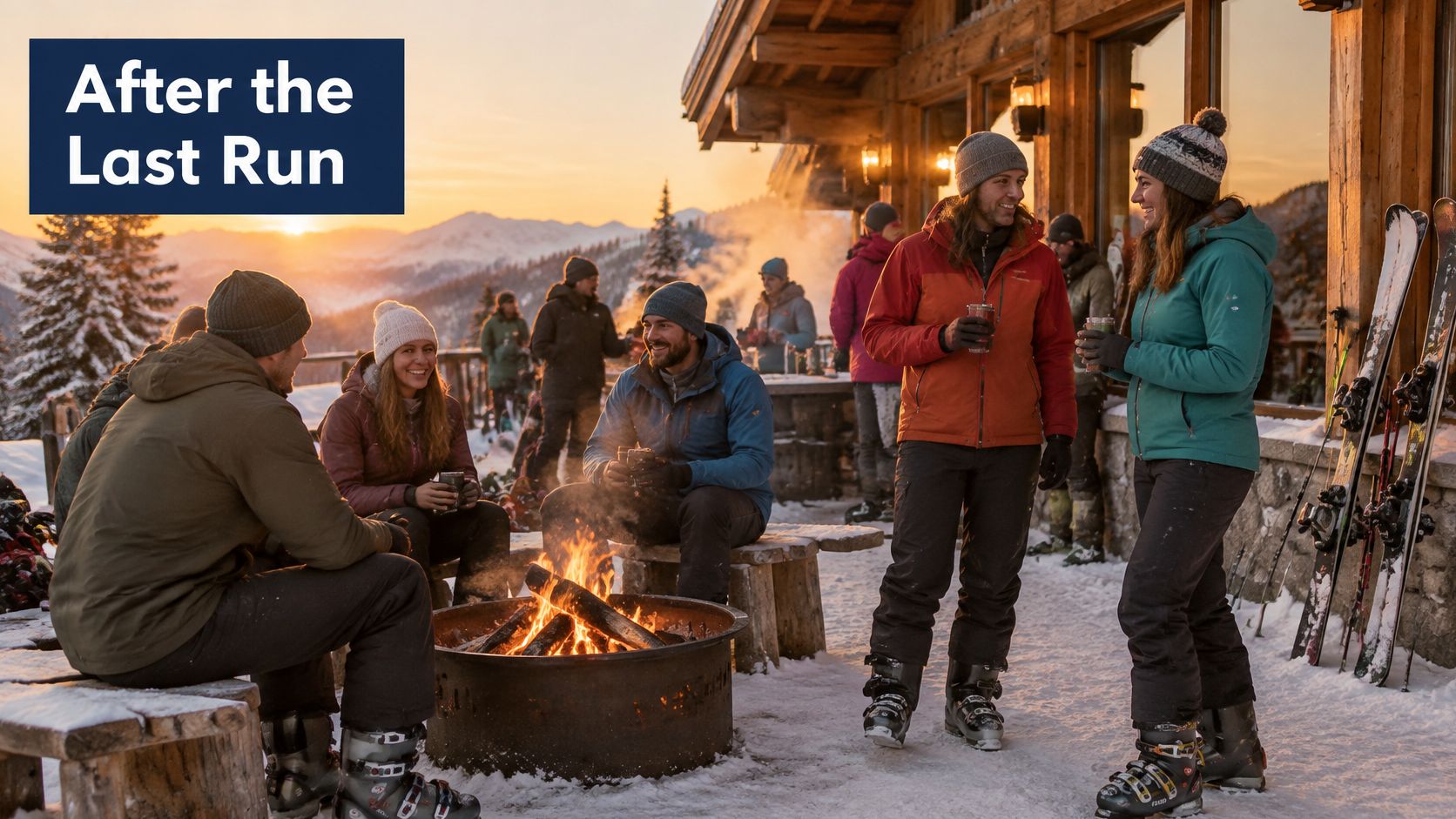
Why Your Ski Kit Loses the Room
A performance shell wins on the hill. It sheds snow, blocks wind, and disappears when you're moving hard. Then you sit down inside and it's loud, stiff, and too warm, and you're peeling it off over a base layer that still holds the day's sweat.
A heavy sweater fails from the other direction. It looks right next to a fire. Put it over a damp next-to-skin layer and the chill shows up anyway, slower and sneakier, the kind that makes you call the night early for no reason you can name.
The fix isn't more bulk. It's a transition system.
Dress for the hour between exertion and dinner, not for a photograph of winter.
Think in three questions. What is still wet on you. What wind you'll cross to get where you're going. What you need to carry once your hands should be free for a drink, a plate, or an actual conversation.
That last part matters more than most gear lists admit. Apres is life offline. Holster your tech, keep your phone in a pocket built for it, and leave your hands empty. The best pieces hide their function, a dry pocket here, a sunglasses loop there, so you look like you showed up to be with people, not to manage equipment.
Choose by transition, fabric behavior, and concealed function. Skip the ranked closet of obvious winter staples. A flannel that dries you out, vents when you step inside, and holds a bottle without a balancing act will beat a statement sweater every single time the temperature drops after sunset.
Start with the moment you're in. Cold walk first, warm room second, maybe a tailgate after that. Build for all three and you won't need a full costume change standing in the snow.
What Apres Ski Apparel Has to Do
A cold walk to the lodge, a warm table inside, then a stop at the car before heading home. Apres clothes need to handle that whole stretch, not just look right in a ski-town photo. The useful outfit dries after the last run, blocks wind on the way in, and stays comfortable once the heat is on.
Apres began as time spent eating, drinking, and talking after skiing. The custom is traced to Telemark, Norway, in the mid-1800s, then spread through the French, Swiss, and Austrian Alps around ski hotels, restaurants, and bars in the history of apres culture in Aspen and beyond. Resorts built places to linger after the lifts closed. The gathering was part of the day, not a fashion category.
In the United States, apres culture grew in the 1930s and accelerated after World War II. Vail opened in 1962 with a pedestrian village inspired by European resorts. Skiing brought people there; the village gave them a reason to stay.
The Job Description
That history still shapes apres-ski style. Choose adaptable warmth that works outside and indoors, with comfort for sitting at dinner as well as walking across a snowy lot. Aim for lodge-ready, not lift-line cosplay.
The scale is substantial: U.S. ski resorts recorded approximately 61 million skier visits during the 2021 to 2022 season in coverage of the American ski industry and apres traditions. Many ski days carry on from terrace drinks to dinner or a late night, so cabin wear and luxury thermal layers need to work across settings. A piece that only suits a heated room leaves you cold outside. One built only for the slopes can overheat you at the table.
- Adaptable warmth: Add, open, or remove insulation without changing your whole outfit.
- Dry next to skin: Manage moisture before adding more bulk.
- Social polish: Look at home at a lodge table or on the deck.
- Morning usefulness: Wear the same piece for coffee on the cabin deck.
For the parking-lot tailgate, go relaxed and prepared, not overstyled. Keep a dry layer handy, choose clothes that can vent when you step indoors, and make sure your pockets can handle the small stuff. Water-resistant pocket apparel built for wet conditions helps keep essentials dry through snow and slush. Wet gloves, a damp phone, or a soaked wallet can put a quick end to a good hour.
Comparing Warmth Fabrics and Hidden Function
At the lodge door, a thick sweater can go from cozy to stifling in minutes. Choose fabrics by the moment they need to handle, and by how easily they adapt when you move from snow to a warm room.
Apres Clothing Types by the Job They Do
| Clothing type | Best moment | Warmth role | Fabric cue | Social function |
|---|---|---|---|---|
| Flannel and overshirt | Lift to lodge, first drink | Light insulation over a dry base | Brushed, breathable, easy to open | Dry pocket, bottle pocket, sunglasses loop |
| Insulating midlayer | Outdoor terrace, fire pit | Main heat holder | Fleece or insulated fill that vents | Layers under or over without bulk fights |
| Wind-resistant shell | Wet snow, exposed walk | Blocks wind and precipitation | Higher waterproof rating, pit zips | Keeps you presentable on arrival |
| Terry-lined robe or shirt | Cabin, hot tub, full change | Cozy warmth after you're dry | Absorbent lining against skin | Fireside comfort, no technical look |
| Heavy single sweater | Heated room only | Static warmth, no adjustment | Thick knit, slow to vent | Looks polished, traps heat fast |
Waterproof ratings use hydrostatic head, measured in millimeters. A 10,000 mm rating is the entry point for waterproof protection, while 20,000 to 30,000 mm offers a stronger margin for prolonged precipitation and pressure from sitting or carrying gear, according to Salomon's guide to choosing a ski and snowboard jacket.
Breathability ratings use MVTR or RET. Salomon's guide describes MVTR above 30,000 g/m²/24 h or RET below 6 as a high-performance target, and 20,000 to 30,000 MVTR or RET 6 to 12 as good. For apres, these figures matter most while you're still walking or moving around. Once you reach the table, ventilation and easy-to-remove layers matter more than maximum shell performance.
A highly waterproof shell earns its place on the walk, not over dinner. Pit zips, two-way ventilation, and a removable layer make it easier to shed heat indoors without changing your whole outfit.
The warmest-looking piece is not automatically the best apres piece.
Hidden function can make an ordinary outfit work harder. A champagne pocket, bottle pocket, dry phone pocket, or sunglasses loop keeps your hands free and your essentials out of the slush. Nobody wants to balance a drink on a bumper while digging through a wet jacket.
The same practical instinct applies beyond ski towns. Cold-weather clothing for horse lovers shows how warmth and wearability matter through long hours outdoors, whether you're headed to a barn or a mountain patio. For fleece, high-pile fleece and how its loft holds warmth explains why loft adds warmth, while also helping you judge whether a plush fabric suits a damp, active day.
Use the table to compare fabrics and useful details before choosing a look. A flannel that opens easily, a midlayer that vents, and pockets that keep essentials dry will serve you better than a piece chosen for appearance alone.
Dressing for the Wet to Warm Transition
The last run ends in wet cuffs, a damp base layer, and a choice: head straight to the bar, change at the lodge, or stay outside for hours. Dress for the next stop, not just the lift.
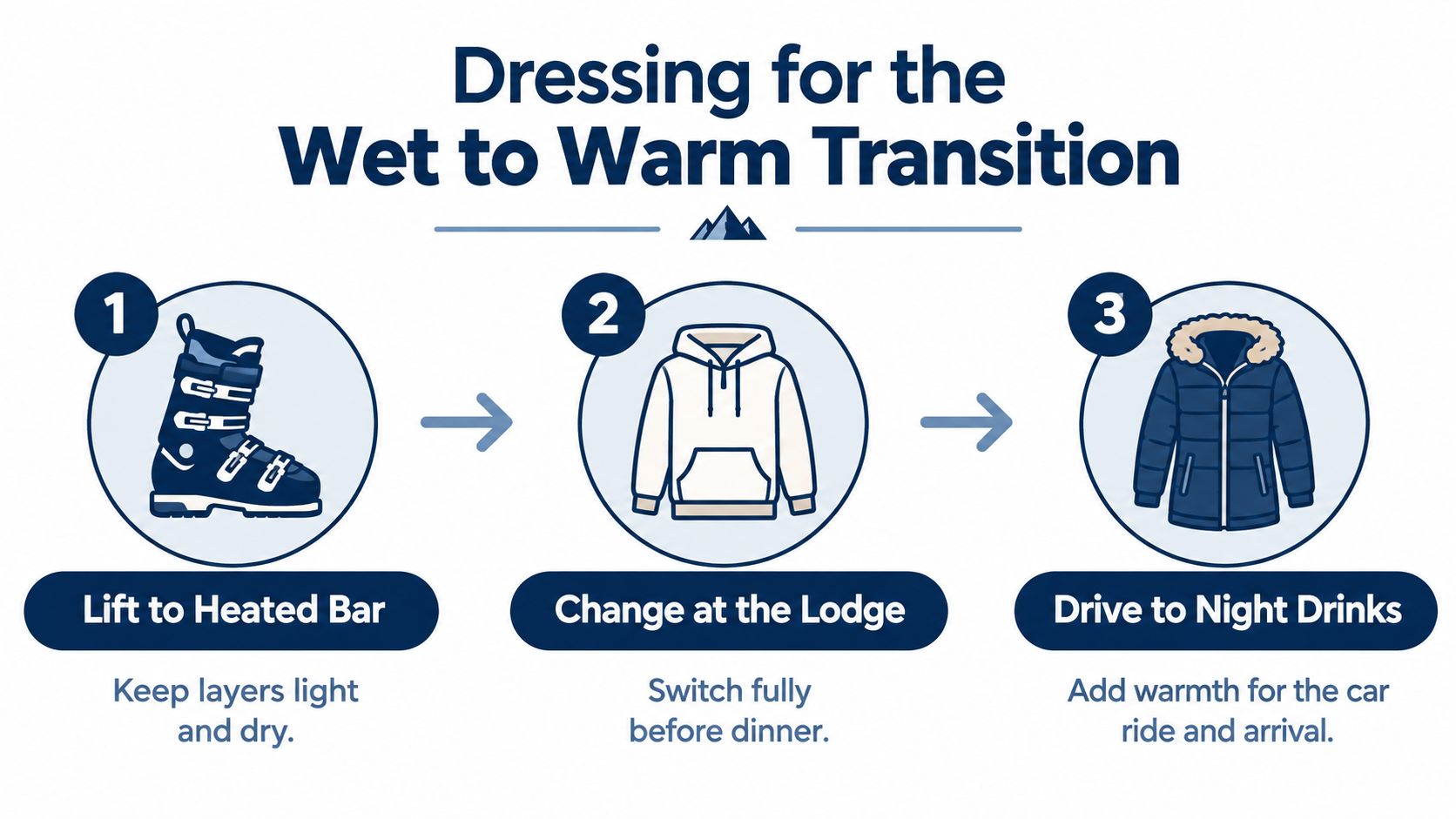
Three Exits, Three Plans
Lift to heated bar. If your moisture-managing base is only a little damp, keep it, open your shell's ventilation, and pull on a flannel or overshirt you can unbutton. Keep grippy boots on. Heavy insulation will become a nuisance the moment you step inside.
Full change at the lodge. Take the opportunity. Swap your damp base for a dry shirt, change socks, then dress for dinner. Research comparing clothing ensembles with 100, 200, 500, and 700 grams of added moisture in the underwear layer found that apparent thermal insulation declined as moisture increased in a study of moisture content and clothing apparent thermal insulation. A thick sweater over a damp base can leave you cold once you stop moving. Dry first; add warmth second.
Hours outside at fire pits or village streets. Put insulation and wind protection first: a dry base, a real midlayer, a wind-resistant outer layer, and warm shoes that aren't ski boots. Leave cotton out of the wet layers. It dries slowly and can make you feel colder when damp.
A small backup kit can save the evening:
- Spare socks: Dry feet make the cold easier to handle.
- Dry midlayer in your bag: One clean insulating piece beats layering over damp clothes.
- Shell for the parking lot: Bring wind protection for the exposed walk, then remove it indoors.
Pack for the handoff from slopes to dinner: a dry shirt in a separate pouch, fresh socks, and the layer you'll wear outside. If a soft, absorbent layer sounds good after changing, towel-lined hoodies and post-activity comfort explains why that fabric can suit the transition.
For a full lodge or cabin change, a robe can make sense once you're dry and the ski boots are off. Keep it for fireside hours, not the chairlift.
Layering When Wind and Moisture Change the Outfit
The chairlift comes with one job: keep you warm while you move. At the car, the wind picks up, the snow on your cuffs melts, and standing still changes the assignment. Build an outfit you can adjust between the last run and the first drink, rather than piling on thickness.
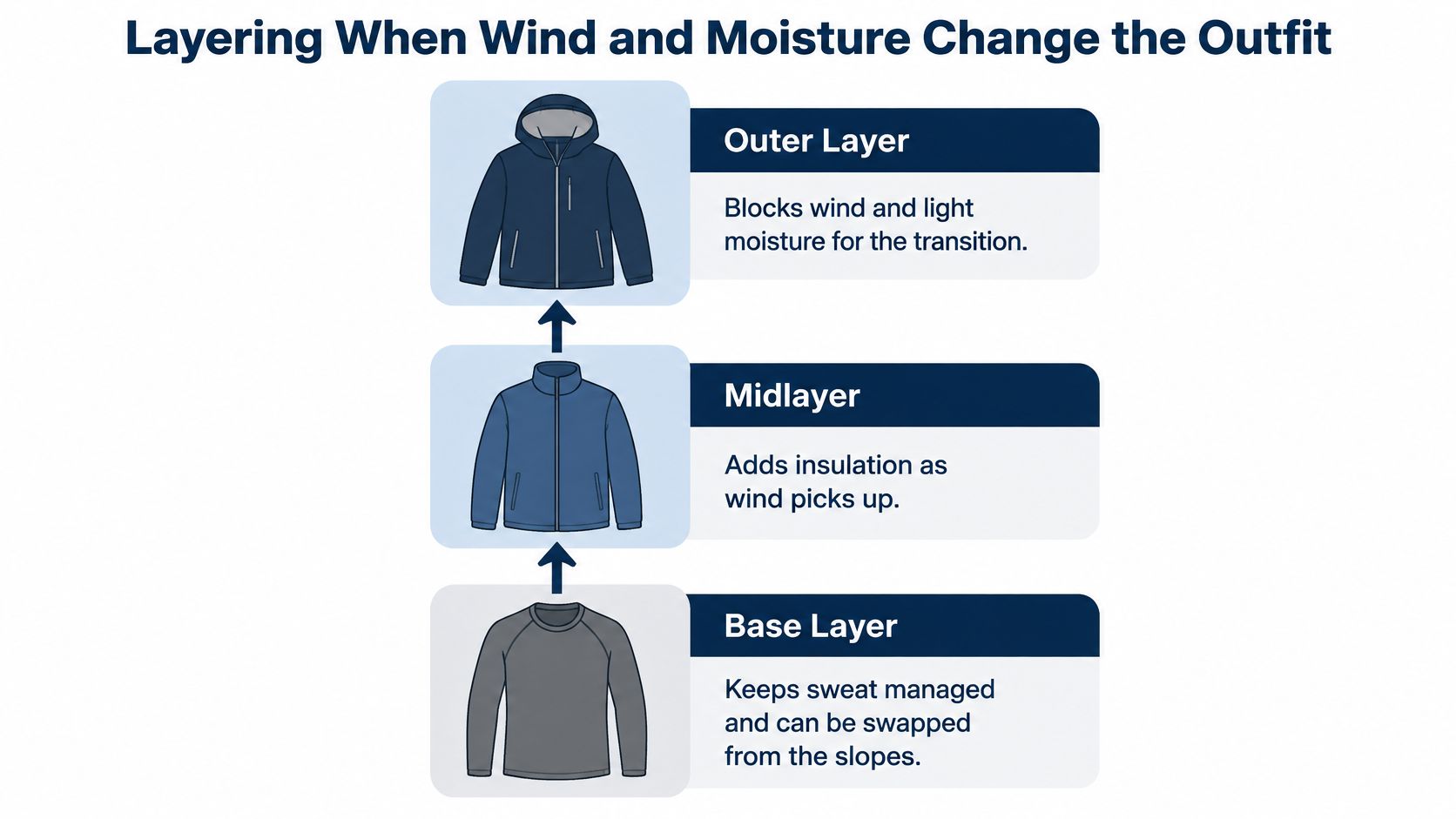
Use a moisture-managing base that's still dry, or change it if it's soaked. Add an insulating midlayer for time outside, then a wind-resistant outer layer for the walk between lift, car, deck, and lodge. The best part is being able to shed or add a layer without turning the parking lot into a dressing room.
Why Wind Wins
In an experimental study of protective textile assemblies, increasing wind speed from 0 to 16 km/h reduced measured thermal insulation by approximately 85% in research on thermal performance of protective textiles in extreme cold. Under those test conditions, temperature and humidity shifts mattered less than wind.
That explains the flannel paradox: cozy beside a fire, suddenly useless in an open lot. Wind strips away the warm air your layers hold, so put a wind-resistant outer layer on before you head out, not after you've started shivering.
Social Spec: A dry pocket keeps your phone out of the snow. A bottle pocket frees a hand for a handshake, and a sunglasses loop saves you from parking your shades on your head like a lost tourist.
Your layers also need to release vapor as you shift from skiing hard to standing around. Open pit zips before sweat builds; removable insulation lets you adjust without stripping down. For a practical sequence from base layer to shell, follow this guide to thermal layering for ski trips.
Watch how a layered outfit moves before your next trip.
After a proper change of clothes, fireside lounging calls for a settled-in final layer. The La Sirena Robe belongs indoors, once the wet-to-warm transition is done. That's the reward, not another piece to wear into the wind.
How to Choose Apres Ski Clothes by Situation
Pick the outfit for where you'll spend the next hour, not just what looked good at the lift. A good apres setup handles the shift from damp gear to a warm room without leaving you overheated or underdressed.
Heated bar after a cold descent. Start with a dry, moisture-managing base and a flannel or overshirt. Take off the shell as soon as you're inside. It can hang over a chair, while pockets keep small essentials off a crowded table.
Windy tailgate. Wear a wind layer over insulation and keep your hat on. You'll be standing outside, so there's no need to dress for a quick indoor warm-up. A bottle pocket helps when your hands are busy greeting friends.
Longer and Quieter Hours
Long outdoor terrace. Choose a clean overshirt over an insulating layer. It looks at home among après crowds while keeping the outfit practical. A review of cold-weather clothing and physiological comfort describes the value of clothing systems that retain warmth while allowing water vapor to escape. That balance matters when you're sitting outside for hours.
Cabin morning coffee. Once your boots are off, reach for a robe or terry-lined layer over a tee. Softness wins here. A shell belongs by the door, not at the breakfast table.
Group weekend. Coordinate through a shared shirt style, then let everyone choose their own colors and layers. Subtle monogramming suits a cabin crew or groomsmen. Keep the mark small, more thoughtful detail than team uniform.
California Cowboy offers High Sierra apres shirts for mountain social hours, High Water terry-lined pieces for coastal weekends, and robes for cabin and fireside time. Choose by the moment you need to dress for, and compare those options with other pieces that serve the same purpose.
Test a piece against more than one plan before buying. Could you wear it on a travel day or a remote-work weekend? Repeat wear beats a one-trip statement, both for your wallet and your closet.
Finish with hats and tees that work under and over a flannel. The right small pieces can make a practical outfit look considered.
Complete the Look for Cabin and Tailgate
The best cabin and tailgate outfits handle the same handoff: get out of damp gear, stay warm in the wind, and feel ready to join the group. Pick a build that fits the stop, then pack only what earns its space.
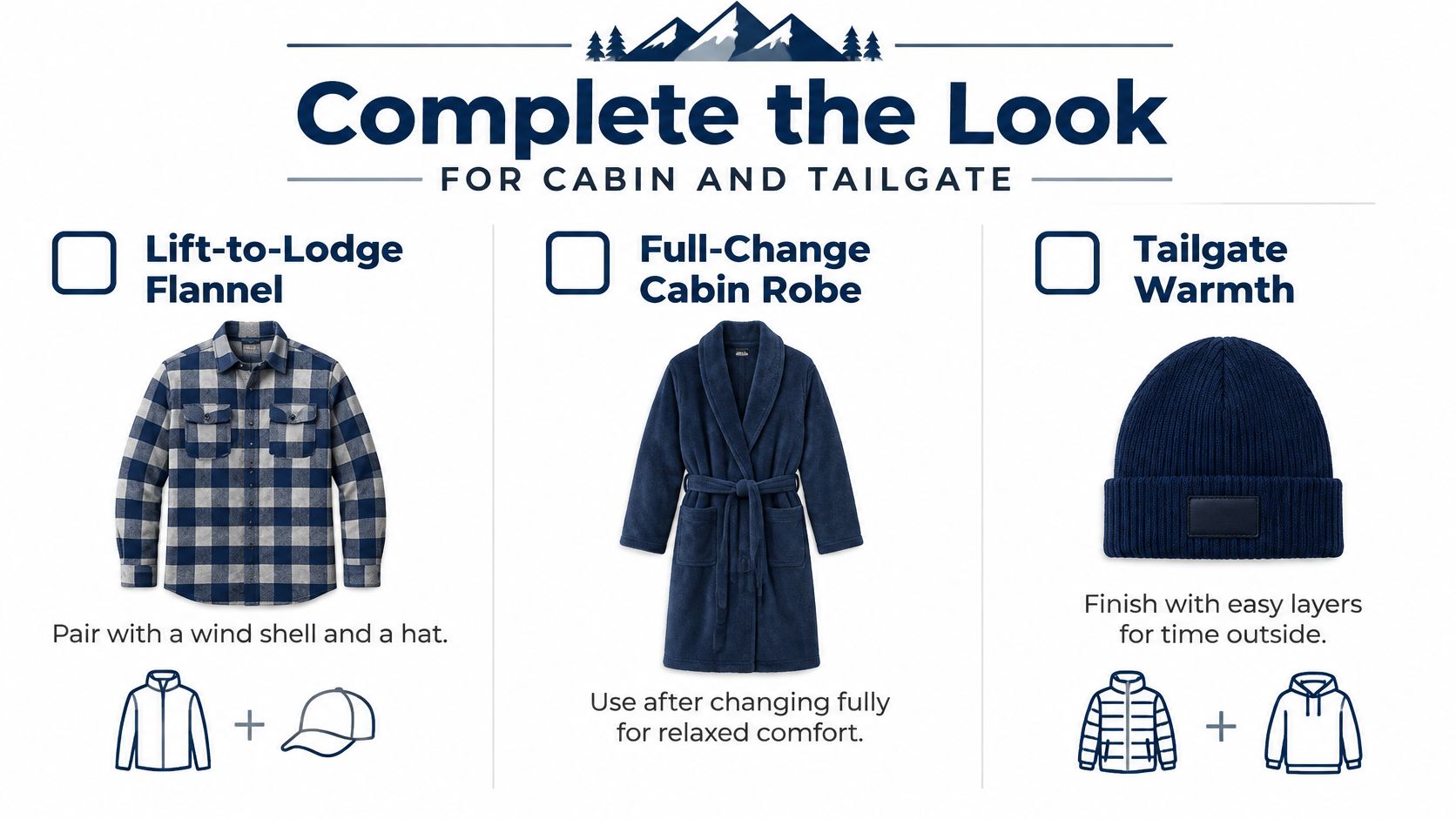
Lift-to-lodge flannel. Wear flannel over a dry base, keep a wind shell close, and finish with a hat and grippy boots. It handles the bar, deck, and unexpected walk without making you change the whole outfit.
Full-change cabin robe. Once the boots are off, pull a robe over a tee and swap into dry socks. Save technical layers for outside; this is fireside territory. The same two-stop thinking works beyond skiing: outfits for the course and dinner need to feel at home in both settings.
Group tailgate. Choose shirts in a shared style, then let everyone pick their own layers. Hats and tees make the crew feel connected, not dressed for a team photo. Put the phone away and the conversation tends to find its own way around the tailgate.
Pack a dry base, a removable midlayer, a wind piece, and one pocket for a bottle or sunglasses. If a piece serves none of those jobs, leave it behind. Use this cabin trip packing list for mountain weekends to fill in the rest.
California Cowboy makes shirts, flannels, and robes with concealed pockets and warm linings for cabin and tailgate hours. Choose pieces you'll keep wearing after the snow melts, not just for one post-lift photo.

