


Your wetsuit is peeled to your waist, the truck door is throwing shade, and the salt on your shoulders suddenly feels cold. Someone's suggesting tacos before the drive home. You need a shirt that handles the damp, looks intentional, and doesn't leave you sitting in your own portable towel hamper.
That's where men's terry cloth shirts earn their place. But buy by construction, not by the promise of softness. A light loop-terry shirt, a substantial lounge shirt, and a woven shirt with terry lining can feel completely different once the ocean comes along for the ride.
Choose for the transition. The right shirt helps you get comfortable, holster your tech, and stay for the conversation.
Terry Cloth Shirt Types and Weights at a Glance
Terry is a fabric construction, not a fiber. The loops describe how the textile is built, not whether the yarn is cotton, a blend, or something else.
That distinction matters when you're standing beside the cooler with wet hair and a restaurant stop ahead. You might want exposed loops for an easy beach layer, or a woven exterior that keeps the towel-like texture on the inside.
Terry cloth shirt types and typical weights
Compare the supplier's stated GSM, grams per square meter, rather than assuming every terry shirt belongs in the same weight class. The constructions below aren't standardized weight categories.
| Type | Best use | Trade-off |
|---|---|---|
| 100% cotton loop terry | Beach-to-bar wear and a post-swim layer | Can become substantial when wet and needs patient drying |
| Lightweight loop terry | Warm-weather layering after toweling off | Less insulation when the breeze picks up |
| Heavy loop terry | Cabin evenings and relaxed indoor wear | More bulk, with greater potential to feel waterlogged |
| Cotton-blend terry | Stretch, shape recovery, or easier-care priorities, according to the blend | May sacrifice absorbency compared with all-cotton construction |
| Terry-lined woven shell | A dressier outer appearance with a towel-soft interior | Both shell and lining need room to wash and dry |
Higher GSM means more textile mass per unit area. It doesn't automatically mean better quality, better absorption, or slower drying, because the yarn, loops, and finishing also matter.
For absorbency, cotton is a sensible starting point. A comparison of terry fabrics published in Vlákna a textil found that 100% cotton samples absorbed better than samples containing other components, although that isn't a guarantee about every cotton shirt.
Cotton also responds to moisture in the surrounding air. A textile study published in the International Design Journal reports approximately 8.5% moisture regain for standard cotton under standard environmental conditions, which helps explain why cotton's relationship with moisture is more complex than just feeling wet or dry.
What to Check on the Label
- Fiber percentages: Get the actual composition, not just a cotton-rich description.
- GSM: Ask for the stated fabric weight so you can compare similar constructions.
- Loop placement: Check whether the loops face outward, sit against your skin, or form a separate lining.
Plush is a feeling. Construction is a specification.
Why Loop Structure Decides How Fast a Shirt Dries
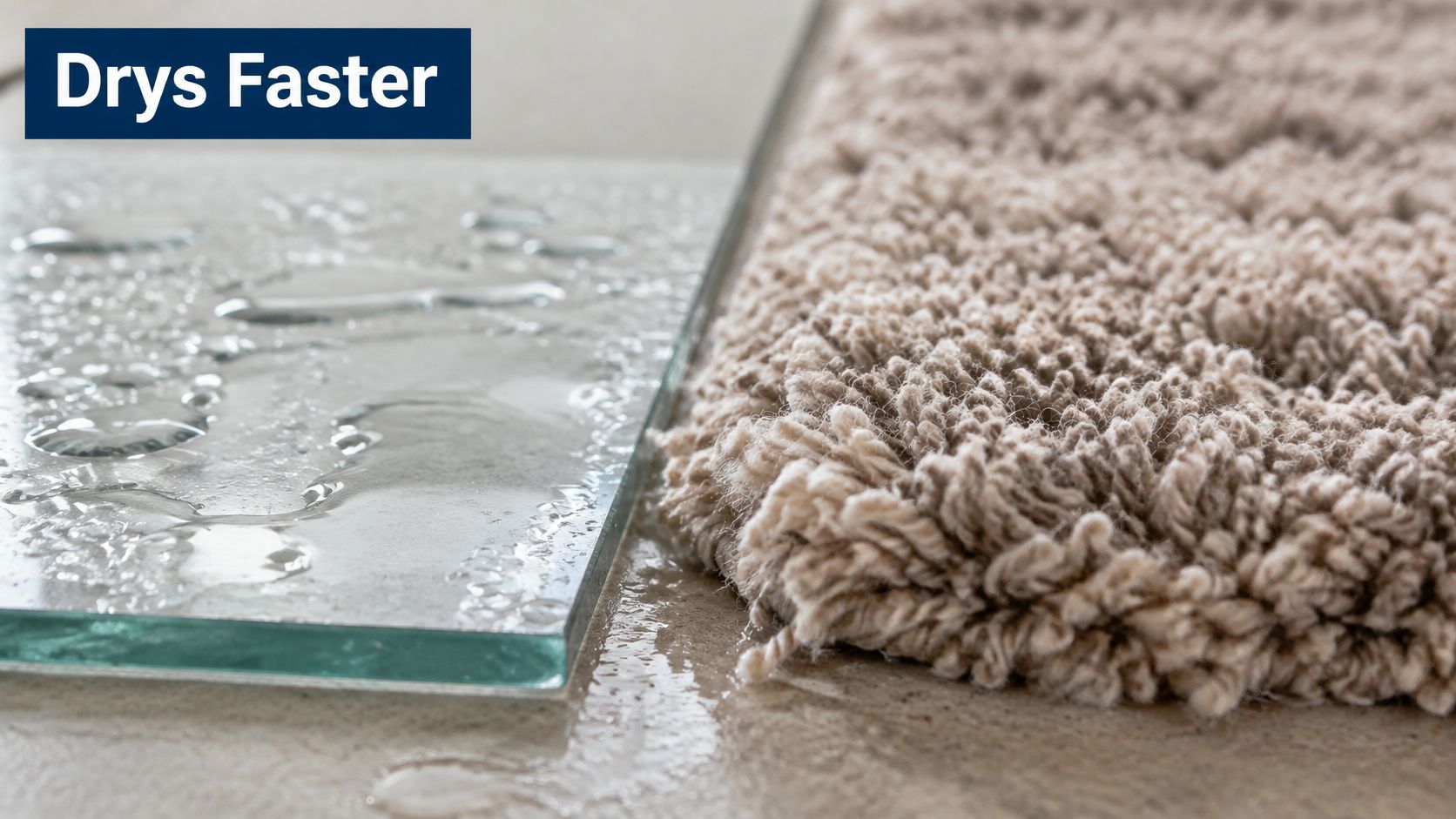
A sheet of glass sheds water; a shag rug drinks it. That's a useful starting analogy for terry, although absorbing water and getting rid of it are different jobs.
Terry's raised loops give moisture more fiber surface to contact than a comparatively flat woven fabric. When you pull a shirt over a damp shoulder, those loops create the contact points that make the fabric feel towel-like.
In an experimental study covering 216 terry-fabric samples, approximately 26%–40% of total absorption capacity was reached within the first 10 seconds, depending on construction; absorption exceeded 50% after 30 seconds and reached approximately 75% after 100 seconds. Those are absorption results, not shirt-drying times.
That distinction is the whole buying decision. A shirt can take moisture off your skin quickly without releasing that moisture quickly afterward.
Fast uptake isn't fast evaporation
Dynamic absorbency describes how rapidly the textile takes water in. Static retention describes how much liquid stays in the textile after absorption.
On a wet shoulder, fast uptake can feel immediately useful. On the drive home, high retention can mean a heavy shirt pressed between your back and the seat.
The sample study identified yarn type as the strongest influence on dynamic absorption, with yarn material and fabric construction also affecting performance. So a terry label tells you the broad family, not how a finished garment will behave.
Loop geometry adds another layer. Research published in the Journal of Textile and Apparel, Technology and Management identifies rounder loop shapes, loop density, and loop length as important to water uptake because they affect exposed surface and available pore space.
Buy balanced loops, not maximum fluff
My recommendation is a moderate, even pile rather than the longest loops you can find. Very plush terry can feel magnificent in your hand while being awkward under a seat belt, vulnerable to snags, and cumbersome after a proper soaking.
Ask whether the seller distinguishes absorbency from drying performance. If a product page calls a shirt quick-drying solely because it absorbs water, keep your skepticism zipped up beside your keys.
For a different application of the same textile, the guide to luxury terry cloth robes helps frame the choice between a wearable shirt and a more enveloping post-water layer. Consider the High Water terry-lined shirt when you want the absorbent surface inside a woven exterior, and inspect its construction before choosing.
Terry is an engineered textile, not a single material.
Social Technical Features Worth Paying For
Social Spec
Why a champagne pocket changes the tailgate game
A concealed chest pocket can keep lip balm, a folded bill, or a suitably sized phone tucked out of the way. The payoff is gloriously ordinary: fewer things in your hands while you open the cooler, pass someone a drink, and actually listen.
Storage deserves scrutiny. A shirt with clever pockets should make you less fidgety, not turn your torso into an overstuffed airport organizer.
The following Social Anatomy illustration is a feature-shopping guide, not a promise that every terry shirt includes every compartment. Check the actual garment's photographs and specifications.
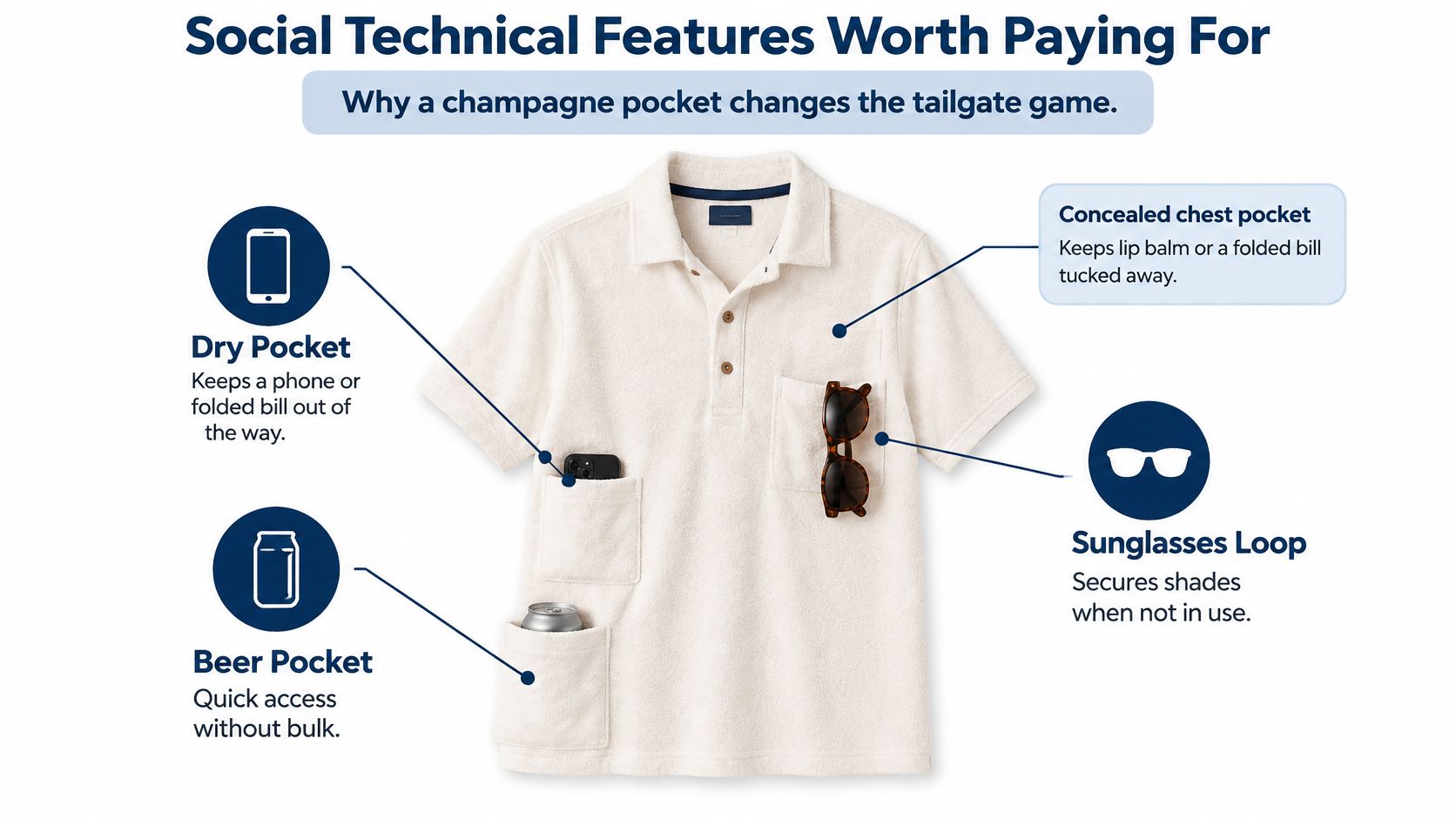
Follow the storage around the shirt
Start at the inner chest. A concealed champagne pocket is useful for small items you don't want rattling around, but check whether its contents show through or pull the front panel out of shape.
Next, inspect the dry pocket. Look for a secure closure and a location away from the dampest lining, then establish what protection the manufacturer claims. A zipped pocket isn't automatically waterproof, and a water-resistant compartment isn't permission to take your phone swimming.
At the hem, distinguish a beverage pocket from a bottle-opener loop. One carries a container; the other anchors a tool. Load either gently during a fit check, because an awkwardly placed weight can drag the whole shirt sideways.
A sunglasses loop near the placket should hold your shades without making them collide with buttons. Hidden back storage can suit a card or folded cash, provided you can sit without crushing the contents or feeling a lump against the chair.
Comfort comes before the first round
Cold-water exposure isn't just a wardrobe inconvenience. NOAA warns that prolonged immersion in water below 70°F can produce hypothermia, making the change into dry clothing an important part of the post-water transition.
Don't treat an absorbent shirt as safety equipment. Towel off, replace wet clothing, and add weather protection when the air demands it.
The guide to water-resistant pocket apparel is useful for separating convenient storage from protection you can rely on.
Pro-Tips
- Reach while seated: Check pocket access from a car seat or camp chair.
- Inspect the attachment: Prefer storage anchored securely into the garment rather than a loose pouch that swings.
- Check closures: Choose snaps or zips for items you can't afford to drop.
- Test the load: Check beverage-pocket placement with an empty container before committing to the fit.
Consider the El Garibaldi Robe when your beach-to-cabin routine calls for a roomier alternative. Check its current pocket layout against what you carry, not what looks entertaining in a diagram.
Sizing a Terry Shirt Without Looking Like a Towel
Terry adds visual volume. The size that looks trim in a flat woven shirt can feel surprisingly substantial once loops and lining enter the picture.
Men's terry shirt chest sizes
Letter sizes aren't chest measurements, and an unverified conversion chart would be worse than no chart. Use the exact style's chart, checking whether it lists body measurements or finished garment measurements.
| Size | Terry fit note |
|---|---|
| S | A closer silhouette works best when lightweight fabric still allows comfortable movement |
| M | Compare chest and shoulder dimensions rather than treating medium as a universal midweight fit |
| L | Check that room for a tee doesn't create excess fabric at the sides |
| XL | Allow comfortable movement without relying on future shrinkage to correct the fit |
| XXL | Check upper-arm room, hem sweep, and seated comfort as carefully as chest width |
Measure your body with a flexible tape around the fullest part of your chest, under your arms. Keep it level across your back, breathe normally, and resist the temptation to stand like you're accepting a medal.
Then measure a shirt you already like, laid flat, using the method specified by the retailer. The shirt-measuring guide helps you distinguish useful garment measurements from optimistic guesses.
Fit Test
- Shoulders: For a conventional set-in sleeve, aim for the seam near your shoulder bone. A deliberately dropped shoulder should look intentional on both sides.
- Raised arms: Lift your arms and check that the hem still covers your waistband.
- Chest: Pinch a little spare fabric and reach forward. The placket shouldn't pull open.
- Seat check: Sit down with the pockets lightly loaded and check for pressure, bunching, or a choking collar.
- Layering: Try it over the tee or base layer you'll wear, not whatever happens to be nearby.
Substantial terry usually looks better with a relaxed drape than stretched tight across the chest. Lightweight loop terry can sit closer, provided it doesn't cling unpleasantly when damp.
Cotton terry can shrink, but the amount depends on the fabric and finishing. Don't buy an oversized shirt expecting the wash to tailor it for you, and don't buy a tight one assuming it has finished moving.
Fitting-room rule: If you can't comfortably hug someone, reach into the cooler, and sit through the drive home, it doesn't fit your weekend.
Before choosing a High Water shirt, compare your measurements with the current style-specific chart. Cut and construction matter more than loyalty to the letter printed inside your usual shirt.
How to Care for Terry Without Killing Absorbency
The softest-feeling routine isn't always the most durable one. A heavily scented wash and a punishing dryer cycle can make laundry day feel finished while giving the loops a rough afternoon.
Preserve the pile instead. It's the working surface, not decorative fuzz.
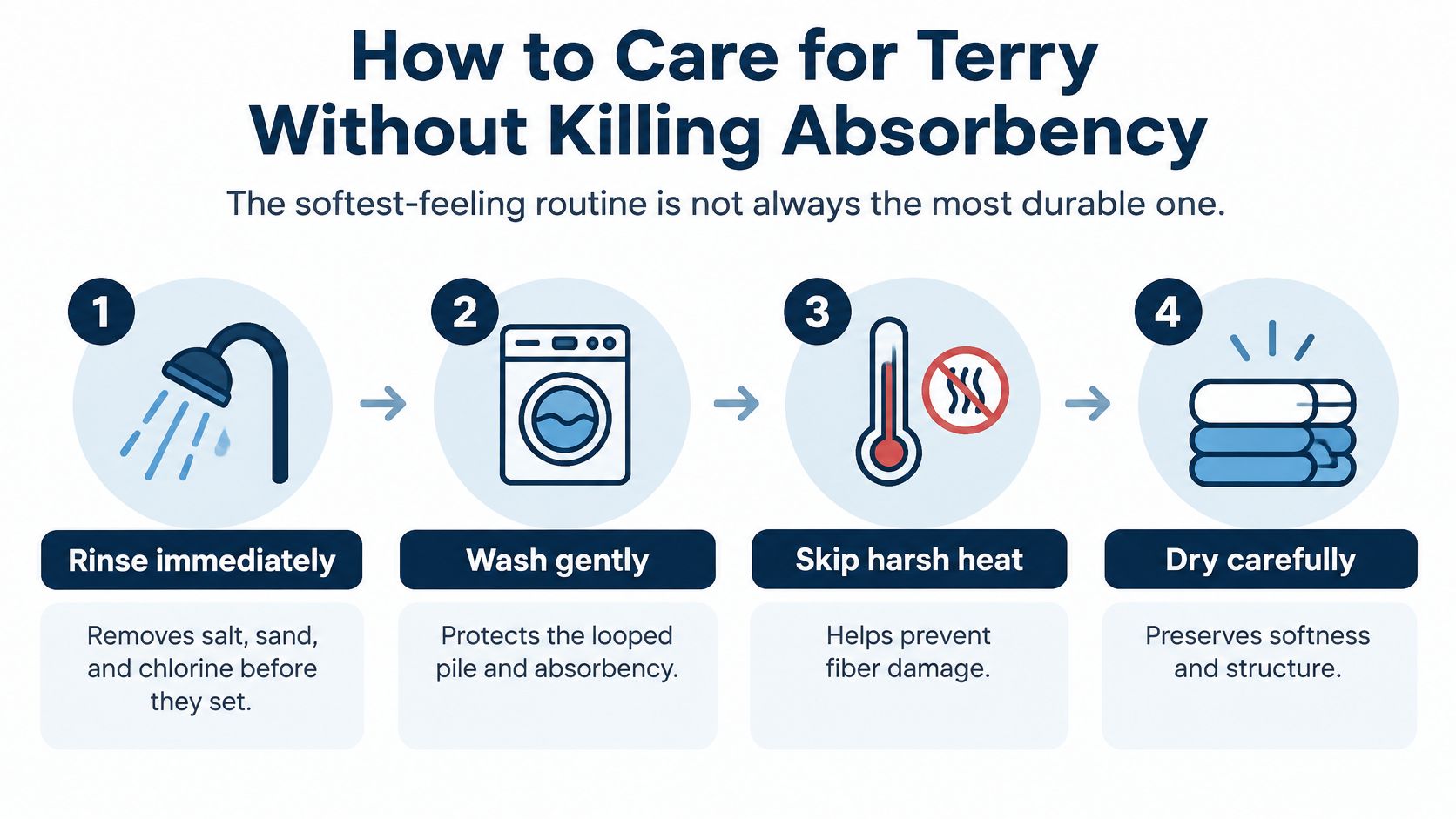
The wash-day routine
- Rinse after water time. Flush out salt, chlorine, and loose sand promptly, then shake out remaining grit before laundering.
- Turn it inside out. Empty pockets and close zips or snaps so hardware has fewer chances to catch the pile.
- Wash gently. Choose a cool or permitted warm gentle cycle with a modest amount of mild liquid detergent. Respect a care label that requires a gentler method.
- Skip fabric softener. Don't add a coating just to make an already soft textile feel more luxurious; prioritize its towel-like function.
- Choose a low spin. Reduce aggressive handling, then reshape the shirt without wringing or twisting it.
- Avoid harsh drying heat. Air dry with good circulation, preferably in shade, or use a low-heat method only when the garment's instructions allow it.
- Treat stains before drying. Apply a fabric-compatible stain treatment before washing, and inspect the mark before adding heat.
That order matters. A splash of sunscreen near the collar needs attention before you bake it into your favorite beach shirt.
A review in The Journal of the Textile Institute identifies drying as a major microfiber-release stage and reports increased shedding with high-temperature tumble drying; it also describes liquid detergent and air drying as gentler alternatives. Softness isn't an invitation to treat cotton like it's indestructible.
Understand wear without fearing the washer
Experimental laundering work on cotton terry fabrics found that absorption and surface characteristics could initially improve, then begin deteriorating after approximately eight industrial wash cycles. Industrial laundering isn't a countdown for a home wardrobe, so don't interpret that result as a shirt's expiry date.
Use it as a reason to preserve the loops consistently. Initial hand-feel tells you less about longevity than how the garment behaves after repeated care.
Can it go in with towels? Yes, if colors and care requirements match, the load has room to move, and there are no exposed zippers or hook-and-loop fasteners waiting to grab the pile.
What about a snag? Never pull it. A loose loop in woven terry can often be carefully trimmed with sharp scissors, but a snag in a knit structure may need drawing back through or professional repair rather than cutting.
For the gap between beach and bar, spread the shirt over a clean chair back or drying rack with both sides exposed to air. Heavy, soaked fabric needs patience, and a shaded cabin deck is kinder than prolonged baking in direct sun. Never leave it balled up damp in a bag.
Outfit Ideas for Après-Ski, Surf-to-Bar and Group Trips
The lifts have closed, woodsmoke drifts across the lodge deck, and your ski boots are finally off. Or the surf is done, the car is packed, and dinner is still a spontaneous possibility. Dress for the in-between: a terry shirt's weight and loop structure decide whether it feels easy to wear or drags like a damp towel.

After the lifts close
Pull a High Sierra après-ski shirt over a dry base layer, then add a beanie and cabin slippers indoors. Keep proper outerwear handy outside; a shirt is no winter jacket.
For cabin wear, let texture do the work. Pair a substantial shirt with simple trousers and wool socks for a relaxed look beside the fire, without going full lumberjack.
Use the après-ski outfit ideas guide to plan a change of clothes alongside your mountain kit. Consider a High Sierra après-ski shirt for that transition, and choose your layer around the evening forecast.
From salt water to the bar
Towel off, change out of thoroughly wet gear, and wear a terry-lined shirt over dry trunks or casual shorts. Add easy shoes and a hat. Save the koozie for the cooler stop.
A woven exterior gives beachwear more structure, while the soft lining feels comfortable against your skin. Choose a weight you can wear after the water without feeling like you're hauling the whole beach with you.
Consider the High Water terry-lined range for this outfit. Keep the rest simple, and leave pockets for what you'll carry.
For the crew, coordinate without issuing a uniform
For bachelor party outfits, start with a shared colorway and let everyone choose their own bottoms. Linen trousers on one person, trunks on another, and the group still looks connected without resembling event staff.
Monogramming can make a groom's shirt or robe feel personal. Ask about placement and lead time before ordering, and choose individual sizing and a wearable color over a giant date across the back.
A Stacker report based on a survey of more than 1,000 employees and gift buyers found that 94% of employees considered a personal-feeling gift a good corporate gift, while only 35% of gift decision-makers based choices on real employee insights. That's workplace gifting evidence, not a wedding-party forecast. The useful takeaway is simple: ask what people like before embroidering it.
What to Pack
- A rotation of terry shirts: Keep a clean, dry option ready while the other airs.
- A hat: Choose one that's comfortable through lunch and the drive home.
- An essentials kit: Carry keys, a card, lip balm, and a protective phone pouch if needed.
- A light layer: Bring something for the evening breeze instead of betting against it.
Aim for socially confident, not over-equipped. The best outfit leaves room for the unexpected, not a running explanation of your pocket system.
Buy the Shirt That Lasts and Finish the Look
Choose the shirt you'll keep wearing. In a 2025 global circularity study covering 15,461 consumers across 21 markets, comfort influenced clothing retention for 88.1% of respondents, fit for 82.2%, and visible wear for 64.4%.
That's a stronger buying framework than chasing the trendiest material claim. If the shirt pinches, snags constantly, or demands a care routine you won't follow, it isn't a good match.
The buying checklist
- Fit checked: Compare your measurements with the exact style's chart.
- Weight stated: Choose manageable fabric mass for your climate and routine.
- Composition disclosed: Favor cotton when absorbency is the priority.
- Storage justified: Buy pockets for your real belongings, not an imaginary expedition.
- Pile balanced: Prefer even, moderate loops over exaggerated fluff.
- Repair considered: Inspect buttons, seams, cuffs, and pocket attachments before buying.
Can a pulled loop be repaired invisibly? Sometimes, but the structure and damage decide the result, so don't expect a universal fix.
A loose button or worn cuff is worth addressing when the surrounding fabric remains sound and you still enjoy wearing the shirt. Watch friction points around pocket corners, underarms, hems, and seat-belt contact areas.
Faded terry can still be useful, but resale value isn't guaranteed. Even fading, clean fabric, and intact seams are easier to present clearly than stains or damaged pile.
Use one shirt as a cover-up, travel layer, lounge top, and casual overshirt if it suits those jobs. Pairing it with terry cloth pants can extend the cabin-lounge outfit without requiring another complete wardrobe.
Complete the Look
Add a hat for the walk into town, a plain tee beneath the open shirt, and a koozie for the cooler. Keep accessories restrained; the point is to get comfortable and join your friends, not spend the sunset adjusting your outfit.
California Cowboy offers High Water terry-lined shirts, High Sierra après-ski styles, and robes designed around post-adventure comfort and practical storage. Visit California Cowboy to find your beach-to-cabin layer, then join the Vital Few newsletter for first access to product drops. Holster your tech and give the next good conversation your full attention.

