


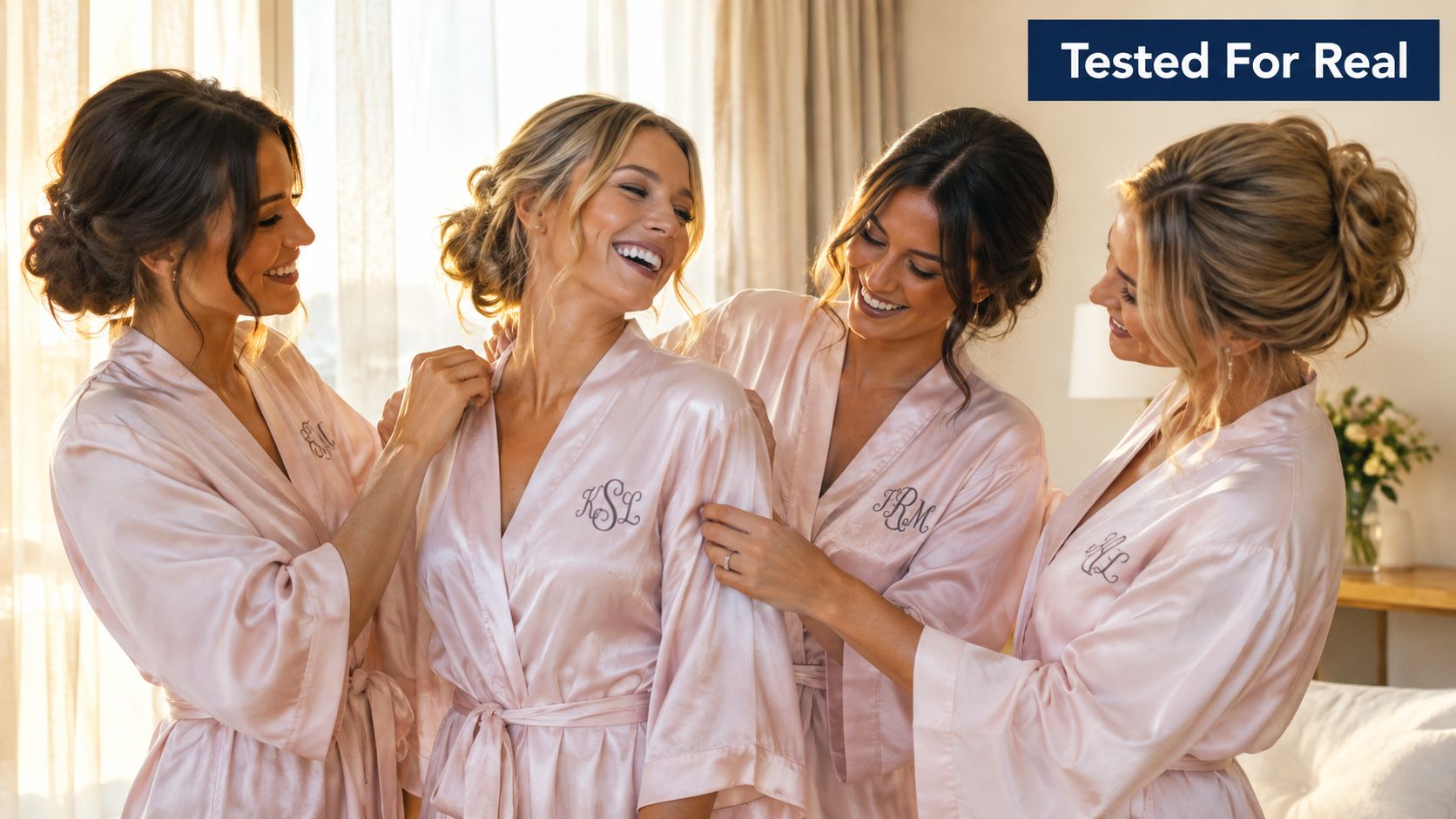
The suite smells like coffee, hairspray, and the salt still drying in someone's hair. Forty minutes before makeup begins, one bridesmaid is hunting for her earrings, another is trying not to spill coffee on her dress, and the matching robes are supposed to make the room feel less like a loading dock and more like a celebration.
That's when monogrammed robes for bridesmaids have to earn their keep. They should feel comfortable, fit the people wearing them, photograph well, and still be useful after the wedding. The couple may be choosing the gift, the maid of honor may be coordinating sizes, the planner may be guarding the timeline, and the bridesmaids may want something they'll wear again. A good plan respects all four.
Coordinated clothing for wedding attendants has a long history, but personalized robes in their current form are a modern extension of that custom. In ancient Roman wedding customs, attendants reportedly dressed like the bride to confuse threats; by the Victorian era, bridesmaids commonly wore white, and later styles increasingly contrasted with the bride's dress. ELLE's history of bridesmaid attire traces that shift toward coordinated, individual styling.
The practical payoff is simpler. A robe gives the group a shared look while leaving room for each person's initials and preferences. The decisions that matter most happen well before the photographer arrives, from fabric and sizing to payment and laundry instructions. For a useful approach to packing and clothing that works across a trip, see this guide to travel-friendly clothing.
Choosing Fabric and Silhouette for Real Bodies and Long Days
Choose the robe for the room, the weather, and the person wearing it, not only for the color palette. Hair and makeup can run long. A lightweight satin robe may feel pleasant in a warm suite but chilly in an air-conditioned hotel; a thick fleece robe can be a welcome layer in a cold cabin and an uncomfortable one in a heated room crowded with curling irons.
Fabric behaves differently under real getting-ready conditions:
- Terry cloth has looped fibers that increase surface area for holding water. Its absorbency depends on construction, including pile length and loop density. Cotton fibers can hold approximately 24–27 times their own weight in water, and terry cloth's loops make it more absorbent than standard cotton, as described in this peer-reviewed study of cotton and terry textiles. Choose it when the robe will pull double duty after a shower, swim, or spa morning.
- Jersey knit is soft and flexible, with a more relaxed feel than satin. It works well when bridesmaids will sit around for a while and want a robe that feels like lounge clothing.
- Brushed cotton offers a cozy, familiar hand, but can feel warm during a busy beauty schedule.
- Lightweight fleece brings warmth for a cold-weather wedding or cabin weekend, though its bulk can change how the robe sits in photos.
Silhouette changes the picture, too. A kimono cut creates a clean V-shaped neckline and often looks polished in group shots. A shawl collar adds more visible fabric around the neck and shoulders, which can feel cozy but may crowd a smaller frame. Check sleeve width and robe length against the person wearing it, especially if everyone will sit, bend, and move around while getting ready.
Fabric rule: If the robe must cover wet skin, prioritize its material and construction. If it's only for hair and makeup, prioritize comfort in the room's actual temperature.
For a palette and styling reference that extends beyond the getting-ready room, styling black dresses for bridesmaids offers useful ideas for coordinating a formal look. California Cowboy's luxury terry cloth robes offer another example of terry as an after-water layer, a useful point of comparison if the group wants robes that travel from the getting-ready suite to spa or beach use.
Initials, Fonts, and Placement That Survive Embroidery
Treat the monogram as a design decision with a real proofing step, not a cute detail to approve while juggling wedding menus. A robe can be beautiful and still disappoint if the initials are in the wrong order, the font closes up on textured fabric, or the stitching crosses a pocket seam.
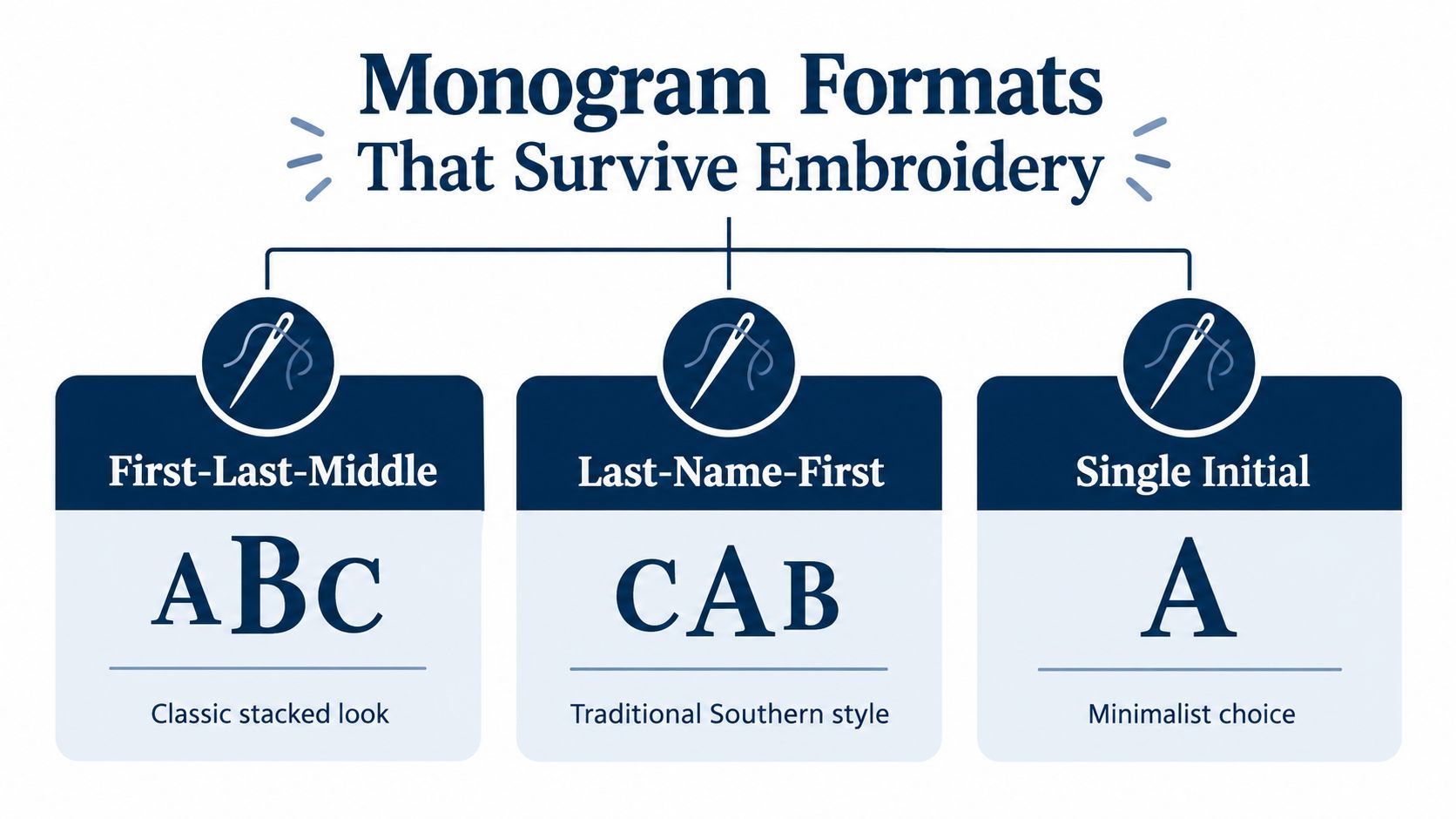
Pick the format first. Some groups prefer the wearer's initials in first-middle-last order. Others use the traditional arrangement with the last-name initial in the center, or keep it simple with a single initial. The point isn't to enforce etiquette. It's to make sure each wearer recognizes and approves the version assigned to them.
Make the letters legible on the chosen fabric
A clean block font is usually easier to read on looped terry than a very fine script. Satin and smoother weaves can support more delicate lettering, but thread density and fabric movement still matter. On plush fabric, ask for a proof that shows the design against the actual material or a close match. If a vendor can't show how the lettering will sit on that texture, don't assume the digital preview tells the whole story.
Keep placement away from seams, belt loops, and pockets. The left chest is familiar and visible; a cuff can be more discreet but may be harder to read in a group photograph. A back placement makes a stronger visual statement, so use it only if the group wants that look rather than treating the robe as a quiet keepsake.
Before production, get written approval for spelling, letter order, font, thread color, placement, and size. The maid of honor can collect the approvals, but each bridesmaid should check her own initials. For background on what an embroidery process can involve, this overview of embroidery services from Simply Merchandise is a useful reference point. California Cowboy's notes on custom monogrammed clothing gifts also cover the practical choices involved in personalizing apparel.
Sizing as a Group Project, Not a Guess
A robe may be forgiving, but a group order turns one casual guess into several opportunities for a bad fit. Don't ask everyone for their usual dress size and hope the robes magically cooperate. Manufacturers use different charts, and wrap garments depend on overlap, belt position, sleeve length, and the wearer's preferred coverage.
Set up one shared process. Send the same measuring guide to everyone, create a spreadsheet, and collect measurements before placing the order. For each wearer, record bust, waist, hip, height, and preferred robe length. Add a separate note for sleeve and body-length preference. Then compare each person's measurements with the seller's actual size chart.
| Record | Why it helps |
|---|---|
| Bust, waist, and hip | Helps match the wearer to the brand's size chart |
| Height and preferred length | Helps avoid hems that drag or feel too short |
| Sleeve preference | Accounts for differences in coverage and comfort |
| Final size approval | Creates a clear check before personalization |
Use the same unit and instructions for the whole group, and ask each person to measure over similar clothing. Don't share sensitive measurements more widely than necessary. The maid of honor or planner can manage the spreadsheet privately, then confirm only the selected robe size with the buyer.
The key is to approve the fit before embroidery. Once a name or monogram is stitched, exchanges may be restricted. One sample or placement proof can help the group check how the lettering sits on the fabric and how the robe's cut looks in practice. A personalized group-gift planning guide can help the organizer keep the collection and approval process orderly.
Ordering Timelines and the Production Buffer Nobody Plans For
Personalization adds decisions and production steps. The wedding date doesn't move just because someone hasn't approved a thread color. Work backward from the day the robes need to be in the room, then confirm the vendor's actual production and shipping estimates before paying.
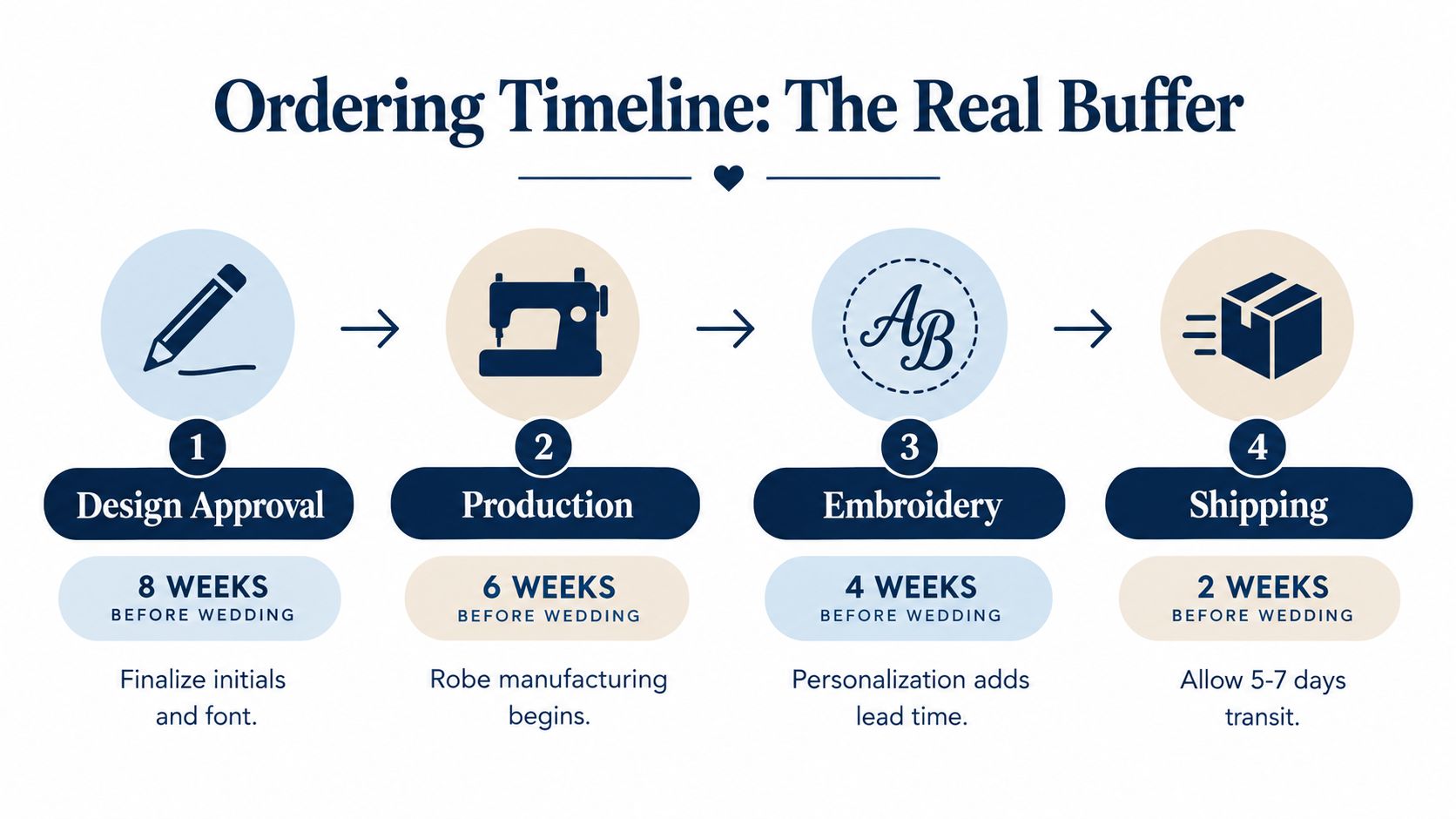
The timeline graphic offers a planning example, not a promise that every vendor can meet those dates. Use it as a prompt to ask specific questions: When must the design be approved? Does the seller send a sample or digital proof? How long does production take after approval? What shipping method will get the robes to the wedding location with room to spare?
Reverse the calendar from the wedding morning
Start with the date the robes must be physically available, not the day you plan to gift them. If the wedding is at a hotel or destination, decide who will receive and inspect the package. Shipping to one organized person is often simpler than sending individual robes to multiple addresses, but only if that person has time to check every item.
Before ordering, make sure the group has confirmed:
- Initials and spelling: Collect every wearer's written approval.
- Sizes and placement: Match measurements to the seller's chart and approve the design location.
- Delivery address: Confirm the recipient can accept the package and keep it safe.
- Travel requirements: For international retreats, check customs paperwork and delivery arrangements with the seller.
- Recovery plan: Ask what happens if an item is delayed, damaged, or personalized incorrectly.
A rush fee may make sense if the vendor confirms that it will shorten a specific production or delivery step. It won't fix missing initials, an unapproved proof, or an address nobody checked. Reserve a shipping buffer that reflects the vendor's stated service, and have the robes arrive early enough for someone to inspect them before the wedding trip.
Budget, Etiquette, and Who Actually Pays
One bridesmaid has already bought the dress, booked the flight, and taken Friday off. Another is covering a sibling's hotel room. A robe can land as a generous gift or as one more invoice, so decide who pays before anyone sees a group order form.
Zola's 2026 Registry & Gifting Survey reported that nearly two-thirds of couples who gave wedding-party gifts spent between $25 and $99 per person, with $25–$49 the largest spending band. Personalized accessories, including bags and robes, were the most selected category at 62%; getting-ready items such as eye masks and skincare followed at 55%, while jewelry reached 51%. That makes a robe defensible as both a getting-ready tool and a keepsake. It does not make matching robes an automatic line on someone else's card.
Say the quiet part early: the dress is already a serious expense, even before shoes, alterations, travel, and the bachelorette. Zola's 2025 First Look Report found that 51% of couples believe wedding-party members should pay for their own outfits, while 33% think the couple should cover those costs as a thank-you. If your plan relies on the 51% agreeing with you, your plan is weak.
Show the full cost, line by line
Price the project, not the product:
- Robe
- Embroidery or monogramming
- Taxes and shipping
- Rush fees, if needed
- A contingency for one wrong size or remake
- Laundering or steaming before the morning
- The person who measures, collects approvals, and chases late replies
For example, six attendants at $25–$99 per person gives a base gift budget of about $150–$594, before taxes, shipping, or customization fees, using the Zola range cited above. The trap is the gap between that clean math and the checkout total.
My rule: if the couple wants the look, the couple funds the look. If attendants are paying, keep personalization optional, offer a plain robe, and let anyone decline privately without a speech. Use a monogrammed bridesmaid gift guide to compare keepsake options, and check these ideas for unique wedding-party gifts if a robe is the wrong fit for your budget.
Photography, Gifting, and Caring for Robes Past the Wedding
A robe should make the getting-ready photos feel like the morning, not like a uniform inspection. Choose a color that works with the room and the wedding palette, then tell the photographer whether you want a coordinated group image or candid moments. Give people time to settle into the robes before asking them to line up. Holster your tech for a few minutes, put the coffee down, and let the room loosen up.
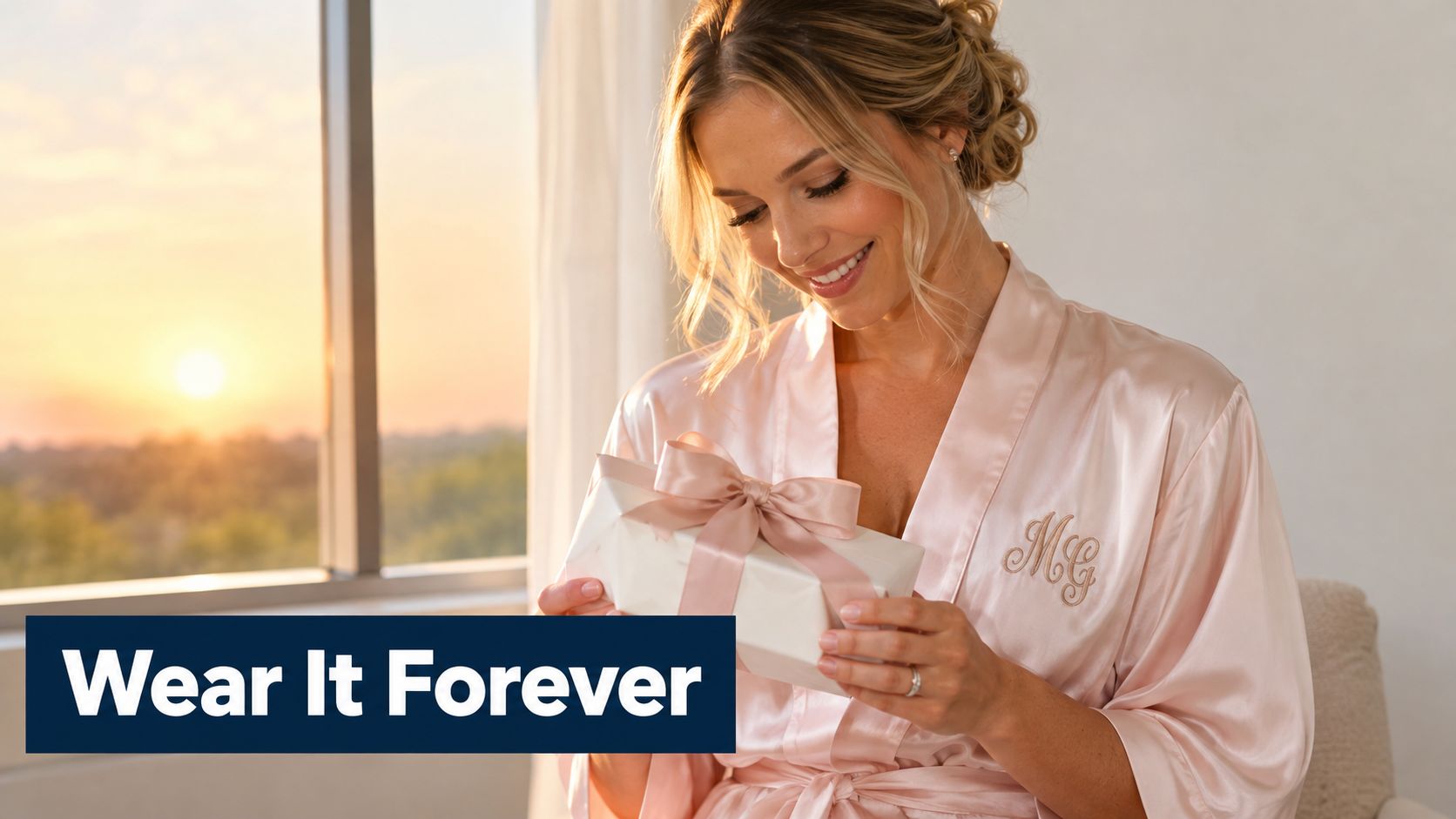
Ask the photographer for a mix of scenes: a group laughing near the window, a close-up of the monograms, and a relaxed robe-on-shoulders shot before everyone changes. Matching colors create a clear group portrait, while varied placements can show off the individual details without making every frame look staged. Warm hotel light and cool daylight can change how thread colors appear, so check a sample under lighting similar to the getting-ready room.
Give the robe as a gift, not a dress code
If the couple is gifting the robes, hand them out with a short personal note. Tell each person why you chose the robe, and make clear they're welcome to wear it again on spa weekends, cabin mornings, or at home. If the robes are only for photographs, say that without pretending they're a keepsake everyone must keep.
A small care card helps protect the embroidery. Embroidered-apparel guidance identifies friction, heat, aggressive agitation, and harsh detergent as common causes of damage. Recommend turning the robe inside out, washing it on a gentle cycle with cold or lukewarm water and mild detergent, avoiding bleach, and air-drying when possible. Don't scrub directly over the stitching. If ironing is necessary, use a pressing cloth or work from the reverse side rather than putting direct high heat on raised embroidery.
After the first controlled wash, check for loose threads, puckering, color transfer, or distorted backing. Keep robes away from towels and garments with zippers when laundering, since friction and snagging can rough up the design. The base robe's care label still matters, but the embroidered area may need gentler treatment than the fabric alone suggests.
Quick answers before you order
How far in advance should I order monogrammed robes? Order early enough for the seller's stated production and shipping times, plus time to review the proof and inspect the delivery. Use the reverse-calendar checklist above rather than relying on a generic promise.
What if a robe arrives with the wrong initials? Photograph the issue and contact the seller promptly. That's why every wearer should approve spelling and letter order in writing before stitching begins.
Are the robes a gift or part of the dress code? Decide before you order. If attendants are expected to pay, explain the cost and make participation optional rather than presenting the robe as a compulsory gift.
What if someone doesn't want initials? Offer a plain robe or a single neutral design without asking them to justify the choice. Personalization should feel personal, not compulsory.
For groups who want coordinated robes that are still useful after the ceremony, California Cowboy offers women's robes, including the La Sirena Robe, with custom embroidery. Share this short video with the planner or gift organizer before settling on the look.
Want wedding-morning robes that can travel from the getting-ready suite to a cabin deck or a slow morning at home? Explore California Cowboy, choose a robe that suits the group, and confirm the embroidery details before you order. Join the Vital Few newsletter for first access to product drops and ideas for life lived offline.

