


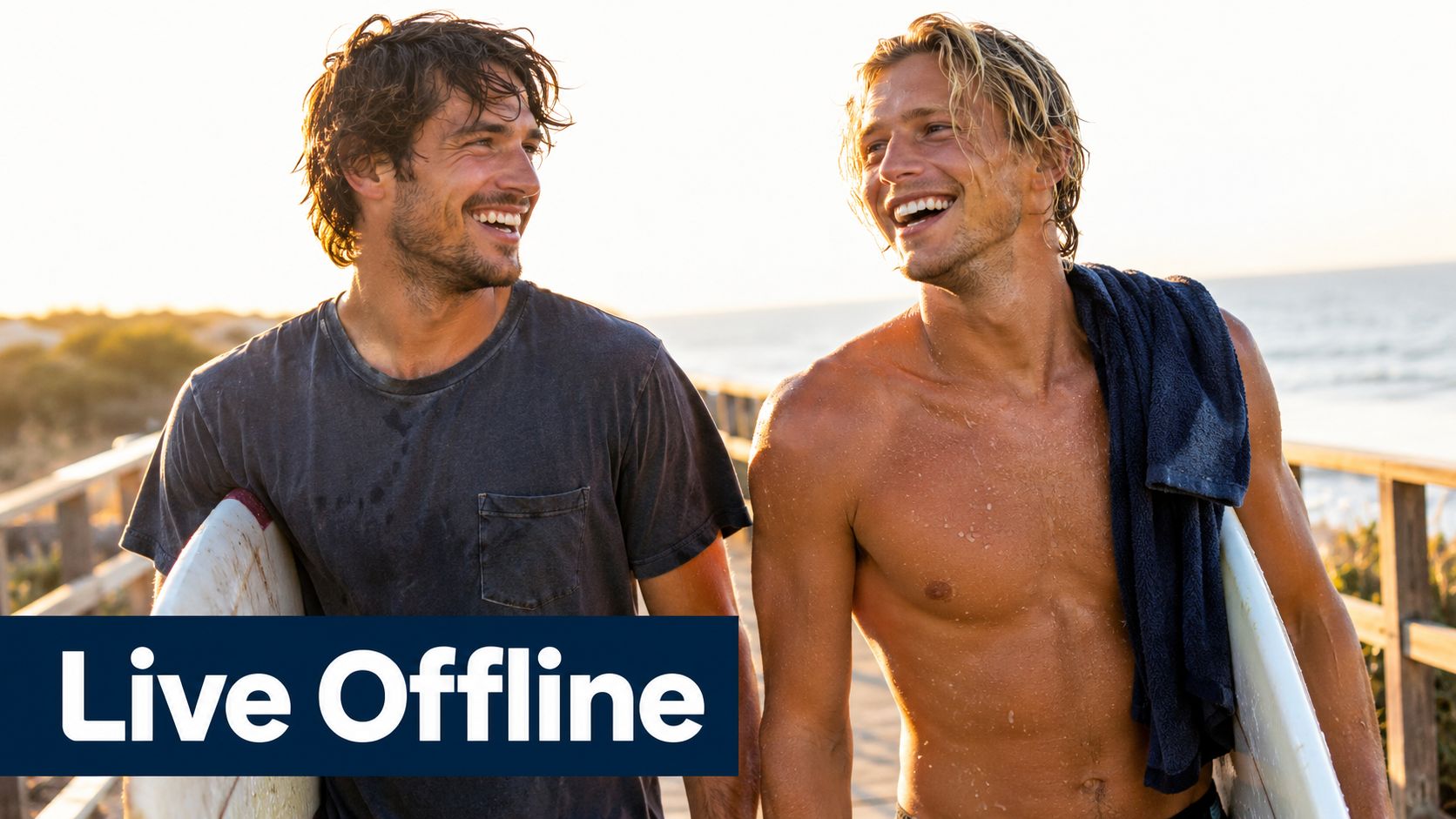
Salt still clings to your shoulders. Your hair smells faintly of ocean, sunscreen, and whatever heroic snack survived the drive back from the beach. Or maybe it's woodsmoke on your hoodie, cold air slipping down your neck, and the first drink waiting after the lifts close. These are the moments when a short sleeve T-shirt stops being an anonymous basic and starts doing actual social work.
It has to feel good against sun-warmed skin, hold its shape when you toss your keys into a pocket, and look intentional when the plan changes from “quick coffee” to “one more round.” You holster your tech. Someone tells a story. A stranger becomes part of the table. Socially confident clothing doesn't demand attention, but it helps you stay present for the serendipitous encounters that make life offline worth leaving the house for.
The Vibe Check Why Your Short Sleeve T Shirt Matters More Than You Think
A short sleeve T-shirt is the handoff between activity and atmosphere. It's what you pull on after surf when your skin is cool and your towel is damp, what sits under a flannel on the cabin deck, and what keeps a fireside outfit from becoming a costume. The garment looks simple because the good decisions are hidden in the fabric, collar, seams, and proportion.
The T-shirt's humble reputation is misleading. The modern short-sleeve version traces a major milestone to 1913, when the U.S. Navy issued crew-necked, short-sleeved, white cotton undershirts as standard undergarments. That adoption moved the garment from utility layer to mass-worn baseline, helping establish the T-shirt as a foundational apparel category. The historical and market overview from Into the AM places the global T-shirt market at $221.4 billion in 2025 and cites a projection of $261.577 billion by 2033.
That scale explains the good news and the bad news. You have endless options, but many tees are built to look acceptable for five minutes under retail lighting. The test arrives after a drive, a meal, a wash, and an evening where you're moving between people instead of posing for a product photo.
Offline rule: Your tee should make changing plans easier, not make you think about your outfit every time you stand up.
The West Coast approach is relaxed but not careless. A short sleeve T-shirt can carry California casual, post-surf comfort, cabin wear, and après-ski style when its weight, fit, and neckline cooperate. For more on designing clothes around real-world connection, explore California Cowboy's Life Offline approach.
What Makes a Great Short Sleeve T Shirt Actually Great
Start with the knit, not the fiber label. Most T-shirts use jersey knit, a looped construction that gives the fabric stretch, airflow, and a soft surface. Think of it as a flexible hammock rather than a rigid sheet. The loops let the shirt move, but the size and tightness of those loops determine whether the tee feels smooth and substantial or thin and a little too eager to reveal your undershirt.
Read the fabric like a hand feel
GSM, or grams per square meter, describes fabric weight. For a short sleeve T-shirt, 150 to 180 GSM is commonly the useful middle ground for opacity, softness, and durability, according to Pura Fabric's practical T-shirt fabric guide. A lighter 120 to 150 GSM knit feels airier, but it can stretch more easily and look transparent, especially in pale colors. A fabric above 180 GSM brings structure and wear life, though it hangs with less drape and may feel less like a classic everyday tee.
Yarn count adds another layer. A 30/1 jersey and a 20/1 jersey can use the same fiber blend and still feel noticeably different. The yarn count affects the hand, surface, and visual weight. Knit type matters too. A tubular tee is made from a knitted tube, while a cut-and-sew tee uses separate panels joined with side seams. Neither automatically wins. The point is to understand that “cotton blend” tells you less than shoppers often assume.
Look at the architecture
A premium-feeling tee usually balances three things:
- Opacity: You shouldn't spend the afternoon negotiating with sunlight.
- Drape: The shirt should fall from your shoulders rather than cling to every snack decision.
- Recovery: After movement, it should return toward its original shape instead of becoming a loose flag.
The neckline deserves attention because it frames your face and signals whether the garment still has standards. Ribbing gives the collar stretch, while the knit's recovery and the attachment method determine how it behaves after repeated wear. A good tee feels calm at the neck. It doesn't ripple like a tiny edible bacon strip.
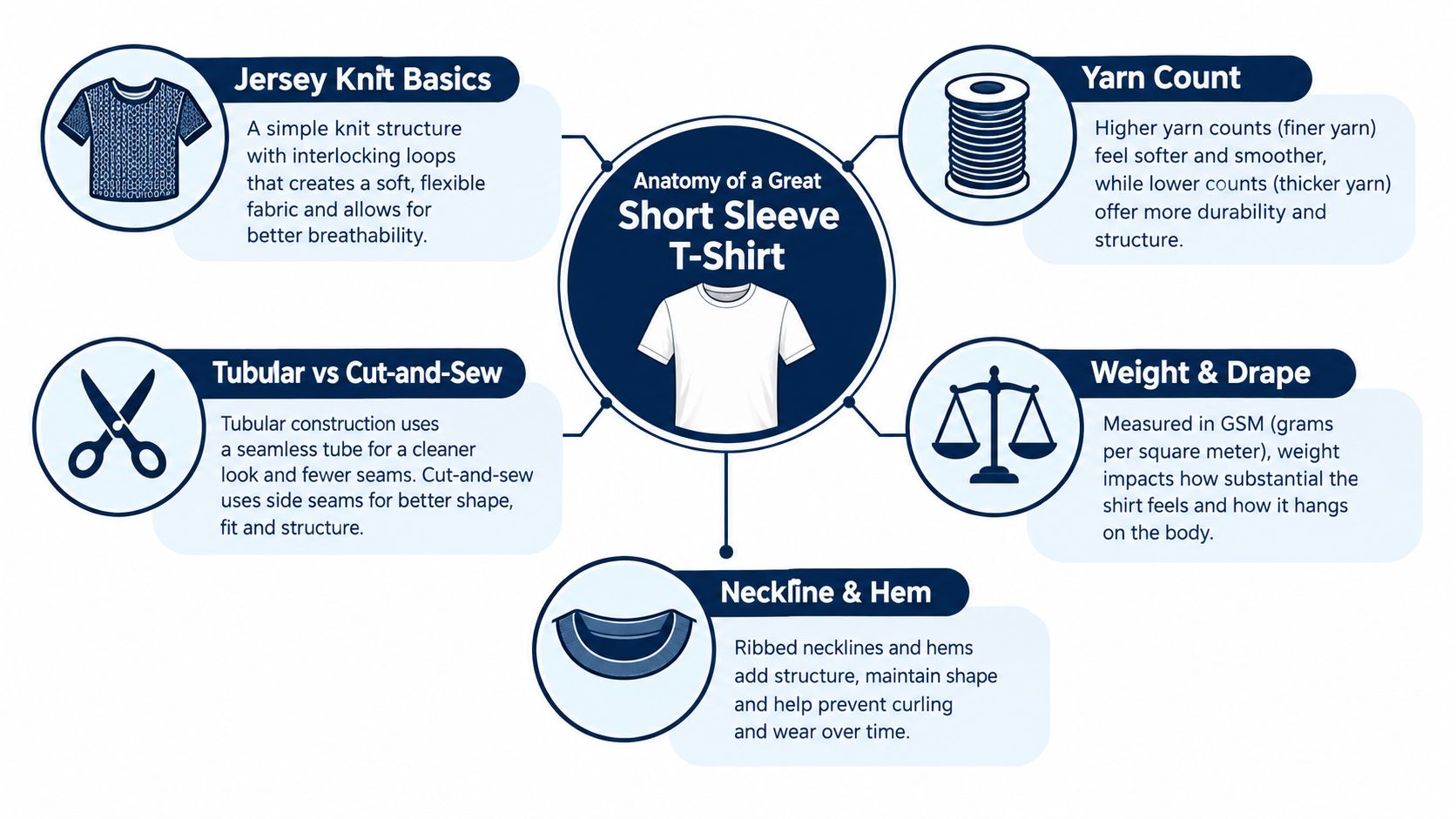
When comparing luxury shirt brands or high-end basics, this guide to luxury shirt construction is a useful reminder to inspect the garment as a system. Fiber is only one ingredient. The knit, yarn, weight, seams, and collar all decide whether the shirt feels like a reliable companion or a disposable souvenir.
Fabric Weight and Blend Choices That Change Everything
Fabric choice is less about declaring a universal winner and more about matching the tee to the day. Pure cotton can feel soft, breathable, and familiar, especially in dry heat. A cotton-poly blend may bring easier movement, faster drying, and better wrinkle resistance. Recycled polyester-spandex jersey can offer stretch and moisture management when your commute, travel day, and evening plans all happen in the same shirt.
The weight question
Summer and hot-climate sourcing guides commonly specify short-sleeve T-shirts at 120 to 160 GSM, a range described in Alibaba's summer T-shirt GSM sourcing guide as a balance between breathability and durability. That range can feel excellent after a beach day, but a very light tee may show more texture, cling more readily, or lose its crispness sooner.
The 150 to 180 GSM middle zone generally suits everyday wear because it gives the fabric enough body to look composed while remaining comfortable under a layer. Go heavier when you want a more structured silhouette for denim, workwear, or a fireside outfit. Just remember that structure can become warmth, and warmth can become a personal negotiation once the room fills up.
The blend question
Cotton is a strong choice for a slow morning, dry weather, and relaxed cabin wear. Cotton-poly works well for travel when you want fewer wrinkles and a quicker reset after washing. Recycled polyester-spandex makes sense for humid conditions, active movement, and days that include walking, transit, and a spontaneous detour.
The trade-offs are real. Synthetics can improve drying and shape retention, but they may hold odor or feel clingy depending on the knit and finish. Cotton can feel cooler and more natural, but it absorbs moisture and may take longer to dry. The right answer depends on whether your priority is breathability, mobility, recovery, or low-maintenance packing.
| Fabric Option | Best For | Trade Off |
|---|---|---|
| Light cotton jersey | Hot, dry days and easy beach layering | Airier hand, but greater risk of transparency or stretching |
| Mid-weight cotton jersey | Everyday wear, denim, and casual dinners | More body, with less airy movement |
| Cotton-poly blend | Travel, commuting, and wrinkle-sensitive plans | Performance improves, but hand feel varies by construction |
| Recycled polyester-spandex jersey | Humidity, movement, quick-dry use, and active social days | Stretch and drying benefits may come with more cling or odor retention |
| Heavy jersey | Structured styling and cooler fireside settings | Reduced drape and a warmer feel |
If you like soft graphic tees, inspect the fabric description instead of trusting the artwork to distract you. This California Cowboy guide to soft graphic tees is a helpful starting point for thinking about softness alongside weight, finish, and everyday wear.
Fit Construction and the Details That Keep Your Tee Crisp
Fit is where a short sleeve T-shirt either earns repeat wear or gets demoted to painting clothes. The key isn't whether the garment says S, M, L, or XL. Letter sizes are shorthand. Measurements tell you how the shirt will occupy space on your body.
Proportion beats the label
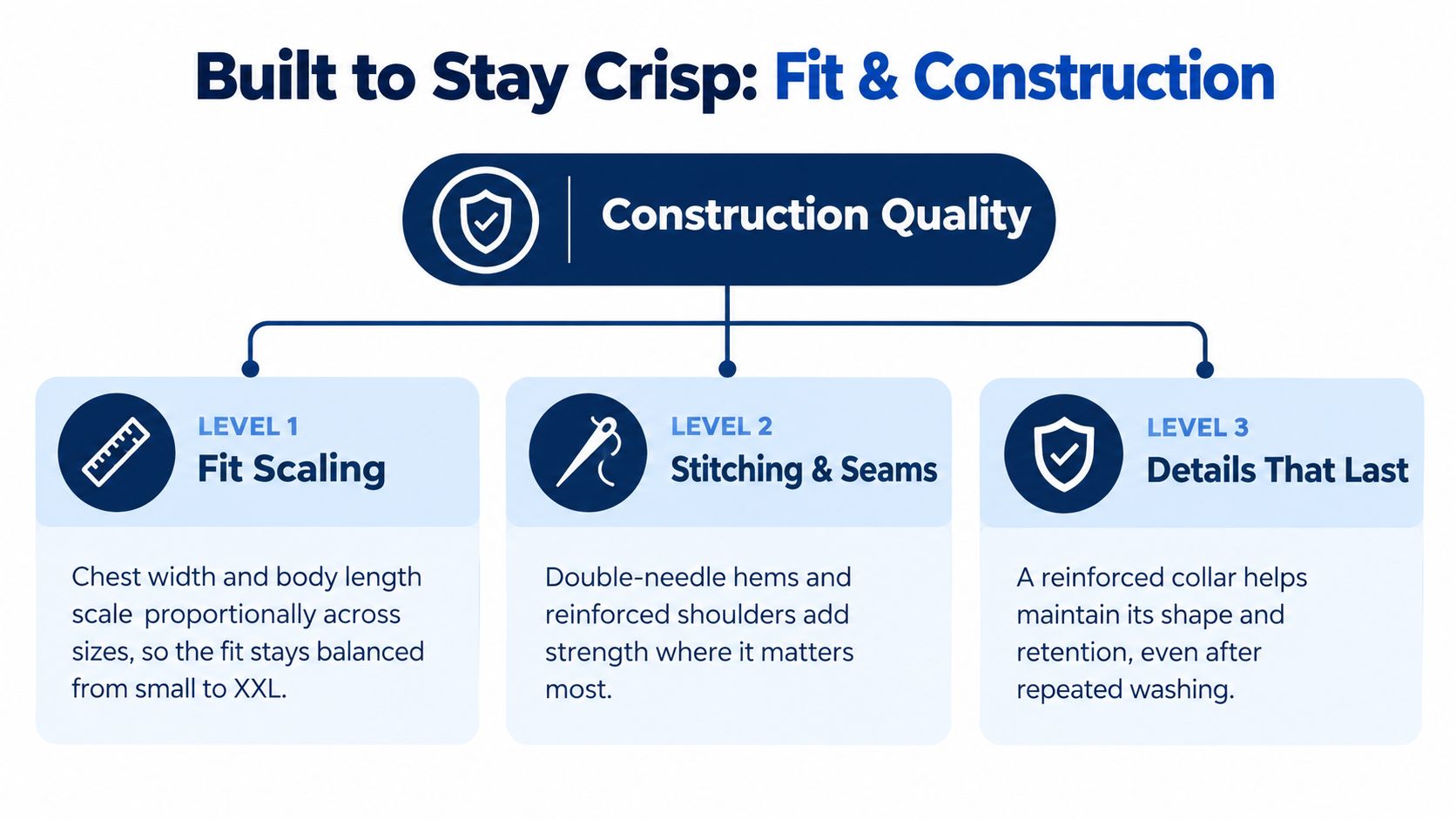
A typical adult tee reference lists an approximate chest width of 18 inches and body length of 27 to 28 inches for S, 20 inches and 28 to 29 inches for M, 22 inches and 29 to 30 inches for L, and 24 inches and 30 to 31 inches for XL. Those dimensions come from DTF Database's T-shirt measurement guide. Treat them as reference points, not universal law, because brands measure garments differently.
Modern unisex charts often connect letters to body chest ranges, including XS at 32 to 34 inches, S at 35 to 37 inches, M at 38 to 41 inches, L at 42 to 45 inches, XL at 46 to 49 inches, and 2XL at 50 to 53 inches, as shown in Your Merch Factory's size guide. Measure a tee you already love, then compare garment dimensions rather than guessing from your usual label.
A Quiksilver men's short-sleeve chart shows sleeve lengths increasing in half-inch steps, from 7 inches for S through 9.5 inches for XXXL. Quiksilver's shirt sizing resource illustrates why sleeve proportion matters. A sleeve that ends at the fullest part of the upper arm can feel tighter and draw more attention than one with a little room and a cleaner angle.
Construction reveals future behavior
Mass-market tees often use single-needle lockstitch construction at about 12 to 14 stitches per inch, while higher-end tees commonly use coverstitch hems and sleeve openings. Technical knit-tee guidance from Handmadelytics cites coverstitch recovery of about 30% greater after 10,000 stretch cycles than basic stitching. That matters at the shoulder and sleeve opening, where you pull the shirt into place again and again.
Collar recovery deserves its own inspection. Neck ribs often include 2% to 5% elastane filaments, a detail discussed in The Guardian's analysis of “bacon neck” T-shirts. The elastic content helps the collar return toward shape, but the rib structure, seam attachment, fabric recovery, and wash care still have to cooperate.
For a practical way to compare chest, length, sleeve, and shoulder dimensions before buying, use this shirt measurement guide from Custom Mark. Then see how to measure for a shirt before ordering a fit that needs to work from the beach parking lot to the bar.
When to Wear Your Short Sleeve T Shirt From Everyday to Après
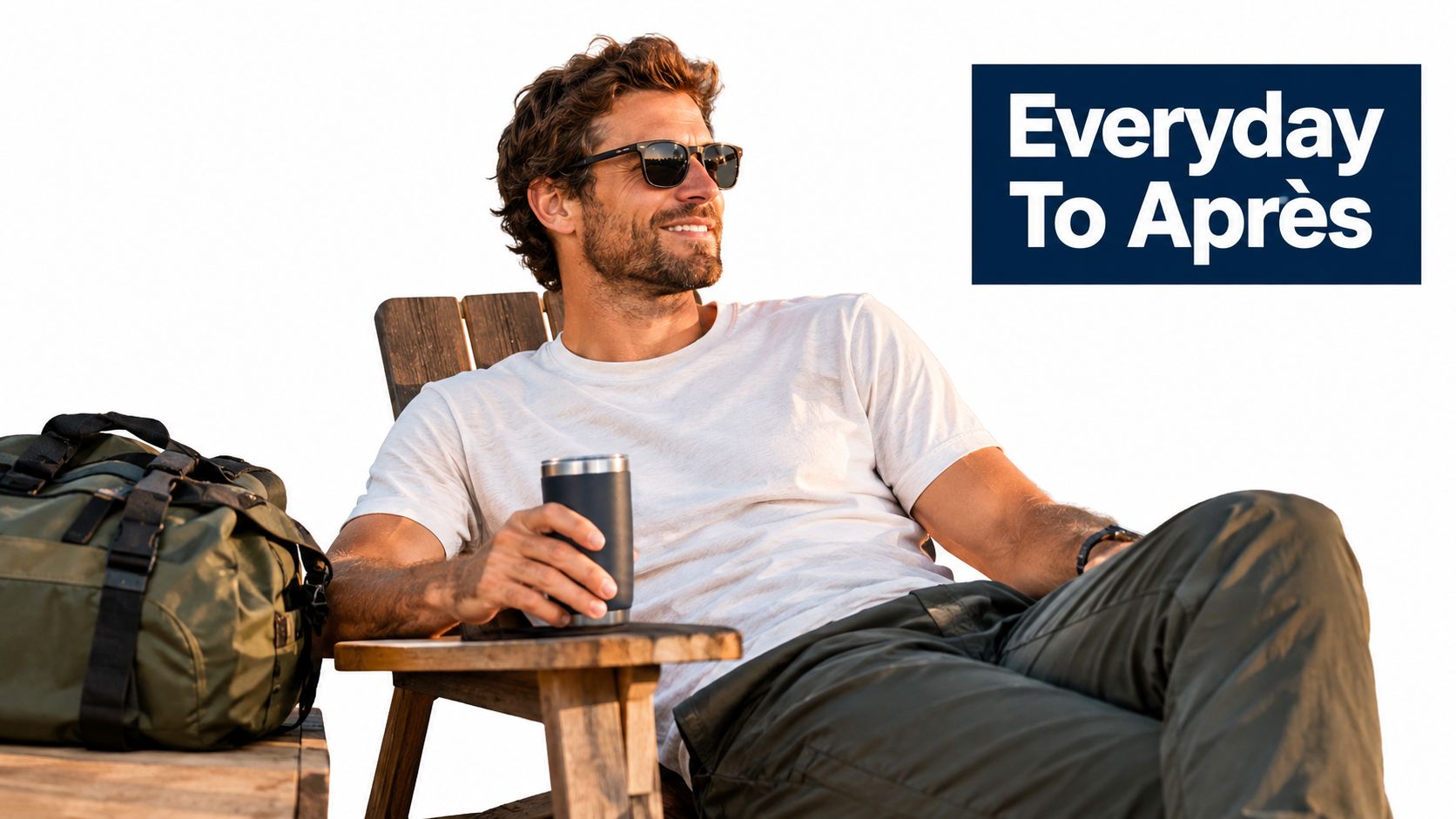
The best short sleeve T-shirt earns its keep during the transition. At noon, it may be your only layer while you walk from the water to lunch. By evening, it becomes the quiet foundation under a flannel, robe, or jacket while everyone gathers around a fire and argues about the proper way to open a bottle.
For the drive home from the beach, choose a fabric that doesn't cling once your skin cools. A light or mid-weight jersey works well beneath an open terry-lined shirt, especially when you want post-surf comfort without looking like you've just escaped a locker room. Keep the fit relaxed through the sleeve and torso, but not so loose that the shirt collapses under a seat belt.
On a travel day, a cotton-poly or recycled polyester-spandex blend can be more forgiving. It moves through a crowded terminal, dries faster after a warm walk, and resists the rumpled look that says your bag won the argument. For an alpine weekend, a mid-weight tee gives you a smooth base under High Sierra gear and luxury thermal layers, then feels natural alone when the cabin heats up.
Social Spec: The useful tee keeps essentials close without turning your outfit into a tactical diagram. Look for a clean pocket, a sunglasses loop, or discreet storage that lets you stay hands-free while you holster your tech and join the conversation.
The first drink after the lifts close calls for a tee with enough body to sit neatly under an après-ski shirt. In a warm cabin, breathable cotton may feel more inviting. Around a cold firepit, a structured jersey gives the outfit visual weight and makes the layer above look deliberate rather than borrowed from a lost-and-found bin.
Your morning coffee on the cabin deck is different again. Softness matters, but so does recovery at the collar and hem because lounging quickly turns into a grocery run, a scenic drive, or an unplanned hello with people you want to see.
How to Style and Layer a Short Sleeve T Shirt Like a California Cowboy
Styling starts with proportion. A short sleeve T-shirt should create a clean base, not compete with every layer above it. Choose one visual anchor, then let texture do the interesting work.
Coastal and post-surf
Pair a light or mid-weight tee with relaxed shorts, worn-in denim, or drawstring trousers. Add a terry-lined shirt when the air turns cool after sunset. Keep the palette sun-faded: chalk, washed blue, olive, sand, or a warm brown. The effect should feel California casual, not like you've joined a themed resort.
A tee under a robe can look surprisingly polished when the neckline sits flat and the hem doesn't bunch. La Sirena and El Garibaldi are robe options for beach days, cabin weekends, and fireside lounging, while a simple hat adds shape around the face. Leave enough contrast between the tee and robe that the layers read clearly from across a patio.
Alpine and fireside
For après-ski style, build from the base outward. Start with a mid-weight tee, add a thermal layer if needed, then finish with a High Sierra flannel or jacket. High Sierra flannels bring warmth and texture without requiring a full costume change after the mountain.
Color works best when it feels collected rather than coordinated by committee. A cream tee under a dark flannel gives the face a little light. An olive tee plays nicely with brown, rust, and charcoal. If the outer layer is loud, let the tee be quiet. Your shirt doesn't need to win the parking lot tailgate. It only needs to look like it belongs there.
For visual outfit experimentation, an AI fashion lookbook can help compare proportions and color combinations before you pack. Use it as a sketchbook, not a substitute for checking fabric weight or measuring your favorite tee.
Social and group settings
Bachelor party outfits, wedding robes, and coordinated group gear work better when the base layer stays wearable after the event. A neutral short sleeve tee can unify a group without making everyone look like they were issued the same personality. Add matching hats, custom embroidery, or a shared accent color, then let each person choose the fit that suits them.
For more layering combinations, this guide to tee shirts for layering keeps the focus on practical proportions. The goal is a socially confident outfit that moves from ceremony to dinner, from beach to bar, and from group photo to the much more important part of the evening.
Choose Quality and Complete the Look
A smart short sleeve T-shirt purchase starts with five checks. Ask for GSM, yarn count, knit type, stitching details, and neckline construction. If the product description only says “premium cotton” and then launches into a dramatic speech about your lifestyle, remain calm and request more information.
Check the fabric against the setting. Light jersey suits heat and layering, mid-weight fabric handles everyday wear with more composure, and heavier jersey brings structure for cooler environments. Look at the sleeve opening, shoulder seam, hem, and collar. The shirt should recover after a gentle stretch, not surrender immediately.
Wash care matters. Use a cooler wash when the care label allows, avoid aggressive pulling at the collar, and reshape the neckline while the tee is damp. Drying flat can help preserve proportion, especially when the fabric is lightweight or carries stretch. A collar is not a frisbee. Don't hang the shirt by the neck and then blame the ribbing for the consequences.
The complete look outfit builder
Build the rest of the outfit around the tee's job:
- Coastal base: Short sleeve tee, relaxed shorts, terry-lined shirt, sunglasses, and a hat for the beach-to-bar transition.
- High Sierra base: Mid-weight tee, luxury thermal layer, High Sierra flannel, durable trousers, and a warm cap for cabin wear.
- Fireside base: Structured tee, overshirt or robe, denim, boots, and a koozie that keeps your hands available for the story you're telling.
- Group base: Neutral tees, coordinated hats, custom embroidery, and a hero robe such as El Garibaldi for wedding weekends, bachelor celebrations, or cabin crews.
California Cowboy offers tees, polos, shirts, robes, outerwear, hats, and accessories designed around post-adventure comfort and social living. Join the Vital Few newsletter for first access to product drops, then choose the pieces that help you holster your tech, stay hands-free, and keep the evening moving.
Visit California Cowboy to find short sleeve tees and transition-ready layers built for beach drives, cabin decks, après-ski drinks, and fireside conversations. Pick your base, invite your people, and let the shirt handle the handoff from adventure to life offline.

