


Your board still drips in the back of the truck, your shirt clings with salt, and someone's already asking where you're getting the first drink. That's stylish resort wear in the wild. It's not a fresh outfit waiting in a hotel room. It's what lets you walk straight from water, snow, or trail into good company, holster your tech, and stay warm, dry, and socially confident without missing the moment.
What Stylish Resort Wear Means Beyond the Beach
A salt-stiff shirt dries on a deck rail. Woodsmoke curls from a cabin chimney nearby. Down the road, the first cold drink hits the table after the lifts close, and nobody in the group went back to change.
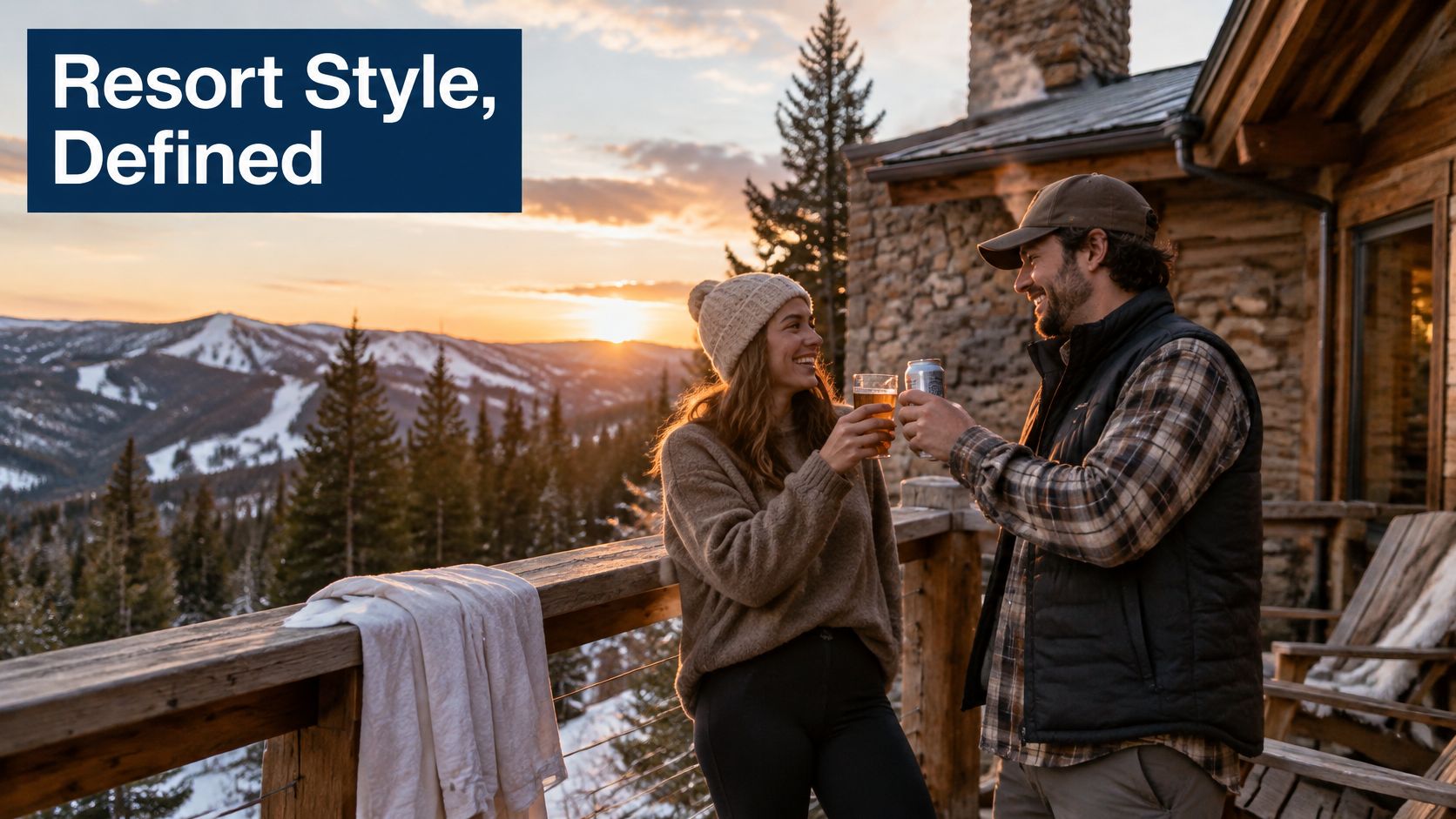
Stylish resort wear is clothing that carries you from activity to social setting without a costume change. It's a compact kit that handles wet, cold, and dark. Three transitions matter most: surf to sand, ski to bar, and hike to cabin. Judge each piece on warmth, dry-back, and social polish together, instead of sorting it into beach, ski, and city bins. If you're checking how that idea differs from standard vacation dress codes, start with the guide to what resort casual means for men.
Why the Definition Matters Now
The category is large enough that you'll find plenty of one-note pieces. According to Growth Market Reports, the global resort-wear market was valued at USD 22.3 billion in 2024 and is projected to reach USD 37.9 billion by 2033. Size doesn't help you pack smarter. Destination thinking does. If you're timing a tropical trip around weather and budget, it helps to check Bali travel seasons and prices before you decide how much warmth you need to pack.
The après pieces in this approach live in the kind of High Sierra flannel category built for fireside and parking lot tailgates, not just the mountain itself. Whether you're traveling solo or planning for a group, each section below ends in a practical decision. Start with the quick-pick table next, so you can see what earns its spot before you read further.
Stylish Resort Wear Essentials and Where Each Piece Works
Read the table by job, not by category. You need one dry-back layer you'll wear wet, one warm layer you'll wear cold, and one social piece that works after dark. Everything else is support staff. When you buy by job, a terry-lined shirt and a flannel don't compete. They cover different hours of the same day.
| Piece | Core fabric | Best moment | Why it earns its spot |
|---|---|---|---|
| Terry-lined shirt | Cotton terry lining with woven outer | Surf-to-sand, beach-to-bar | Pulls water off skin fast |
| Flannel overshirt | Brushed cotton flannel | Après-ski, cabin evenings | Warmth without bulk |
| Lounge robe | Cotton terry or waffle weave | Post-surf, fireside, balcony mornings | Covers the step from pool to patio |
| Linen-cotton camp shirt | Linen-cotton blend | Warm-day dinners, pool bars | Breathable with enough cover for daytime sun |
| Polo | Cotton pique | Daytime drinks, golf, group photos | Collar keeps its shape in humidity |
| Hoodie | Fleece or French terry | Cabin mornings, the drive home | Layers over any shirt |
| Tee | Cotton or modal | Base layer everywhere | Lightest piece, does most of the work |
| Hat | Cotton twill or wool blend | Sun, snow, parking lot tailgates | Covers sun, cold and bad hair |
The Hero Piece Most People Skip
The El Garibaldi Robe covers the step from pool or beach to patio and fireside. That sounds like a narrow job until you count how often it happens on a trip. Morning coffee in it. A towel alternative after a cold plunge. An outer layer over a tee when the fire's going and dinner's casual. If you only add one piece that changes how the whole kit feels, start with the El Garibaldi Robe on its product detail page through the shop's robe collection and check the weight and lining before you buy. A robe that is too heavy becomes luggage. One that's built for the transition becomes the piece you reach for first.
Three buying rules keep you honest. Buy the layer you'll wear wet, not the one that only looks good dry. Buy the layer you'll wear cold, sized to fit over whatever's underneath. Then buy one piece that works after dark, because most resort regrets happen at dinner when everyone's cleaned up except you.
Climate Changes the Fabric Call
Humid coastal towns favor cotton and linen that breathe and dry in moving air. Dry mountain nights favor flannel and fleece that hold heat once the sun drops. A trip that crosses both doesn't need a second wardrobe. It needs one of each, chosen well. Even water days have a clothing logic before you get in, which is why practical resources like these clothing tips for Big Island snorkeling trips are useful for planning what you'll wear on the boat out, not just in the water. Match the piece to the hour you'll wear it, and the starter set at the end gets much easier to pick.
Fabrics and Hidden Features That Do the Heavy Lifting
A shirt's color alone can't tell you how much sun it blocks. Sun protection depends on construction, including the spaces between threads, the fabric's thickness, and how it fits. A dense weave can make a light resort shirt more useful in strong sun than its appearance suggests.
A review of photoprotective clothing identifies fabric structure, thickness, weave tightness, color, dryness, fit, and laundering as factors that affect UPF. Tighter, thicker constructions generally reduce porosity and ultraviolet transmission. Darker shades usually absorb more UV radiation than lighter ones, but weave matters too: fewer gaps between threads means less UV reaches the skin.
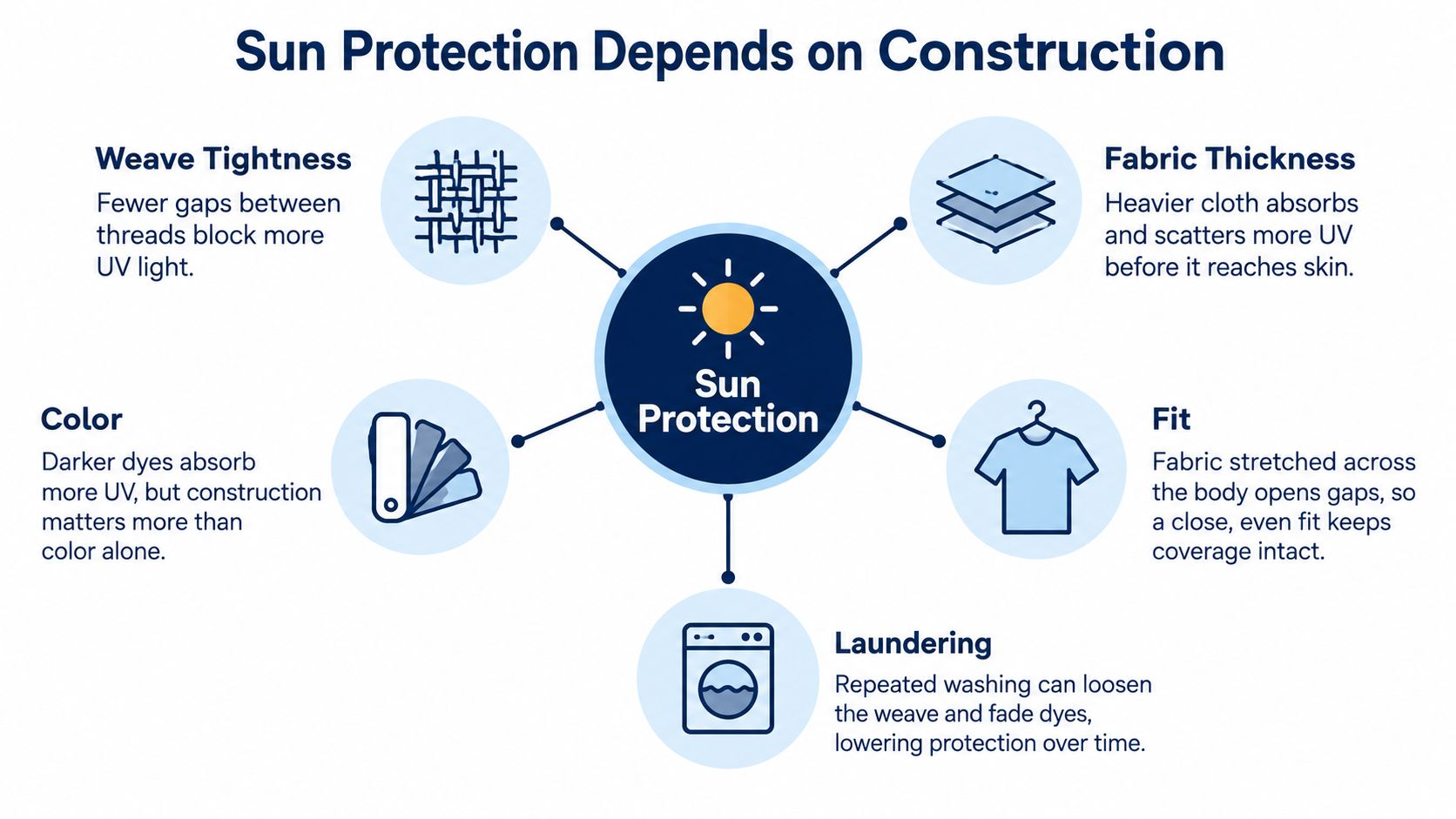
For a beach-to-bar shirt, look for dense linen-cotton or cotton constructions, darker saturated colors, and a relaxed but not overlarge fit. That combination can offer useful coverage without a technical look. A lightweight, pale garment may behave differently when wet: moisture can reduce cotton UPF. Woven cotton intended to remain highly breathable generally reached UPF 15 to 22 in one study cited in the review. Ask brands for UPF measured on the finished, laundered garment, rather than relying on fiber content or how the fabric looks on a hanger.
Practical rule: hold the shirt up to daylight before buying. If pinpoints of light show through the weave across the chest and shoulders, don't count on it for a high-UV afternoon, whatever its color.
The Social Spec Tour From Collar to Hem
For a transition wardrobe, the useful details are the ones that protect small essentials without making a shirt look like technical gear. California Cowboy's description highlights concealed pockets and storage, including a champagne pocket. Other details are worth checking for in resort shirts generally, but shouldn't be assumed to come with every garment.
- Concealed chest pocket: a discreet place for a card or lip balm, without filling wet shorts pockets. California Cowboy's champagne pocket is one example of concealed storage.
- Water-resistant pocket: helps keep a phone or keys separate from damp layers. Check how the pocket is constructed and what level of water resistance it offers before carrying valuables near the water. This guide to water-resistant pocket apparel and how the pockets are built explains the design details to look for.
- Bottle pocket: a feature to look for in shirts intended for social outings, where carrying a drink may be more convenient than keeping a hand occupied.
- Sunglass loop: can keep shades close at hand, but check that it holds them securely and doesn't pull on the collar.
- Bottle opener loop: a small convenience for gatherings. Its usefulness depends on whether you carry an opener.
What to Check Before You Buy
Run a hand inside each pocket and feel for seams that might rub against skin. Stretch the fabric across your knuckles to see whether the weave opens. Then button the shirt, sit down, and reach forward as if taking a drink from a low table. If it pulls, gaps, or twists, the fit is unlikely to improve after a swim.
For a forecast that includes sun, wind, and a cold evening, a dense overshirt with proper shoulder coverage can carry more than one part of the day. Check the High Sierra flannel detail page through the shop for fabric weight and pocket placement, then judge whether it suits the activities and layers you expect to wear.
Terry Lining and the Warmth-Plus-Style Balance
Terry is a sponge built into a shirt. Looped pile pulls water off your skin on contact, which is why a terry-lined shirt feels so good after a cold surf session when a normal button-down would cling and chill you. You throw it on, the loops do the towel's job, and you look dressed instead of wrapped up.
The trade-off is real. The same loops that absorb water also hold it. A heavy terry shirt that felt luxurious at the beach can still be damp at dinner, and now your best layer is the problem. Research summarized in a Bombay Textile Research Association study on terry fabrics found high absorbency and rapid initial uptake, while heavier constructions took longer to dry and showed lower air permeability and slower water spreading. Softness in the shop tells you almost nothing about dry-back at hour three.
The Hybrid Fix
The answer isn't more terry. It's terry only where skin contact is highest. Put the loops in the lining, collar, and upper back, then use a lighter woven shell outside. You keep the warm, towel-like contact where it matters and cut the total water load the garment has to shed. That's the difference between a shirt that's ready for the drive home and one that rides in the wet bag.
Aim for a controlled terry weight. You want enough loop volume to pull moisture off your back and shoulders, but not so much mass that the shirt hangs heavy and stays cool against your skin. If a brand can't tell you anything about weight or drying, assume the shirt was designed for the mirror, not the parking lot. For a deeper look at how that lining should be specified, see the breakdown of terry cloth lined shirts and what high specificity actually means.
Spec Checklist for the Product Page
- Absorbency: does the lining pull water quickly, or does water bead and sit on the surface?
- Drying time: is there any indication of how the garment dries after full wetting?
- Air permeability: a lining that can't breathe will feel clammy once you're warm again.
- Seam strength: wet fabric is heavy fabric, and weak seams fail at the shoulders first.
- Dimensional stability after washing: terry that twists or shrinks unevenly stops layering well.
- Pile retention after repeated washes: loops that pull out leave thin patches exactly where you need absorbency.
Care decides whether those specs survive the season. Wash terry cold, skip fabric softener because it coats the loops and cuts absorbency, and air-dry flat or on a wide hanger so the wet weight doesn't drag the shoulders out of shape. Shake sand out before washing, not after. Sand trapped in the pile acts like grit in every cycle.
A terry layer earns its keep in the second hour, not the first five minutes. Judge it by how it feels at the bar, not how it feels coming out of the water.
When you're ready to compare real options, look at the High Water terry-lined shirt detail page through the shop and run it against the checklist above. If the lining placement, weight, and care instructions are clear, you're looking at a piece built for post-surf comfort and the beach lifestyle apparel job it claims to do.
Outfit Recipes for Après-Ski, Surf-to-Sand and Cabin Mornings
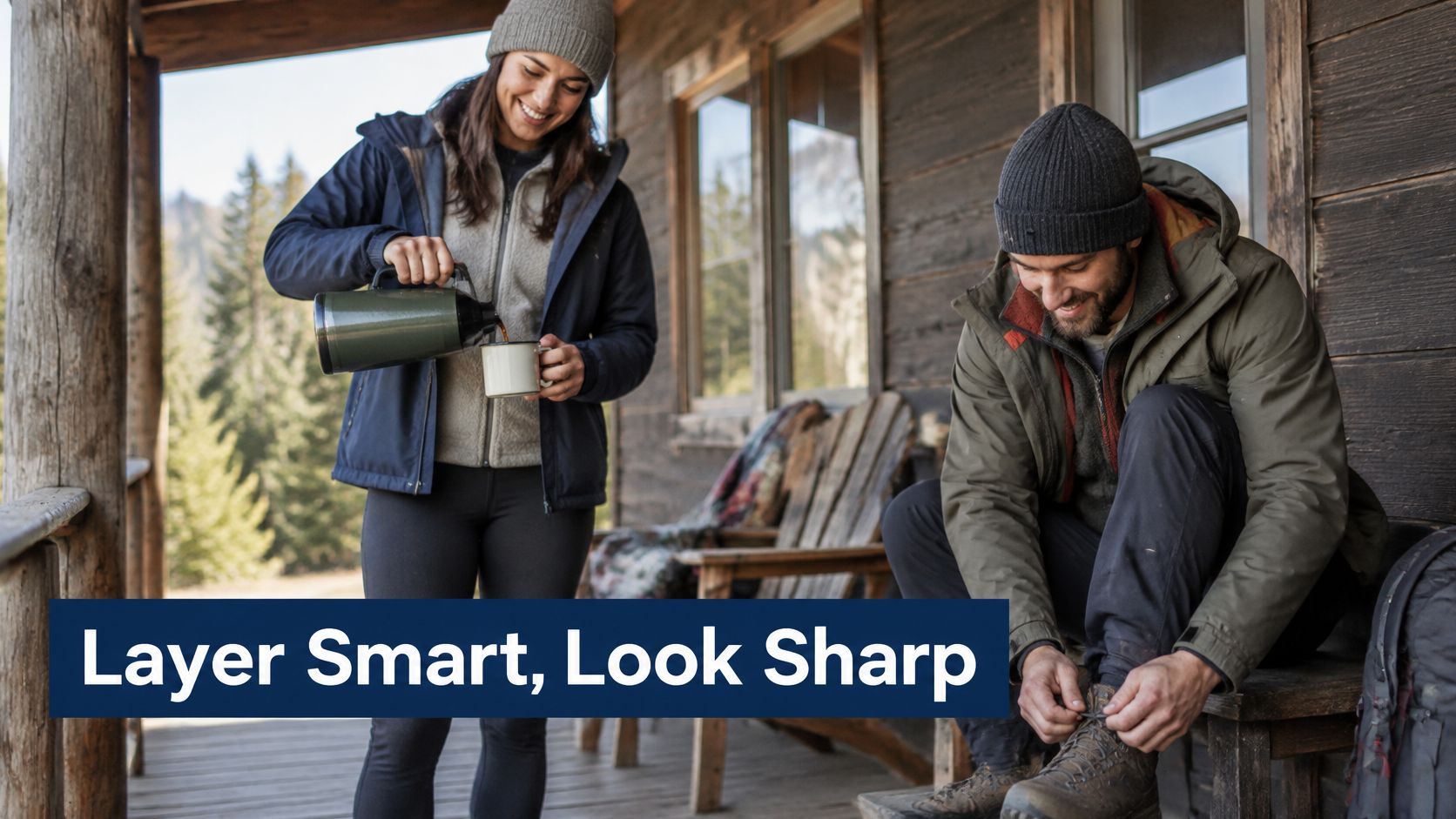
Recipes beat inspiration boards because they answer the only question that matters at 5 p.m. What goes on first, what goes over it, and what finishes it? Every recipe here uses the same logic. A base layer against the skin that wicks or absorbs, a middle layer for warmth, an outer layer for weather and polish, and one accessory that makes it look intentional.
The shoulder season is where this system pays off. Mornings start cold, midday runs warm, and the bar at night is either overheated or blasting air conditioning. Here's how that layering looks once you're out of your boots and into the parking lot scene.
| Scenario | Base layer | Middle layer | Outer or finish | Accessory |
|---|---|---|---|---|
| Après-ski tailgate after lifts close | Tee | Flannel overshirt | Hoodie or insulated overshirt | Beanie and sunglasses on the loop |
| Drive home from the beach | Terry-lined shirt | None | Hoodie over shoulders | Cap and sunglasses on the loop |
| First drink after surf | Tee | Terry-lined shirt | Lounge robe over shoulders | Koozie in hand |
| Morning coffee on the cabin deck | Thermal tee | Flannel overshirt | Lounge robe | Wool beanie |
| Warm dinner on a patio | Linen-cotton camp shirt | None | Unlined overshirt | Sun hat |
| Fireside lounging | Tee | Hoodie | Lounge robe | Monogrammed hat |
Two Recipes Worth Memorizing
The drive home from the beach is where most kits fall apart. You're damp, the car is cold, and you're stopping for food on the way. Terry-lined shirt on first, so it pulls water while you load up. Sunglasses go on the collar loop instead of the dashboard. Hoodie over your shoulders for the air conditioning at the taco stop. You look like you planned it, which, now, you did.
The first drink after the lifts close runs on warmth plus pockets. Tee as the base, flannel overshirt buttoned halfway, hat on because helmet hair is nobody's best look. Phone goes in the dry pocket and stays there. That's the whole holster your tech idea in practice. You're present for the tailgate, not scrolling through photos of it while it's happening around you.
The Swap Rule and the Indoor Problem
When it gets colder, add a layer rather than a heavier base. A heavier base traps you once you're indoors. An added layer comes off and goes over your shoulders or around your waist. This is the difference between luxury thermal layers used well and one bulky piece doing a job it can't adjust to. Après-ski style and good cabin wear both depend on that flexibility.
The indoor-outdoor edge case trips people up on warm trips, too. You're dressed for a humid patio, then the bar inside is freezing. Swap the robe for an unlined overshirt in that case. Same coverage, half the insulation, and it reads more California casual at a table than terry does. Keep the camp shirt underneath and you haven't changed outfits. You've changed one layer.
Watch how quickly a morning on the deck turns into a full day outside, because that's exactly the transition your layers need to survive.
Notice that none of these recipes needs a shoe change, a bag change, or a trip back to the room. That's the test. If a combination only works in one location, it's an outfit. If it works across three, it's a kit. When you need the layer that makes half these recipes work in cold air, check the hoodie and fleece layer detail pages through the shop and pick the weight that fits over a flannel without binding at the shoulders.
Group Outfitting That Looks Coordinated, Not Costumed
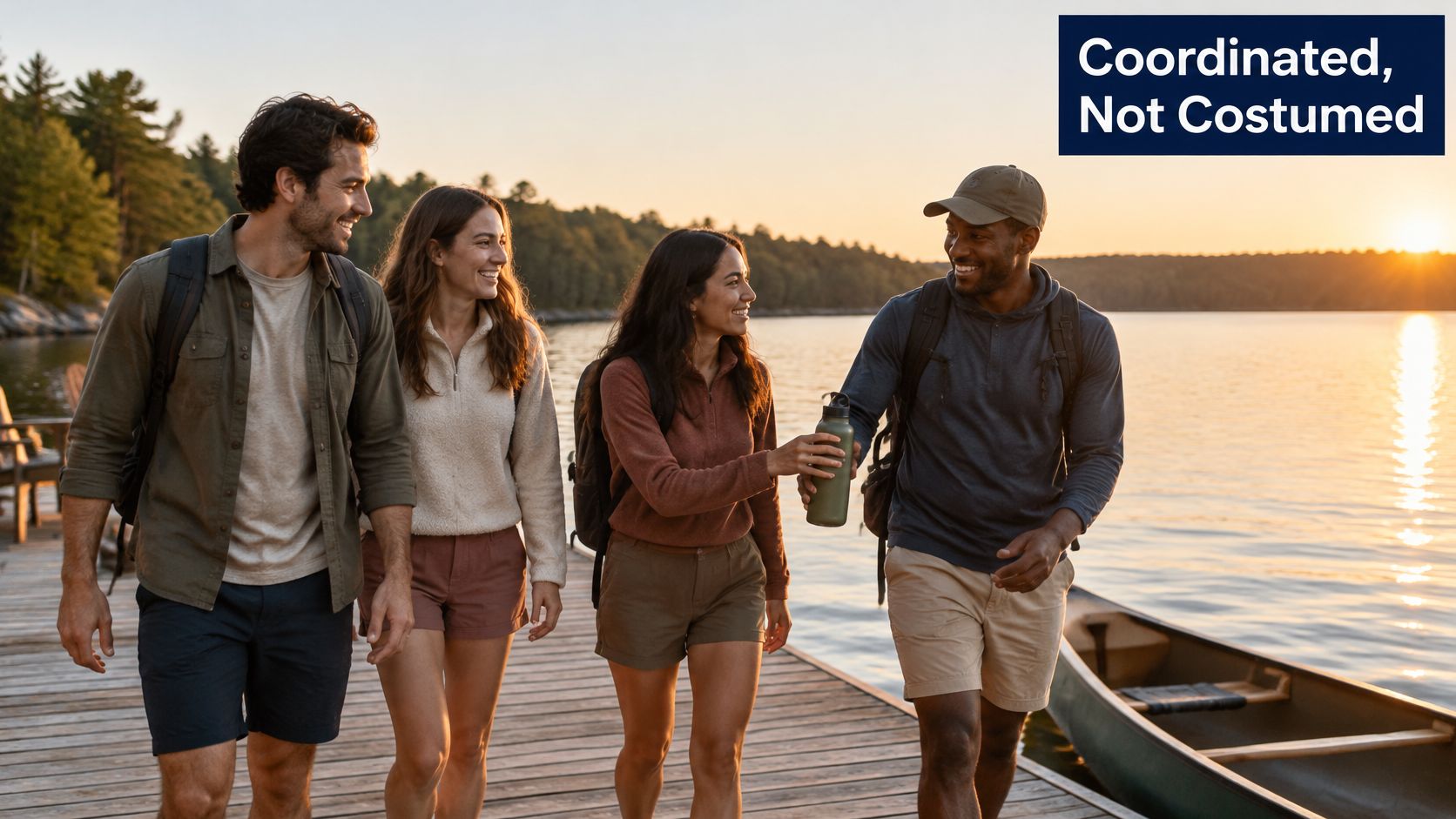
The group is heading from the beach to dinner, and someone proposes matching shirts for every stop. That can leave people with a costume they'll never wear again, plus a bill some guests would rather avoid. Bachelor party outfit ideas work better when the group shares a palette and each person chooses pieces that suit the trip.
Cost is a real constraint. In the 2023 OnePoll survey of 2,000 U.S. adults, 38% had been invited to a bachelor or bachelorette party they could not afford to attend. Among people who had attended one in the previous five years, 39% said required outfits or accessories cost more than expected. A novelty shirt that gets worn once is an easy expense to regret.
Trip length matters, too. WeddingWire's study of more than 1,000 recent attendees found over 60% of bachelor parties lasted at least two days, while one in three lasted three days or more. Hotels and resorts were preferred by 44% of respondents, compared with 17% for rental houses. For a multi-day resort trip, plan for travel, daytime activities, dinner, and late nights. A single printed tee won't carry a group through changing conditions; coordinate pieces that can dry back, add warmth, and still look right at the table.
The Palette and Hero Piece System
- Agree on one color family: navy, sand, rust, or forest. Everyone chooses within it, so the group reads as coordinated without wearing identical outfits.
- Give each person one hero piece: one person might wear a flannel, another a robe, and a third a terry-lined shirt. Coordinated group gear works when the palette aligns and the silhouettes vary.
- Mix flannel, terry, and tees: different textures create a shared look without relying on identical logos. Choose each piece for the shift from outdoor activity to a social setting, not just for the group photo.
- Choose one standout print: save it for the person of honor or a photo moment rather than putting the whole group in prints at dinner.
For practical examples of group matching outfits that stay coordinated, keep the shared palette and let people choose the pieces they'll wear again.
Robes, Gifting, and the Piece That Survives the Weekend
Wedding robes can make a more useful keepsake than a slogan shirt on the unique groomsmen gifts list. A monogrammed or embroidered robe works for the wedding morning, a later cabin trip, and ordinary time at home. It photographs well without asking anyone to wear a slogan, and its relaxed fit avoids some of the sizing complications of fitted shirts across a group with different builds.
Set the budget before choosing the shared piece. Let everyone use base layers they already own, then agree on one hero item and skip matching accessories. The group stays visually connected without asking everyone to buy a full outfit for one weekend.
For a lasting gift, look at the custom monogrammed robe product page through the shop and check embroidery placement and turnaround before committing the group. Order early, since personalization and a tight wedding timeline are a poor combination.
Packing Light Without Losing the Layers
Pack two kits, not one bag. Your dry kit holds everything for the social hours. Your wet bag holds towels, swimsuits, and damp terry, sealed away from anything you plan to wear to dinner. That single separation decision saves more outfits than any packing cube system ever will.
| Trip length | Tops | Bottoms | Warm layers | Robes and extras |
|---|---|---|---|---|
| Weekend, 2 nights | 3 tops | 2 bottoms | 1 flannel and 1 hoodie | 1 lounge robe and 1 wet bag |
| Five days | 5 tops | 3 bottoms | 2 flannels or fleece | 1 lounge robe, 1 wet bag and 1 hat |
| Week or longer | 7 tops | 4 bottoms | 2 warm layers and 1 packable shell | 1 lounge robe, 2 wet bags and 1 spare hat |
Pack for the coldest night, not the hottest day. Warmth is harder to improvise than a short sleeve. Count one warm layer for every cold evening on the itinerary, then check whether your layers stack. A flannel under a hoodie under a robe is three outfits' worth of range from three pieces. If you're building a bag around that principle, the notes on travel friendly clothing and what actually earns space are worth a look before you zip up.
Pro Tips That Actually Save Space
- Roll terry rather than fold it: the loops compress better and come out with fewer hard creases.
- Wear the bulkiest layer on the plane: your flannel or hoodie is free luggage and a decent blanket.
- Pack darker colors for travel days: coffee, sunscreen, and road food all leave evidence.
- Keep one zip-top bag inside the wet bag: small damp items like socks stay contained instead of migrating.
Multi-climate trips scare people into overpacking. If you're moving from coast to mountain in one trip, add one packable shell and one flannel. Nothing more is needed. The shell handles wind and light rain over everything you already packed, and the flannel covers the temperature drop. A second full wardrobe is just a heavier bag making the same trip you are.
Complete the Look and Start Your Resort Kit
Finishing touches do disproportionate work in stylish resort wear. A hat handles sun at the beach and cold ears at the tailgate. A tee in a second color buys you a clean base layer for day two. A koozie keeps the first drink cold and your hand dry, sunglasses live on the collar loop instead of in the sand, and a monogrammed robe add-on turns a group order into something people keep.
Water people already think this way about gear. Browsing a well-stocked dive outfitter like the Kona Honu Divers shop is a good reminder that the small, purpose-built extras are usually what get used on every single outing. Clothing works the same way. The loop, the pocket, and the hat outperform the statement piece you wear twice.
Pick One Anchor Piece
Here's the single decision. A skier starts with the flannel overshirt. A surfer starts with the terry-lined shirt. Anyone who does both starts with the lounge robe, because it covers more transitions than either. One anchor piece this week beats a full cart of maybe-pieces you'll second-guess at checkout. Choose the one you'll wear first after the activity, since that's the moment your current kit fails you.
Then join the Vital Few newsletter for first access to product drops and new styling guides, so the next piece you add is the one you actually need. Holster your tech, get to the bar, and make a real connection with the people standing next to you.
California Cowboy designs shirts, robes, and layers built for the moments after the activity, with terry linings, concealed pockets, and warmth you can wear straight into the social hours. If you're building a resort kit that moves from surf to bar to cabin without a costume change, visit California Cowboy to find your anchor piece and join the Vital Few for first access to new drops.

