


The lift line has gone quiet, snow crunches under your boots, and the parking lot smells like woodsmoke, melted wax, and someone taking tailgating far too seriously. At the coast, the soundtrack changes to salt water dripping from your hair, cold sand underfoot, and the first hiss of a drink opening near the fire pit. The activity is over. The good part is just getting started.
A sweater button up earns its keep in that narrow window between adventure and actual plans. It gives you warmth without trapping you in expedition gear, polish without making you look like you came from a board meeting, and enough utility to let you holster your tech while you find the next conversation. This is Social Technical apparel for life offline, where serendipitous encounters matter more than another notification.
The Vibe Check for Post Adventure Transitions
The transition after an outdoor activity has its own dress code. You've spent the day moving, sweating, carrying equipment, and tolerating weather that would make an indoor person reach for a blanket and a strong opinion. Then someone suggests a drink, a snack, or a suspiciously ambitious parking lot meal. Your technical shell suddenly feels too serious, while a basic tee leaves you shivering before the first round arrives.
A sweater button up solves the social problem cleanly. The front opening makes it easy to adjust as the temperature shifts, and the knit texture reads as relaxed rather than underdressed. Wear it over a tee on the drive home from the beach, over a thermal layer after the lifts close, or open at the cabin table while coffee does its slow and noble work.
The right piece should make you feel socially confident, not costume-ready. It needs to move with you, hold the small essentials you'd rather not clutch all evening, and look credible beside a ski rack, a surfboard, or a firewood pile.
Practical rule: If the garment only works during the activity, it isn't post-adventure clothing. The test starts when the gear comes off.
From high output to low stakes
A good post-adventure layer bridges two worlds. It carries enough structure to look intentional, but it doesn't demand a perfect tuck, polished footwear, or a solemn explanation of your fabric choices. That's why the button-front knit has become such a dependable après-ski style and coastal layering piece.
For a broader view of dressing for real-world connection, explore Life Offline lifestyle gear. The useful principle is simple: your clothes should help you participate in the room, not turn you into a mobile storage problem.
The parking lot tailgate test
Start with a clean base layer, add the sweater button up, and keep the rest of the outfit straightforward. Dark denim, durable trousers, or relaxed cords work better than anything overly technical. Add a beanie or structured hat, then stop. You're going to a drink, not accepting an award for Most Prepared Person at the Trailhead.
For a colder mountain setting, a thermal-lined button-up such as the High Sierra Shirt makes sense as an après-ski layer. For a warmer coastal transition, a lighter knit or terry-lined shirt leaves room for movement and lets you move from post-surf comfort to a bar without looking like you've misplaced the beach.
A Century of Reinvention in Knitwear
A sweater button up can handle the drive home from the mountain, then hold its own at the first drink afterward. The cardigan is the established historical match for that job. Its name comes from James Thomas Brudenell, the seventh Earl of Cardigan, a British Army officer associated with the Crimean War, which lasted from 1853 to 1856. Historical accounts place the garment's rise in the mid-19th century, when a front-opening knit offered warmth without restricting movement. The cardigan's documented history) explains why that silhouette still earns space in a working wardrobe.
Workers and sailors valued the design because it could be removed quickly and worn over other clothing. By the late 19th century, it had moved into civilian life. The cardigan was already more than weather protection. It had become a flexible social uniform, which is a better origin story than “someone needed a cute sweater.”
Utility became identity
The button-front knit gained cultural status through education and youth style. The letterman sweater tradition began at Harvard in the late 19th century and took off during the 1920s, turning knitwear into a visible marker of achievement, belonging, and identity. That shift gave the sweater button up a job beyond insulation. It could show where you belonged before you said a word.
Coco Chanel helped popularize the cardigan for women by the 1920s, pushing it from military-inspired knitwear into mainstream fashion. The silhouette kept changing without losing its central idea. Wartime versions, fitted mid-century styles, and the craft revival of the 1970s made the same case in different accents: a buttoned knit layer belongs wherever people gather.
A chunky knit carries the same emotional charge at home. For a companion piece on tactile comfort and relaxed interiors, see this chunky blanket for cozy living. Texture signals warmth, hospitality, and an invitation to stay for another drink. That is the social side of the garment, and it matters once the technical gear is parked by the door.
Why the shape survives
Fashion histories place the cardigan in every decade since the 1930s, from wartime use in the 1940s to fitted styles in the 1950s and 1960s, followed by renewed handcraft interest in the 1970s. See a decade-by-decade account of cardigan silhouettes since the 1930s. Its durability comes from function, not nostalgia.
A sweater button up adapts to the setting. Yarn, collar shape, buttons, and fit can make it collegiate, rugged, coastal, polished, or deliberately louche. The modern West Coast version keeps the old formula and treats it as Social Technical apparel: a layer built for movement, conversation, and the unplanned stop. Choose one with enough structure to look intentional, useful details that keep small essentials close, and a texture that invites contact without looking precious.
For more context on durable clothing and identity, see heritage brand clothing. The strongest pieces earn their place through actual use, then stay ready for the next round of offline living.
Decoding Knit Structure and Fabric Longevity
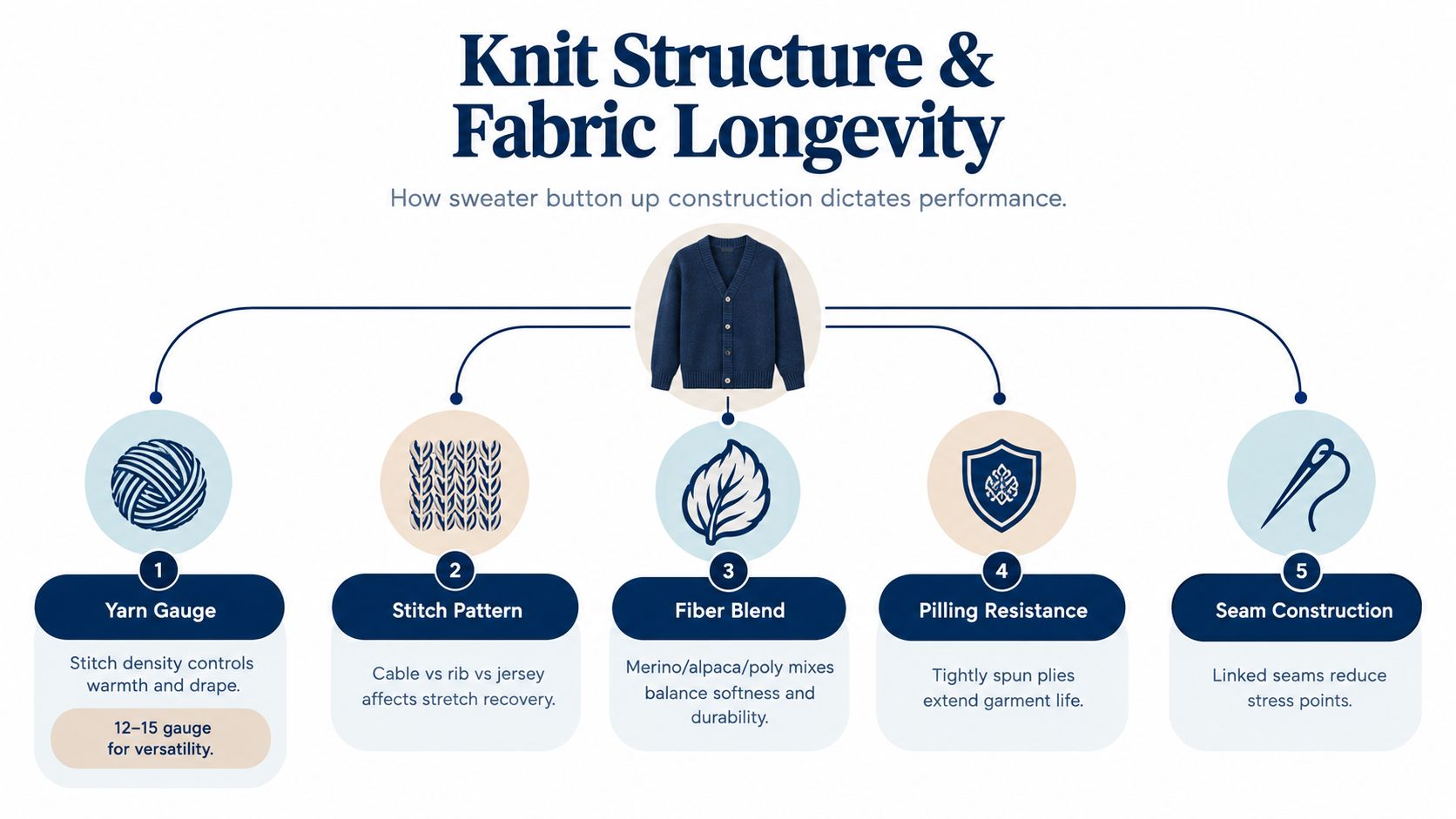
A sweater button up earns its place after the adventure through construction, not fiber labels alone. A beautiful yarn can still wear poorly if the knit lets surface fibers move freely. Loop density, yarn twist, fiber length, yarn hairiness, cover factor, and fabric relaxation all shape how the garment handles friction and washing, as explained in technical guidance on pilling and knit structure.
Denser loop formation and tighter fabric cover usually restrict fiber migration, which helps reduce pilling. The tradeoff is drape and stretch. A tight knit can look sharper and hold up better against the realities of post-adventure life, while a loose, soft structure feels excellent on the cabin sofa but catches more abuse from seat belts, backpacks, jackets, and rough picnic benches.
Read the surface, not just the label
Inspect the garment before buying. The surface should feel controlled rather than excessively fuzzy, and the fabric should recover after gentle handling instead of staying stretched or distorted. Check the underarm, placket, cuffs, and shoulder line first. Those areas meet friction before the rest of the shirt.
Use this checklist:
- Surface stability: Excessive looseness encourages fiber migration and visible pills.
- Loop consistency: Uneven loops can signal less controlled construction.
- Placket behavior: The button front should lie flat without pulling between closures.
- Seam stress: Shoulder and side seams should sit smoothly on the body.
- Recovery: Cuffs and ribbed edges should move back toward their original shape after use.
Washing changes the equation
Knits rely on interlocking loops, so they are less dimensionally stable than woven fabrics. Relaxation shrinkage can appear after washing or steaming, even when the garment looked perfect on the rack. Industry testing commonly evaluates pilling with ISO 12945-2 and wash or shrink behavior with ISO 6330. Published knitwear guidance also discusses acceptable shrinkage targets, often in the low single digits, and explains why yarn selection and process control matter in this knitwear manufacturing guidance.
Yarn count and twist can shift shrinkage and pilling resistance. Coarser yarns may improve bursting strength while changing lengthwise and widthwise shrinkage behavior. Durability has several moving parts: a strong garment can still change shape, while a soft garment can still need careful friction management. Choose construction for the life you will give the shirt, including the drive home, the bar stop, and the next round of offline living.
For a lighter, feminine interpretation, review the White Pointelle Cardigan. Its styling logic differs from a dense mountain layer, but the same inspection principles apply. A sweater button up should support connection after the gear comes off, with a surface that looks good and survives being used.
Styling Blueprints for Mountain and Coastal Scenes
The lift is closed, your gloves are damp, and the group wants one drink before the drive home. That is the sweater button up's real assignment. It should move from outdoor gear to social uniform without looking like you forgot to change. In the High Sierra, choose texture, insulation, and storage. Along the coast, prioritize breathability, easy removal, and a shape that can handle salt air. This is Social Technical apparel: clothing engineered for the handoff between adventure and connection.
The mountain blueprint
For an après-ski tailgate or cabin arrival, start with a fitted thermal base layer. Add a denser sweater button up or thermal-lined shirt, then finish with weather-resistant trousers and boots that can handle slush. Keep the palette controlled: charcoal with cream, olive with tobacco, or navy with faded denim. The outfit should look ready for a drink, not another black diamond.
Give the shirt room for movement without creating a balloon under your jacket. Wear it open beside the car or inside the lodge. Button it higher for the drive home when the temperature drops and someone insists on keeping the window cracked. Hidden storage earns its keep here too. A secure pocket for your phone, keys, or sunglasses leaves both hands available for tailgate duties and questionable high fives.
What to pack for cabin wear:
- A clean base layer: It gives the sweater a fresh start after a day outside.
- A structured hat: It handles flattened hair and adds shape to soft knitwear.
- Durable trousers: Denim, cords, or sturdy casual pants keep the outfit grounded.
- A compact layer: Bring a shell or vest for the walk from the lot to the fire.
- One unapologetically comfortable piece: The drive home isn't a runway, thankfully.
Use this men's après-ski outfit guide for more mountain-specific formulas. Choose pieces that can handle the cold walk, the warm cabin, and the first round without a full outfit change.
The coastal blueprint
A beach-to-bar outfit needs less insulation and more airflow. Start with a tee or tank, then add a breathable sweater button up, terry-lined shirt, or relaxed cardigan. Choose shorts, easy trousers, or worn-in denim for the evening. Roll the sleeves once. Six turns looks fussy, even after a good surf.
A towel-lined button-up works especially well after the water, offering post-surf comfort while moving cleanly into casual social territory. Keep footwear simple, sunglasses accessible, and the top layer open until the wind picks up. For a beach fire, bring a heavier overshirt instead of forcing one bulky sweater to handle every condition.
Social Spec: A dry pocket, beer pocket, or sunglasses loop turns ordinary layering into useful social equipment. Keep your phone protected, carry a drink without gripping it all night, and stay hands-free for the handshake, high five, or questionable guitar performance.
The best feature is the one you forget until you need it. That quiet utility lets the garment support the gathering without demanding attention. Social Technical style should disappear into the moment, then prove its value at exactly the right time.
Matching Fabric Weight to Your Social Climate
The warmest sweater isn't automatically the smartest sweater. A dense wool blend can be excellent after a snowy day, but it becomes a personal sauna during a coastal concert or a crowded bar with a fire pit nearby. Luxury is choosing the layer that matches your climate, activity level, and next destination.
Mountain conditions need controlled warmth
Cold-weather cabin wear benefits from a denser structure and substantial insulation. Wool offers warmth and can feel at home in a mountain wardrobe, while a thermal lining adds another barrier between you and the seat of a cold car. The goal isn't maximum bulk. It's enough warmth to handle the walk from the lift area to the tailgate without forcing you to strip down once the drinks appear.
A thicker layer also makes sense when your outfit needs to work as outerwear for short stretches. Choose a shape that sits cleanly over a base layer and under a shell. If the placket strains beneath your jacket, the garment is too bulky for the system, no matter how handsome it looked in the fitting room.
Coastal conditions reward breathability
Cotton, wool, and synthetic blends each create different tradeoffs in breathability, moisture handling, softness, and layering potential. Thinner versions generally sit more comfortably under jackets, while denser versions suit colder conditions, as reflected in recent knitwear trend guidance. That distinction matters when your day moves from water to pavement to dinner.
Cotton can feel comfortable and familiar in mild weather. Wool can provide useful warmth when the air turns sharp. Synthetic blends may add durability and moisture-management properties, but the hand feel and breathability depend on the specific construction. Treat the fiber label as a clue, not a verdict.
Match the garment to the evening
Use this quick audit before buying:
- Cold mountain drive: Choose a denser knit, thermal lining, or wool-rich structure.
- Cabin deck at sunrise: Favor warmth with enough softness for sitting and layering.
- Post-surf bar stop: Choose a lighter, breathable layer that can open fully.
- Beach fire pit: Add texture, but keep an extra shell nearby for wind.
- Travel day: Pick a layer that resists awkward bulk under a jacket.
The thermal layering guide for ski trips is useful if your wardrobe leans alpine. The central rule remains blunt: buy for the climate you inhabit, not the coldest fantasy version of your vacation.
The Anatomy of Social Technical Apparel
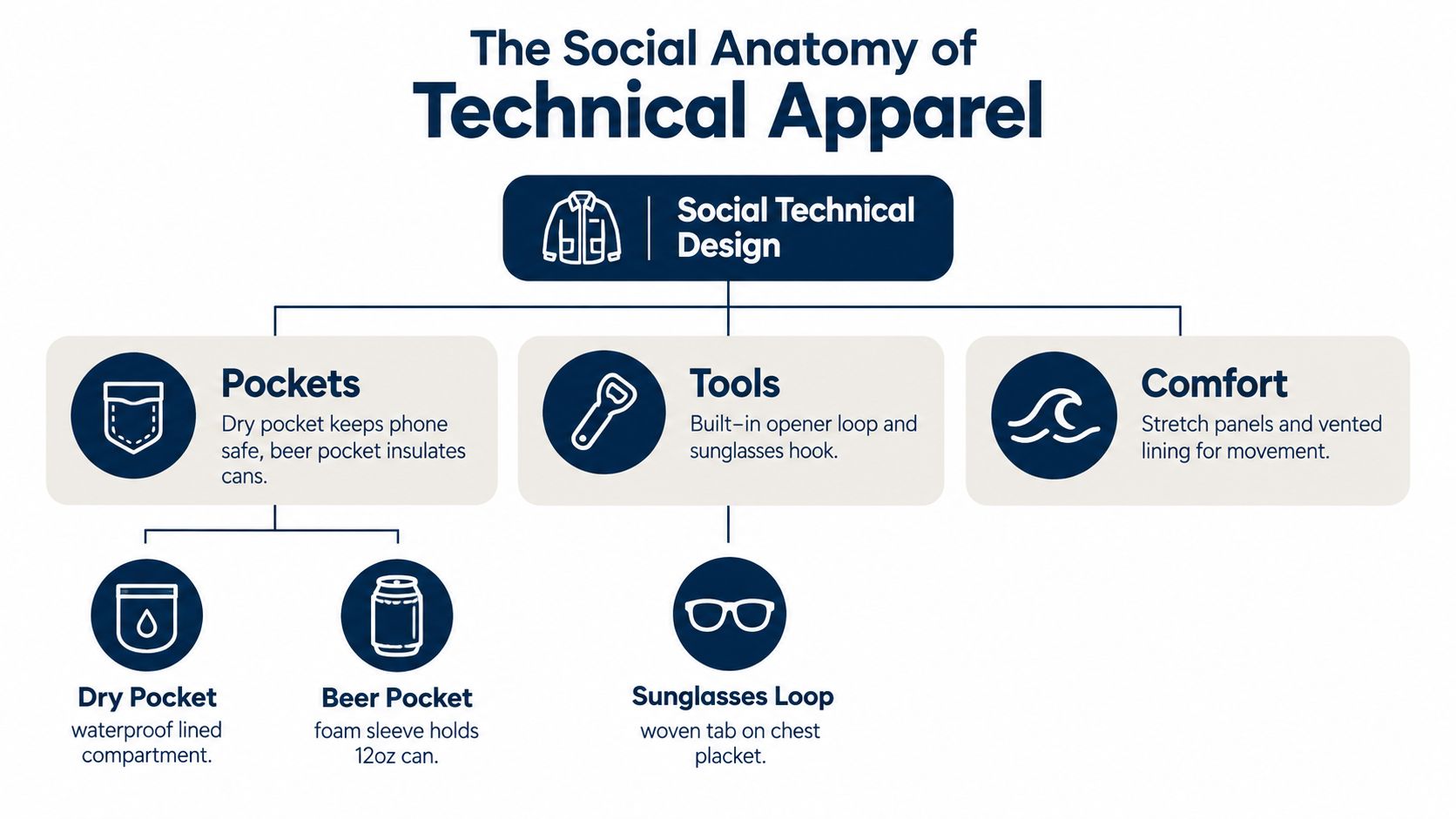
A standard cardigan carries warmth, texture, and a little old-school charm. A Social Technical sweater button up adds a second job. It helps you move through a gathering without stuffing every small necessity into your hands, your pockets, or the poor friend who agreed to hold your sunglasses.
Storage should disappear into the design
A dry pocket protects a phone or other small item from the hazards of a wet, crowded environment. A beer pocket creates a dedicated place for a can or bottle, which is useful when you're standing around a tailgate and need both hands. A sunglasses loop keeps eyewear from vanishing into the abyss of a backpack.
These features don't need to look tactical. In fact, they shouldn't. The best hidden storage follows the lines of the garment and stays quiet until it earns its keep. That's how apparel supports offline living instead of advertising that you've dressed for a very specific equipment demo.
Tools create social ease
A bottle opener loop is a small detail with an outsized social life. It turns the person wearing it into the one who can solve a minor problem without leaving the conversation. That opens the door to the kind of serendipitous encounters that never happen while everyone is staring at a phone and asking where the opener went.
Comfort matters just as much. Stretch panels, venting, and a lining that feels good against the skin let the garment handle movement between the beach, the car, and the bar. The goal is not to turn knitwear into a piece of expedition equipment. It's to give an ordinary social layer enough intelligence for real use.
A button front remains the foundation. The hidden details make it a tool for Life Offline, where the best accessory is usually another person asking if you want one.
Complete the Look and Join the Vital Few
Build the outfit from the sweater button up outward. Start with a clean tee, add the knit or post-adventure shirt, and choose bottoms that can handle the setting without looking overly precious. Then add accessories that make the transition feel deliberate.
The outfit builder
- Base layer: Choose a premium tee in cotton or another breathable fabric. White, faded black, and washed heather are dependable.
- Main layer: Select the sweater button up by climate. Dense for mountain evenings, lighter for coastal movement.
- Headwear: Add a structured cap or relaxed hat to give the outfit shape after a helmet, hood, or saltwater session.
- Drink solution: Carry an insulated koozie when the gathering involves a tailgate, beach fire, or cabin deck.
- Footwear: Use boots in snow, clean sneakers in town, and sandals only when the sand demands them.
- Group option: For weddings, bachelor weekends, or bachelorette trips, coordinated robes and custom embroidery create a shared look without forcing everyone into identical outfits.
The accessories should support the scene, not overwhelm it. A good hat hides the evidence of the helmet. A tee keeps the knit from feeling fussy. A koozie prevents your drink from becoming a warm little tragedy.
Join the Vital Few newsletter for first access to product drops and community events built around real-world connection. Keep your phone holstered, bring the useful layer, and give the person beside you a reason to start talking.
California Cowboy offers shirts, robes, outerwear, tees, hats, and accessories designed for post-adventure comfort, hidden storage, and social living. Visit California Cowboy to find a sweater button up alternative for the mountain drive home, the first drink after the surf, or the gathering you didn't plan to attend but won't want to leave.

