


Woodsmoke drifts off the beach fire pit, salt is drying on your collarbone, and somebody's suggesting one last stop before the drive home. You're not dressing for the surf anymore. You're dressing for the friends, the first drink, and the possibility that tacos turn into an entire evening.
A terry cloth polo belongs in that transition, provided you choose something better suited to conversation than impersonating a bath mat. The useful question isn't just whether it feels soft. It's whether it absorbs enough, dries sensibly, fits when damp, and survives the laundry routine you'll follow.
What a Terry Cloth Polo Actually Is
A terry cloth polo combines short sleeves, a collar, and a buttoned placket with a textile built around raised yarn loops. Think familiar polo shape, different working surface. Those loops are what distinguish it from the smooth shirt you might wear to lunch.
Terrycloth's construction increases the surface area available to absorb moisture; French terry puts loops on one side and a comparatively smooth face on the other, making it lighter and more garment-friendly than conventional towel terry. Terry describes construction, not a fiber. Cotton and cotton blends can both belong to the family.

Terry polo constructions compared
| Construction | Typical fiber | Feel and weight | Best use |
|---|---|---|---|
| Towel terry | 100% cotton | Thick loops, high absorbency, heavy when wet | Pool days and showers; often too bulky for the bar |
| French terry | Cotton or cotton blend | Lighter, smooth face and looped back | Everyday polos and post-surf layers |
| Cotton-blend terry | Cotton with nylon or polyester | Specify yarn structure and fabric weight; the blend alone doesn't establish feel | Travel and resort wear |
Say you're packing for a coastal weekend. A plush towel-weight shirt makes sense beside the pool, but it may feel cumbersome under a seat belt. French terry is the more sensible starting point when the same shirt needs to reach the dinner table.
Also distinguish a terry polo from a terry-lined shirt. One uses terry as the principal garment fabric; the other puts an absorbent layer inside an exterior shell. They can serve the same afternoon without wearing or washing identically.
Pick the construction first and the colorway second. Use the coastal comfort clothing guide to frame the choice around your actual beach-to-town routine, rather than the vacation your shopping cart thinks you lead.
How Fast Terry Soaks Up Water and How Long It Holds
Absorbency comes from the loops and yarn construction, not the fiber label alone. Fast uptake isn't fast drying.
The post-surf payoff happens quickly. A study of 216 terry-fabric constructions found that approximately 26% to 40% of available water was absorbed within the first 10 seconds, absorption exceeded 50% after 30 seconds, and reached 75% after 100 seconds, with yarn type the strongest influence on dynamic absorption.
Those are fabric results, not a promise about every finished polo. They explain why terry can feel useful immediately against damp skin without establishing when you'll stop feeling moisture against the car seat.
A review in the Journal of Textile and Apparel, Technology and Management identifies loop density, loop length, and more open, circular loop shapes as contributors to uptake; long-staple cotton and low-twist pile yarns can also improve absorption. In plain English, accessible fiber and open pathways help water enter the fabric.
Buy for the afternoon, not the squeeze test
Holding that water is the catch. In experimental terry drying work, some unfinished fabrics had evaporation periods of roughly 130–150 minutes, while finished variants took 130–190 minutes or longer under laboratory conditions.
Don't turn those laboratory windows into a beach forecast. Humidity, airflow, garment construction, and how wet you get all affect the experience. A shirt that absorbs generously can still be the wrong choice for a cramped travel bag that evening.
I'd choose moderate pile with credible drying information over maximum fluff for bar-bound wear. Towel off first, change out of soaked swimwear, and let the polo handle residual dampness rather than the entire Pacific.
- Pinch the surface: Separate the loops gently and judge their height.
- Check consistency: Look for even pile rather than isolated long loops waiting to catch.
- Name the job: Decide whether you'll wear it damp, change into it dry, or pack it soon afterward.
For a boat day, clothing is only part of the plan. If you're heading to Hawaii, you can explore Kona's waters with experienced captains through Captain Cook Snorkeling Tours, then pack a dry change for the return.
If generous post-water coverage matters more than a polo silhouette, consider the trade-offs in this luxury terry cloth robes guide.
The Social Anatomy of a Terry Polo
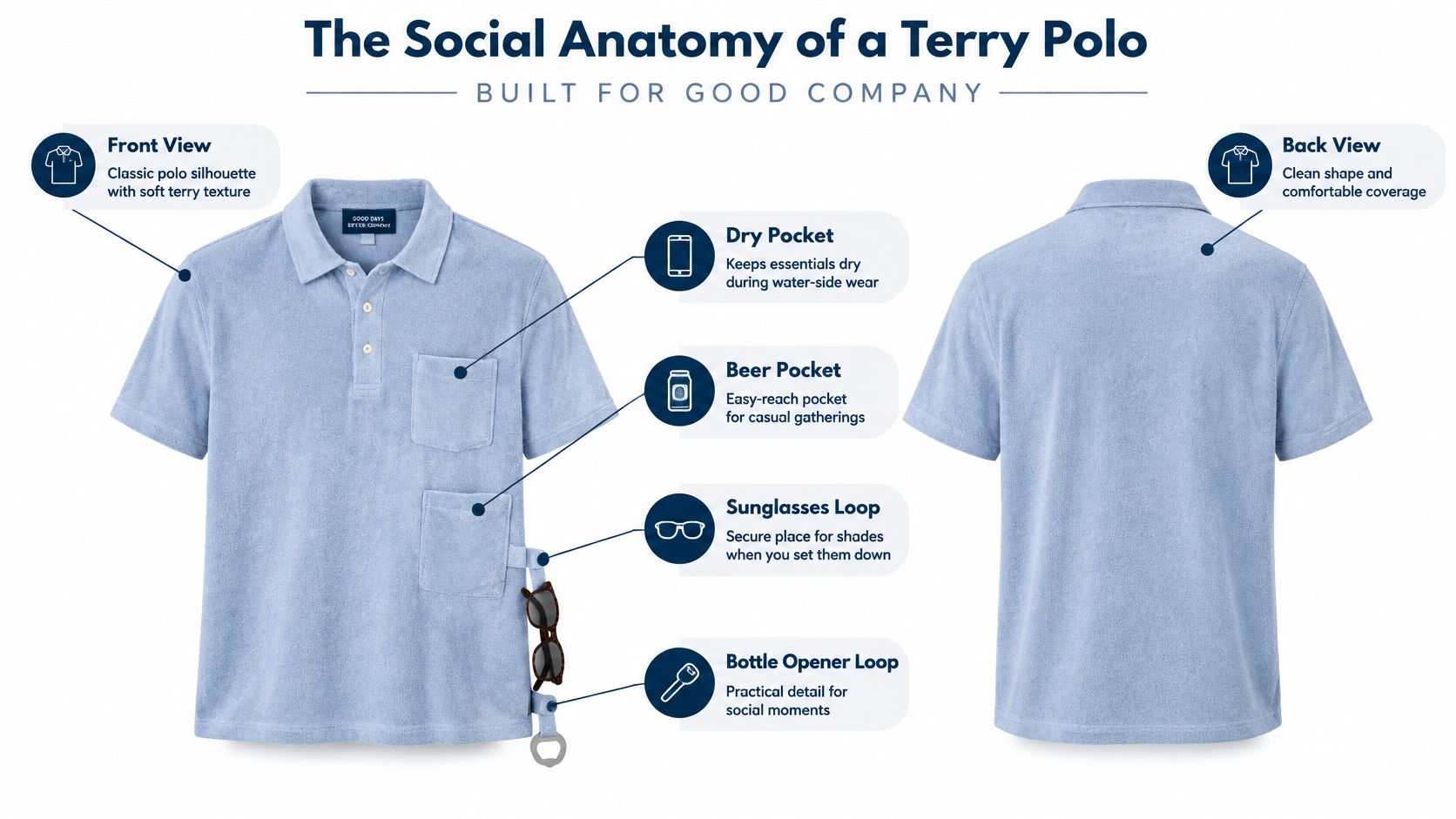
Treat this Social Anatomy illustration as a feature-shopping map, not proof that every terry polo includes every compartment. A polo, a technical overshirt, and a robe can have very different layouts. The product photographs should settle what's there.
Start with essentials storage. A zippered compartment can stop keys or a phone from escaping when you bend over the cooler, but a zipper doesn't make a pocket waterproof. Establish the stated protection before trusting electronics beside wet lining, spray, or a spilled drink.
Social Spec
Why secure phone storage changes the transition
A properly positioned pocket frees your hands for carrying the cooler, greeting friends, and ordering the first round. Keep a protective phone pouch in play when water exposure remains possible. Hands-free is useful; wishful waterproofing isn't.
Follow the features around the shirt
Next, examine a bottle pocket at the hip or lower back. Its opening needs to accept your container without making the whole shirt sag sideways. A bottle-opener loop is different: it anchors a tool rather than carrying the beverage.
Near the placket, a sunglasses loop should hold the frames close enough that they don't swing into buttons when you lean forward. Try the movement you'll make across a crowded table. If you have to rescue your glasses every time you listen, the detail isn't doing its job.
A hidden pen pocket deserves the same scrutiny. Use a capped pen, check where the tip rests, and make sure the clip doesn't scrape your skin. Any lining should sit smoothly against damp shoulders without bunching beneath pocket seams.
Pro-Tips
- Inspect attachment points: Prefer reinforced pocket corners and double stitching where bulky layers gather.
- Test your container: Check bottle-pocket access with the bottle you carry, not a conveniently tiny substitute.
- Match lining to weather: Soft modal suits a different evening than thermal lining; choose for temperature rather than the word luxury.
- Sit before committing: A useful standing pocket can become an awkward lump against a chair.
That's the point of Social Technical clothing: fewer small interruptions between finishing the activity and joining your friends. Holster your tech. Leave room for serendipitous encounters, not a running demonstration of your storage system.
Post-Surf Style From Water to Bar
You've towel-dried, the sun is dropping, and someone at the bar is already waving you over. Pull on the polo, leave the collar comfortably open, and keep the rest uncomplicated: dry board shorts or swim trunks, sandals, and sunglasses secured if the shirt has a suitable loop.
The test comes when you sit down. If your shorts are still soaking the chair, the outfit isn't ready for the transition, whatever the shirt can absorb.
Three stops, one sensible approach
For resort dinner, switch to chinos or linen trousers. A loose half-tuck can work if the hem isn't too thick; otherwise, leave it cleanly untucked. Add leather loafers and a lightweight overshirt for the walk back.
This outfit gets tested under restaurant lighting rather than sunset camouflage. Check the collar, smooth the placket, and leave the heavily loaded bottle pocket out of the dinner equation. The beverage has its own table now.
For après-surf and cabin nights, wear a dry polo under fleece or an overshirt, with dark jeans and boots. That can carry you from the lodge fire to the parking lot tailgate, provided the layers move comfortably together. Add proper weather protection outside; an appealing texture isn't a forecast.
Keep one layer on and one piece off: bring the useful overshirt, skip the extra accessory that makes the outfit feel rehearsed.
Destination plans should guide the bag. Before packing for a Mexican coastal trip, compare water activities in Tulum with Irie Tulum Boutique Hotel so your change of clothes suits the outing rather than just the dinner reservation.
What to Pack
- A versatile polo: Choose a color that works with both shorts and chinos.
- A wet-gear pouch: Keep damp swimwear separate from clean clothing.
- A light overshirt: Pack for the cool walk back.
- Practical shoes: Choose something comfortable from beach access to sidewalk.
- A hat: Give midday sun its own solution.
Build the rest around your itinerary with these coastal weekend outfit ideas. Socially confident usually looks like being comfortable enough to stop adjusting your clothes.
Fit Choices by Use Case
Should a terry cloth polo fit like a classic polo or a cover-up? Choose the use case before choosing the size. Room for wet swimwear is a different requirement from a neat layer beneath a jacket.
The stakes aren't imaginary. Corso's reporting citing Coresight Research says 53% of apparel sellers identify size and fit as the leading reason for online apparel returns, while apparel return rates are commonly reported around 20%–30%.
Fit choice by use case
| Use case | Fit to choose | Why it works | Watch out for |
|---|---|---|---|
| Layering over swimwear | Relaxed, roomy | Airflow and room over wet swimwear | Excess volume can look sloppy at the bar |
| Beach-to-bar, one shirt | True to size | Keeps the collar and silhouette sharp once dry | Sizing down can feel tight across the chest when wet |
| Under a jacket or fleece | Trim, not tight | Keeps layering comfortable | Looped terry adds bulk under outerwear |
| Travel packing | True to size | Avoids unnecessary garment volume | Absorbent terry adds weight in a bag |
Measure the shirt you trust
Lay a polo you like flat without stretching it. Measure pit to pit, then body length using the same starting point as the seller's chart. Compare garment measurements with garment measurements, not with a body-size chart that happens to use similar labels.
If you'll wear a tee underneath, try that combination before deciding how much extra room you want. The shirt-measuring guide helps turn a familiar shirt into a useful reference rather than a vague memory of what medium means.
Reach forward, lift your arms, and sit. Watch for a placket that pulls open, sleeves that bind, or fabric pooling around the waistband. Trim shouldn't mean tension.
Damp terry changes perceived weight and drape, so a snug dry fitting deserves caution. Conversely, sizing up automatically can leave you with a drooping shoulder and too much fabric under an outer layer. Buy the silhouette you need, not an optimistic plan to shrink it into submission.
Care That Keeps the Loops Intact
The loops that make terry useful also create a surface that can snag, distort, and shed. Treat the pile as the working part of the garment, not decorative fuzz that the washing machine can sort out.
A 2025 review in The Journal of the Textile Institute identifies domestic washing and drying as major contributors to microfiber release, notes that thicker fabrics can shed more, and describes cool washing and liquid detergent as ways to reduce release relative to hotter or more abrasive conditions. Cotton isn't automatically a lower-impact choice in use, because natural fibers also leave garments during laundering.
Wash and dry settings for terry polos
| Care step | Setting | Why it matters |
|---|---|---|
| Wash temperature | Cool, not hot | Limits heat exposure and harsh handling |
| Detergent | Liquid detergent | A gentler starting point for reducing fiber release |
| Spin | Gentle or low speed | Reduces mechanical stress and distortion |
| Drying | Air dry, hang immediately | Avoids tumble abrasion, though drying takes longer |
| Dryer heat | Low or none, within the care label | Limits shrinkage and loop damage |
| Fabric softener | Test on one shirt first | Don't assume a softer feel means unchanged absorbency |
Judge break-in without expecting miracles
Absorbency doesn't follow one universal break-in curve. An experimental terry-fabric paper in Vlákna a textil found the highest absorbency before washing, followed by stabilization with repeated washing.
Evaluate how your shirt behaves over several washes rather than treating the new-garment feel as permanent. Softness, shape, and drying behavior matter together. Don't keep escalating heat or detergent to chase a particular hand-feel.
For cotton, pay particular attention to reshaping and heat restrictions. For blends and synthetic terry, respect the requirements of the whole garment, including stretch fibers, lining, and trims. Fiber content alone doesn't settle the care routine.
The evidence cited here doesn't settle every fabric-softener formulation's effect on every terry construction. I'd leave it out initially, then test cautiously rather than making it automatic.
Pro-Tips
- Turn it inside out: Reduce direct rubbing on the exposed face.
- Secure hardware: Empty pockets, close zips, and fasten pocket closures before washing.
- Support wet weight: Reshape on a rack if hanging pulls the shoulders out.
- Unpack promptly: Never leave a damp polo bunched in a bag.
Buying Checklist and What You Pay
The tag that earns its place lists fiber content and care instructions. The one announcing luxury tells you nothing about whether the collar sits flat after a spin cycle or whether the shirt still works when your itinerary goes pool, lunch, bar. A plush first impression is exactly that: a first impression.
Inspect what you can see before money changes hands. Then look at the parts that take stress every single wear: placket, collar attachment, underarms, pocket corners, hem. Those junctions decide whether a polo survives its second season as a transition piece or retires to the back of the closet after one wet summer.
What deserves your money
- Fiber content: Get actual percentages. Cotton, blends, and synthetic terry need construction details before you can judge absorption or drying.
- Pile and density: Even loops and a manageable surface beat the tallest pile on the rack. Tall loops soak up more water and take longer to give it back.
- Lining: Match the inner layer to your climate and how long you expect to wear the shirt damp.
- Reinforcement: Collar and placket seams should lie tidy, no puckering. That's where a wet, heavy shirt pulls first.
- Pocket placement: Secure attachment and access that still works when you're seated at the bar.
- Care requirements: Air-drying is manageable at home and a nuisance during rapid hotel changes. Price the routine, not just the shirt.
Terry polo price benchmarks
These are historical listing snapshots, not current offers or like-for-like performance tests.
| Example listing (year) | Price | Stated original | Notable detail |
|---|---|---|---|
| Todd Snyder Tile Jacquard Terry Polo, 2024 listing | $94 sale | $248 | 76% cotton, 24% nylon |
| Goodlife Terry Cloth Polo at Nordstrom Rack, 2025 listing | $44.97 | $125 | Listed at 64% off |
A sale price reflects a markdown, not independent proof of quality. A retailer's stated original price or comparison value isn't a guarantee the garment is worth that amount to you. Compare the delivered construction and condition, not the size of the crossed-out number.
Where you spend depends on which half of the transition you're buying for. Beach-heavy use rewards sound pile, seam construction, and a fit that stays comfortable wet to dry. Cabin or city wear rewards collar behavior, lining, and trims quiet enough for a room that never sees sand.
A cheap shirt that demands an impractical routine isn't necessarily economical. Neither is an expensive one you avoid wearing because every chair, zipper, and laundry cycle feels like a threat.
Choose Your Terry Polo and Complete the Look
Pick the construction for the water you'll meet, the fit for the room you'll enter, and the care for the life you want the shirt to have. Keep the decision practical.
- Choose construction: Towel weight for poolside use, French terry for everyday and bar wear, or a suitable blend for travel.
- Choose fit: Relaxed for layering over swimwear; true to size for a one-shirt day.
- Check useful details: Match lining to temperature and storage to what you carry.
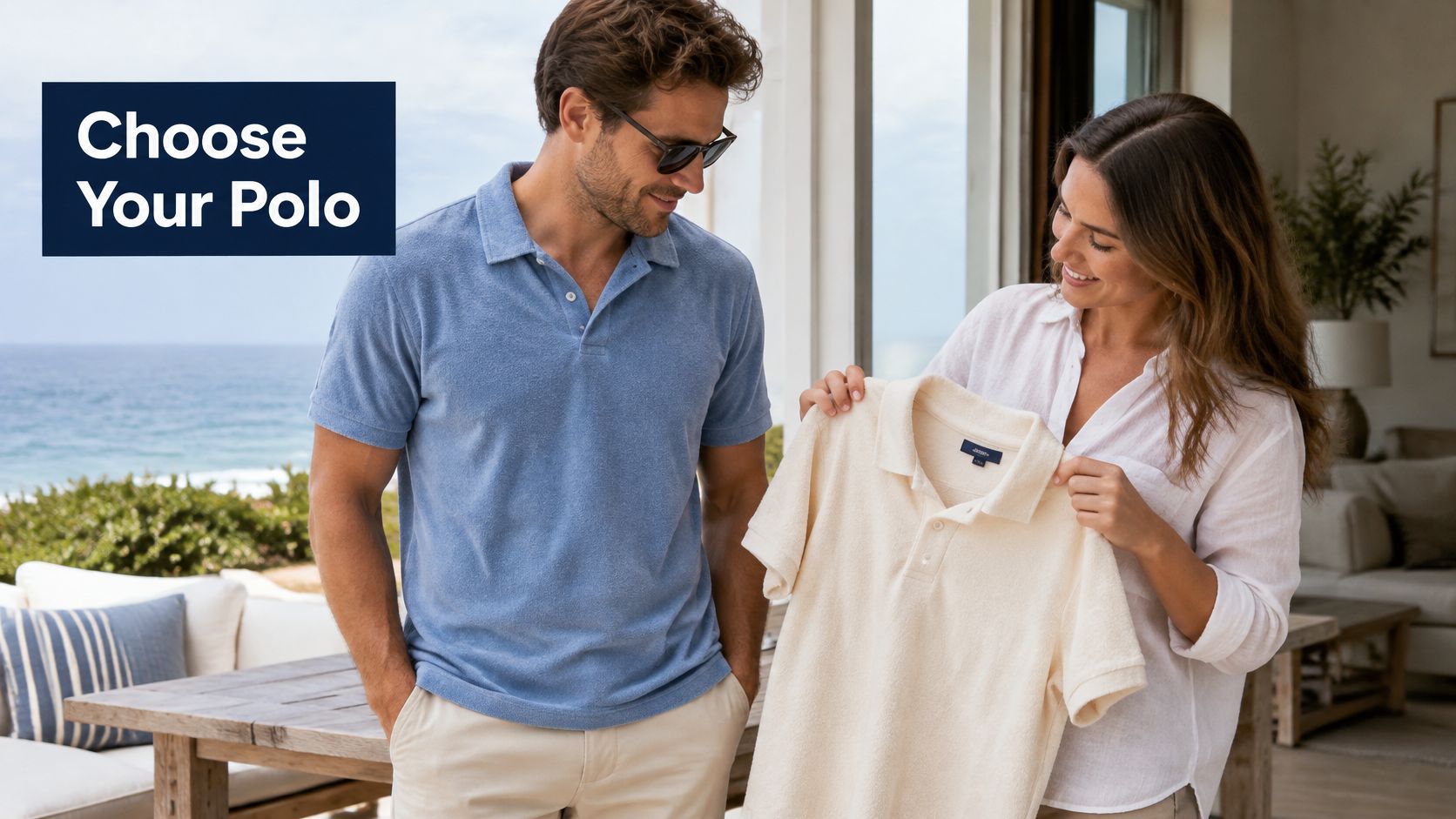
Complete the Look
Our men's categories include Tee Shirts & Polos, High Water Shirts, High Water Tropic Shirts, High Sierra Shirts, Robes, Hoodies & Fleece, Outerwear, and Hats & Accessories. Use the Terry Cloth Lined filter when lining is your priority. For extended coverage, consider these long-sleeve polo considerations.
Finish with a hat, a matching tee, and a koozie where the pocket fit allows. For post-activity lounging, our El Garibaldi Robe includes a sunglasses clip and a built-in bottle pocket with a beer koozie and brass-coated bottle opener. Keep coordinated group gear wearable individually, too; your friends aren't a bowling team unless they volunteered.
California Cowboy offers shirts, robes, and layers built around post-adventure comfort and real-world connection. Visit California Cowboy to choose your beach-to-bar layer, then join the Vital Few newsletter for first access to new drops. Holster your tech and stay for the conversation.

