


Salt water is drying on your neck, your hair still smells faintly of the ocean, and the truck floor is collecting enough sand to qualify as a minor dune. Or maybe you're parked below the lifts, boots thawing, woodsmoke drifting across the lot, and somebody has produced coffee that tastes better because it came from a dented camp mug.
The activity is over. The social part is just getting started. A 6 panel hat is built for that handoff, carrying the visual language of baseball, surf, and mountain towns into the first drink, the cabin deck, or the beachside fire without looking like you tried to style a costume.
The Vibe-Check Holster Your Tech and Grab a Cap
At a Tahoe tailgate, the right cap does more than block glare. It covers the helmet hair, handles a little weather, and gives you something easy to adjust while you introduce yourself to the people beside the truck. After a Malibu session, it does the same job with salt-crusted hair and a towel over one shoulder. You're no longer dressed for the mountain or the water, but you're not ready for polished indoor civilization either.
That middle ground is where Social Technical Apparel earns its keep. The garment or accessory should solve a practical problem while helping you feel relaxed enough to talk to strangers. A 6 panel hat keeps the silhouette familiar, the brim useful, and the outfit socially confident without demanding a mirror check every ten minutes.
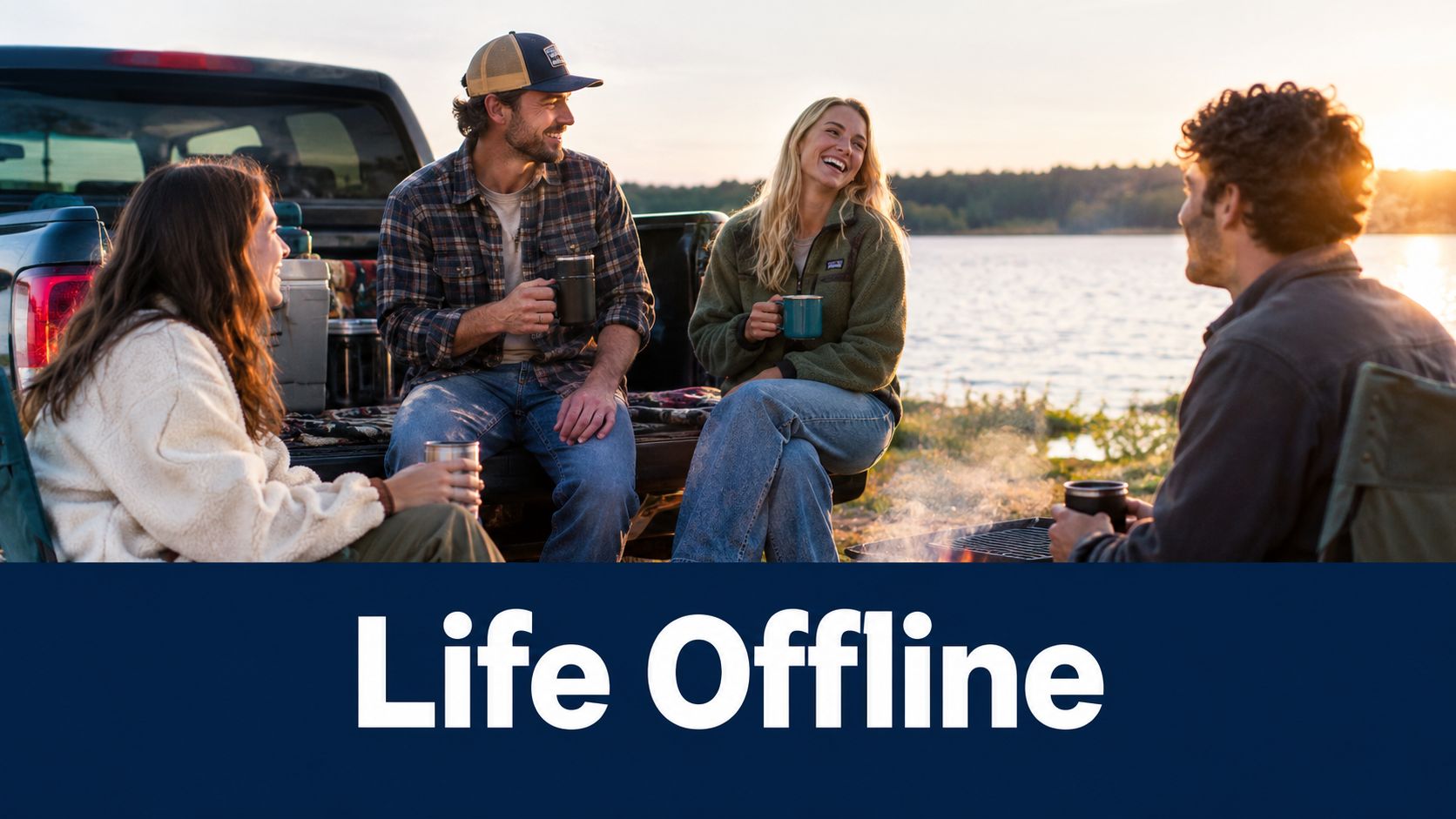
Built for the transition
The best version is the one you grab after the activity, when you're ready to holster your tech, trade notifications for conversation, and leave room for serendipitous encounters. It works with a hoodie at the gas station, a flannel by the fire, or a faded tee at the taco stop.
The construction has a useful history. MLB describes the earlier eight-panel cap as a design that “would morph into the six-panel cap you see today,” while the official baseball cap history places the broader shift toward the modern form in the mid-century era. That evolution helped establish the cap as durable everyday headwear rather than equipment reserved for the diamond.
If you're comparing options for an event, team, or company, promotional headwear by Dirt Cheap Product is a practical resource for understanding custom cap formats. For a deeper look at accessories that support life away from screens, browse cool everyday carry gear.
The Anatomy of the Classic 6 Panel Hat
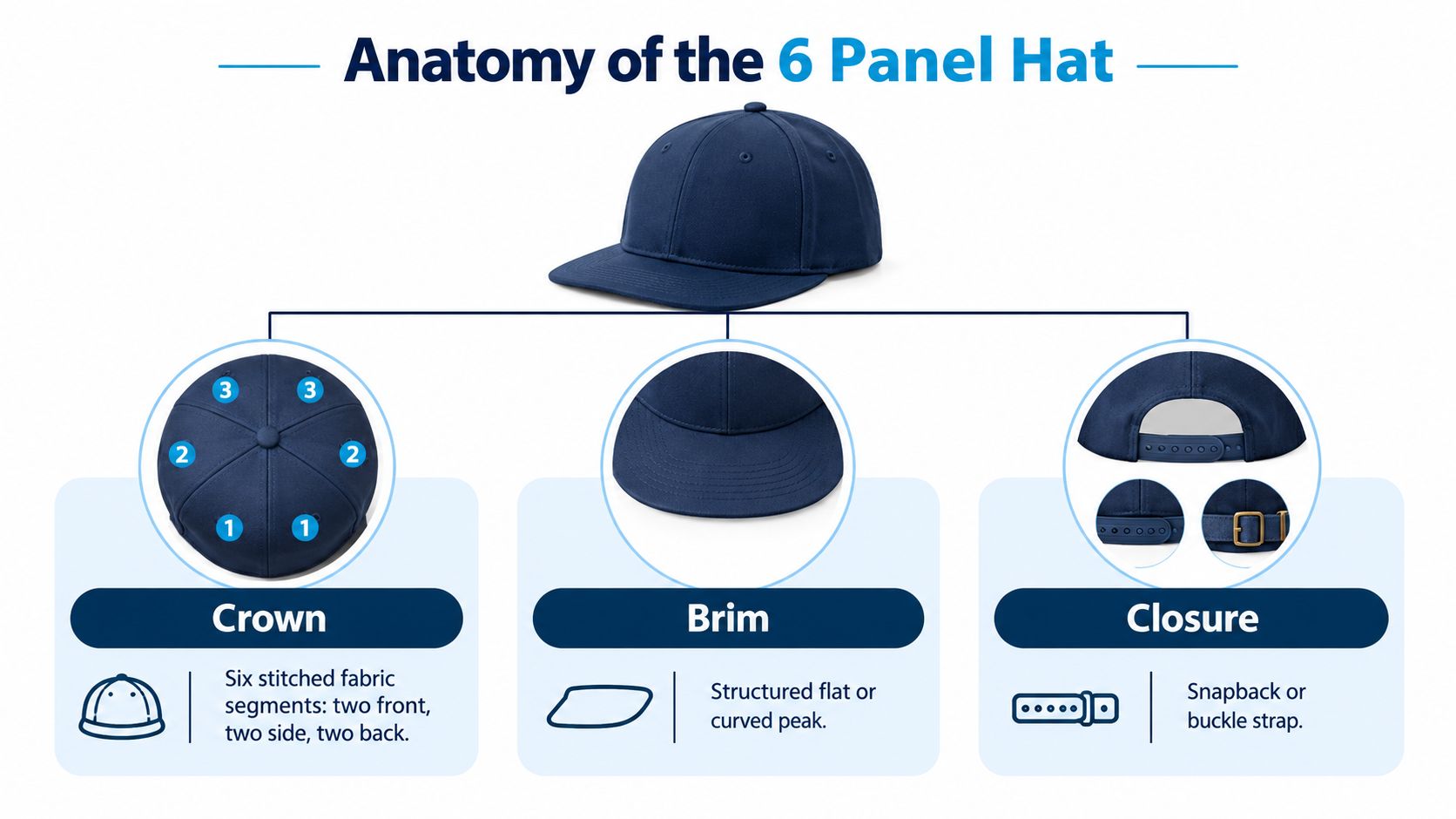
A 6 panel hat has six separate fabric sections stitched into the crown. The usual arrangement is two front panels, two side panels, and two back panels, with those pieces joining to create the rounded top familiar from a traditional baseball cap. The front panels meet at a vertical center seam, which gives the hat its recognizable face.
That seam isn't a flaw. It's part of the architecture. Think of the crown as a small fabric dome, not a flat billboard. The panels distribute the curve around the head, while the central join helps define the front and influences where embroidery can sit cleanly.
Crown, brim, and closure
The crown is the stitched upper section. Structured versions commonly use an internal support material such as buckram to preserve the front's form, which is why a structured cap can keep its shape through a long cabin weekend or a crowded festival ground. The construction process for baseball caps generally assembles the crown before decoration, then builds the visor with a stiffener such as plastic or buckram. That order gives decorators a steadier fabric surface for accurate logos.
The brim, also called the peak or visor, projects from the crown and may be curved or flatter. A stiffened brim protects the eyes from sun and gives the cap its stance. The closure controls adjustability, with snapback, buckle, strap, or fitted approaches depending on the model.
Social Spec: Look for ventilation eyelets or grommets near the top of the crown, a stable brim, and a covered button at the apex. Those small details support airflow, shape, and comfort when the day stretches from trailhead to table.
The six-panel construction guide describes the center seam and rounded silhouette as defining features. That combination explains why this format remains so comfortable in settings that demand a little polish but absolutely no fuss. For a coastal variation, compare the relaxed attitude of a surf trucker hat, where airflow and post-water ease take the lead.
Choosing Between 6 Panel, 5 Panel, and Unstructured Fits
The easiest way to choose a cap is to decide what you want the front of it to do. A 5-panel hat gives you one broad front panel and a flatter, more graphic-friendly face. An unstructured dad hat collapses more easily and feels softer. The 6 panel hat sits between those two moods, with a rounded crown, a defined front, and enough support to look intentional after hours of wear.
Face shape matters, but comfort matters more. A taller, structured crown can balance a longer face and create a stronger outline, while a lower profile often feels quieter on the head. The curved front of a 6-panel cap softens the overall impression, making it useful for classic sports styling, surf shack casual, and cabin wear without committing you to a streetwear uniform.
| Hat Style | Crown Structure | Best Vibe |
|---|---|---|
| 6 panel | Rounded and often structured, with a split front | Traditional sports, everyday California casual, curved embroidery |
| 5 panel | Flatter front with a cleaner uninterrupted face | Creative, modern, graphic-led styling |
| Unstructured dad hat | Soft crown with a relaxed, flexible shape | Low-key errands, worn-in weekend comfort |
A practical fitting rule
Try the cap with the clothes you'll wear. A rigid crown can feel too formal with lightweight beach layers, while a floppy cap may look underpowered beside a wool overshirt or heavy outer layer. The right choice should hold its line without pressing against your forehead or turning every gust of wind into a hat-recovery operation.
The hats and accessories collection is useful when you want to compare silhouettes rather than shop by panel count alone. Choose a 6-panel style when you want a dependable default that can move from a morning coffee run to the first round by the fire.
Material Choices and Brim Curves for Every Environment
Fabric changes the personality of a cap before the logo or color gets involved. A wool blend or heavy cotton twill feels at home beside a snowy parking lot, especially with luxury thermal layers and a substantial overshirt. Washed cotton brings a softer, broken-in quality to a beach lifestyle outfit, while mesh can make more sense when the afternoon is warm and the ocean has left you damp.
The panel count doesn't determine breathability by itself. Ventilation depends on the material, the weave, the eyelets, and how much structure the crown carries. A cap with small eyelets in each panel may let air move more naturally, while a densely supported front can feel warmer during a long walk from the beach to the bar.
Curved or flat
A curved brim is the classic choice for sun protection and a traditional athletic profile. It follows the familiar shape of the baseball cap, frames the face, and works naturally with flannels, polos, hoodies, and terry-lined shirts. A flatter brim creates a sharper, more graphic stance, but it can push the outfit toward a more deliberate streetwear direction.
Brim stiffness also affects maintenance. A supported visor keeps its form, but it shouldn't be folded into a backpack like a receipt. Spot-clean the crown, avoid rough washing, and store a structured cap so the front panels don't get crushed. The goal is simple: preserve the shape that made the hat useful in the first place.
Field note: Match the cap to the transition, not just the forecast. Heavy fabric suits the drive from the slopes to the lodge. Washed cotton or mesh suits the walk from the lineup to lunch.
For a High Sierra morning, pair a darker wool-feel cap with a flannel and insulated layer. For post-surf comfort, choose a lighter cap with a curved brim, then let the rest of the outfit stay easy. No one at the beach bar needs to know whether you planned the color story.
Styling the 6 Panel Hat for Après-Ski and Surf-to-Sand
The cap becomes most useful when the technical kit comes off but the day isn't finished. You've got a mountain jacket in the back seat, wet trunks in a tote, or boots that have survived a questionable amount of mud. A good 6-panel hat gives the outfit a clean anchor while the rest of the wardrobe moves toward comfort.
The High Sierra outfit
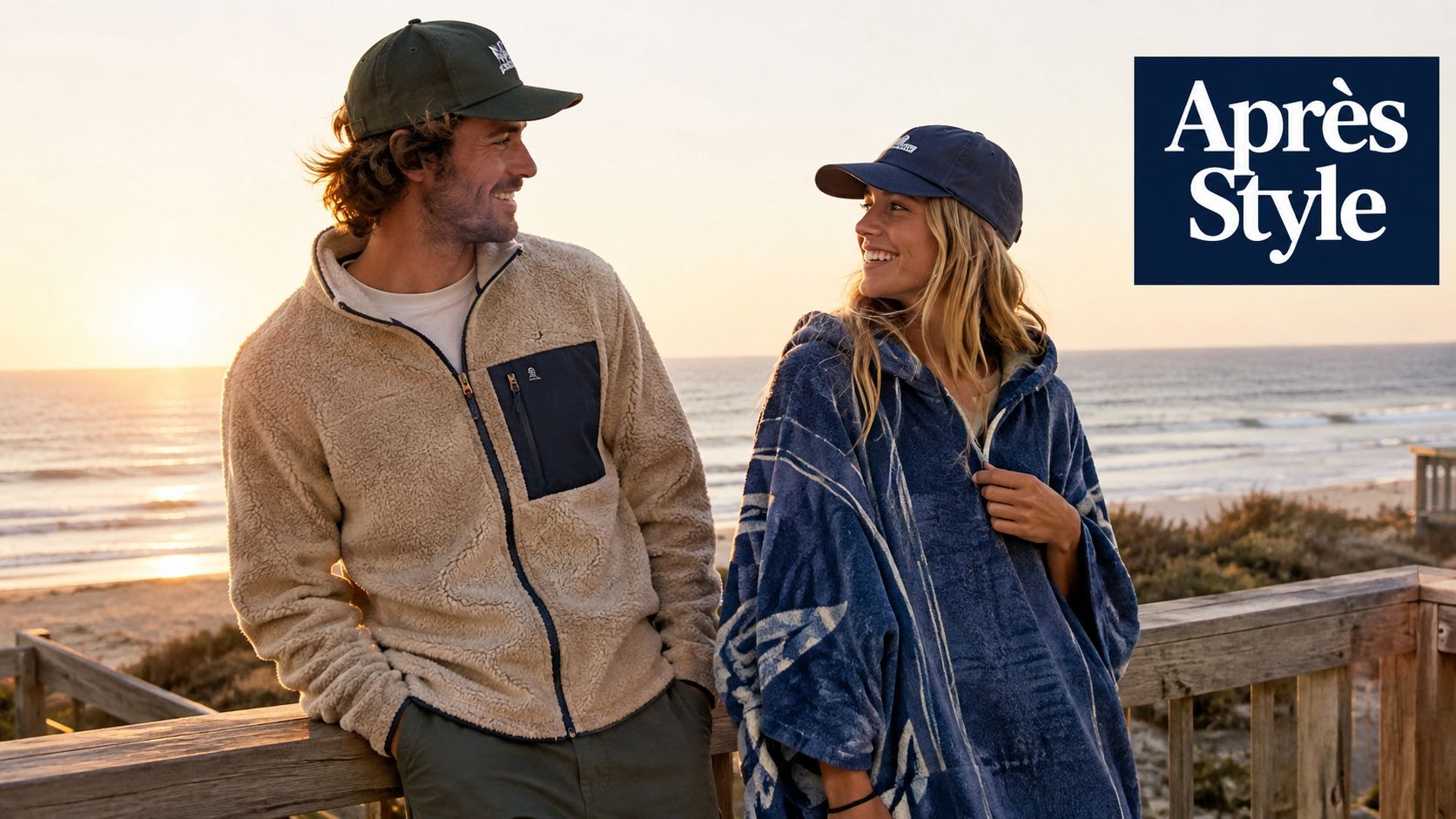
Start with a structured cap in a grounded shade, then add a luxury thermal layer under a durable flannel. Finish with relaxed trousers and rugged boots that can handle the walk from the tailgate to the lodge. The crown's shape keeps the look composed, while the curved brim stops the outfit from drifting into costume territory.
This is après-ski style without the showroom stiffness. You can carry a mug, lean against the truck, and join a conversation without looking like you're auditioning for a catalog. Heritage sports aesthetics work here because they already belong to the setting.
A cabin deck version needs less armor. Swap the heavy outer layer for a soft tee or thermal, keep the flannel open, and bend the brim slightly more. The same hat now works with cabin wear for men, morning coffee, and a late afternoon fire.
The High Water outfit
For the coast, choose washed cotton or a breathable construction in a tonal color. Pair it with a terry-lined shirt, easy shorts or drawstring trousers, and sandals or low-profile sneakers. The result feels ready for the beachside bar without looking like you came directly from a surf competition, even if you did.
The coastal comfort clothing guide offers useful context for building a beach-to-bar outfit around softness, absorbency, and relaxed layers. Keep the logo quiet and let texture do the work.
Here's a short visual reference for the social handoff between activity and downtime:
Complete the Look
A cap gets better company. Add a simple tee underneath the overshirt, a koozie for the parking lot or beach fire, and a practical layer that can handle a little sand, smoke, or spilled coffee. The best post-surf comfort and après-ski apparel doesn't announce its features. It keeps the evening moving.
Mastering Custom Embroidery and Group Outfitting
A 6-panel cap is a strong choice for group outfitting because people already understand how to wear it. The silhouette feels familiar at a bachelor party, a company retreat, a wedding weekend, or a coordinated bachelorette trip. Nobody has to be persuaded to add it to an everyday rotation.
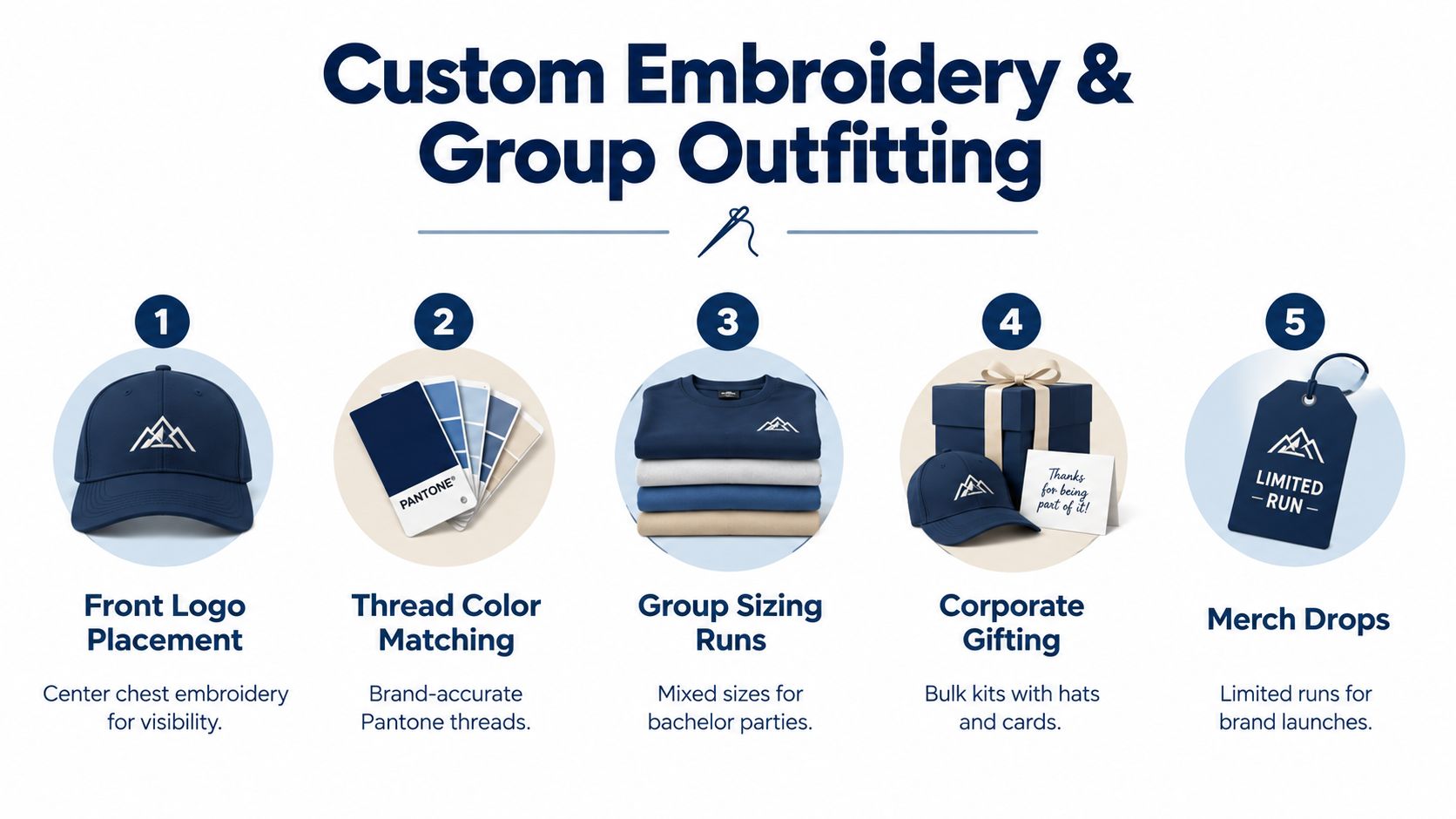
The center seam creates the main design constraint. Large artwork that spans both front panels can buckle, distort, or lose clarity where the fabric joins. A smaller centered mark, curved lettering, or embroidery placed deliberately on one panel usually works more naturally with the crown.
Design for the shape
Sourcing guidance from custom hat specialists notes that the split front and central seam define the classic baseball-cap build, while 5-panel and 7-panel styles provide flatter logo real estate. That tradeoff is exactly why 6-panel caps suit curved embroidery and a structured, traditional fit.
For a team or wedding group, keep the primary mark compact and legible. Use thread contrast when the logo needs to read from a distance, or choose tonal embroidery when the goal is a quieter keepsake. A 3D puff treatment can add dimension on a supported front, but the design still needs to respect the seam and the curve.
Decoration isn't limited to stitching. If you're weighing heat-applied graphics, this guide to DTF hat transfers can help clarify how transfer methods interact with curved headwear. For broader group coordination, pair caps with custom group shirts, keeping the colors aligned while letting each person choose their preferred fit.
Group ideas that people keep
- Groomsmen gifts: Use a small monogram or shared location mark that feels personal without turning the hat into a billboard.
- Bachelor party outfit ideas: Coordinate the cap color, then let shirts or robes carry the louder joke.
- Corporate gifting: Add a restrained logo and package the cap with a useful accessory so it feels like gear, not leftover conference swag.
- Bachelorette weekend outfits: Choose a shared palette and a simple embroidered phrase that works long after the weekend ends.
The best custom cap is the one that survives the group photo and gets worn afterward. Join the Vital Few newsletter for first access to limited-edition drops, personalization updates, and gear designed for the moments after the main event.
California Cowboy makes shirts, robes, outerwear, hats, tees, and accessories built for après-ski, post-surf comfort, and real life offline. Visit California Cowboy to find a 6-panel hat and complete the transition with layers and accessories made for good company.

