


Salt is still drying on your forearms. The beach parking lot smells like sunscreen, warm rubber, and the first round of drinks cracking open on the deck. Or maybe you're stepping out of ski boots after the last chairlift, cheeks cold, hair carrying a trace of woodsmoke, with dinner waiting somewhere that doesn't welcome technical outerwear.
That's where white linen shirts for men with long sleeves earn their keep. They aren't merely summer basics. Worn correctly, they're the social layer for the hour after the activity, when you holster your tech, find a seat beside strangers, and become socially confident without looking overdressed.
Why a White Linen Shirt Earns Its Place in the After-Adventure Kit
A good white linen shirt handles the awkward wardrobe gap between exertion and interaction. After a surf, it covers damp skin without clinging like a synthetic tee. After a mountain morning, it gives a cabin outfit enough polish for town without pretending you're headed to a board meeting. After a long drive, it makes the first drink feel like an occasion.
Linen's history helps explain its staying power. Flax cloth dates to around 3500 BC, and European men first wore white linen shirts as underlayers that absorbed sweat and protected outer garments. By the 1750s, portraits show plain-woven white linen shirts with fine wrist ruffles, while Beau Brummell's Regency-era influence helped turn the crisp white shirt into a marker of refinement. Bright, frequently laundered linen also signaled social rank because maintaining it demanded time and resources, as this history of the men's white shirt from Luca Faloni explains.

The modern version is less about rank and more about range. A long sleeve white linen shirt can move from swim shorts to trousers, from an open collar to a buttoned cuff, and from a dusty trailhead to a restaurant where the napkins are folded with intent. Shirts are also the largest product segment in one estimate of the luxury linen clothing market, at 32.5%, while the market itself is projected to rise from $8.7 billion in 2025 to $14.2 billion by 2034, according to Dataintelo's luxury linen clothing market estimate. Treat those figures as market projections, not a reason to buy a shirt. The reason to buy one is simpler: it works when the day changes character.
The transition test
Use the shirt where your day has a second act.
- Beach to bar: Wear it open over a swim brief or tee, then button the middle buttons before dinner.
- Cabin porch to town: Start with sleeves down over a lightweight base layer, then tuck it into chinos.
- Trailhead to town: Choose a structured collar and opaque cloth, not a translucent resort shirt.
- Drive to the first drink: Keep it loose, breathable, and ready to take the seat beside you.
For more ideas on the first transition, post-surf comfort clothing captures the same practical question: what should you wear once the water is behind you and the social part begins?
Social Spec: A long sleeve linen shirt creates useful coverage without the sealed-in feeling of a heavy overshirt. Keep your phone away, carry only what you need, and leave room for serendipitous encounters.
White linen can still fail. A flimsy weave may turn sheer in hard afternoon light. A narrow cut can pull across the back after a swim or a plate of tacos. A stiff collar can make a relaxed shirt look like costume formalwear. Before you buy, judge the fabric, opacity, and fit as carefully as the color.
For a dose of visual culture between coastal stops, explore the art at Clos Pegase. The setting is a useful reminder that white linen looks best when it belongs to the surroundings, not when it tries to dominate them.
Reading the Fabric Like a Spec Sheet
The product page usually gives you enough information to make a sound decision. You just need to read it like someone who plans to wear the shirt outside the fitting room.
Start with fabric weight, usually listed in grams per square meter, or g/m². Warm-weather guidance commonly places linen around 130 to 180 g/m² as a practical balance between breathability and everyday wearability, according to Primer's guide to men's linen. Lighter cloth feels breezier but can reveal more underneath. Heavier cloth offers more body and coverage, though it may feel less airy when the afternoon turns humid.
The exact number matters less than the consequence. A lighter shirt is excellent for beach-to-boardwalk wear. A midweight shirt is the better all-rounder for travel, dinner, and repeated use. A substantial shirt can look more refined, but it should still move when you reach for a glass.
What the weave tells you
Plain weave gives linen its familiar dry hand and open appearance. Herringbone or other textured weaves can add visual density and make a white shirt appear less flat, but texture also pushes the garment toward a more casual register. A smooth, tight weave looks cleaner under a jacket. A slubby weave looks better with rolled sleeves, worn denim, and the general mood of we're staying for one more round.
Opacity deserves its own inspection. Hold the shirt against daylight if you can. Online, look for product photography that shows the shirt worn over a torso rather than floating against a white background. White cloth can look crisp on a screen and unexpectedly sheer at the edge of a pool.
How linen manages heat
Linen's hollow fiber structure supports airflow and moisture transport. Apparel guidance notes that linen can absorb roughly 10 to 12% moisture regain under standard conditions, compared with 7.5 to 8.5% for cotton, as outlined by Natuclothes' linen and cotton comparison. Linen also wicks and sheds moisture, dries quickly, and conducts heat efficiently, which helps explain why long sleeves can feel comfortable when the sun is sharp.
A separate textile resource describes linen as capable of absorbing up to 20% of its own weight in moisture or perspiration before releasing it quickly, as detailed by the University of the Arts London's linen fiber properties resource. Georgia Tech likewise notes that linen performs especially well in hot, humid conditions and transports moisture away from the body more effectively than cotton or polyester, according to its summer fabric guidance.
| Weight (g/m²) | Feel | Best For |
|---|---|---|
| Light | Airy, soft, more likely to show what's underneath | Beach days and hot travel |
| Midweight | Balanced, breathable, easier to dress up | Beach to dinner and everyday wear |
| Heavy | More structured, denser, less breezy | Cooler evenings and polished layering |
Finishing treatments can change the first impression. A washed finish softens the hand and makes wrinkles feel intentional. A pressed finish sharpens the shirt but demands more care. Don't confuse softness with quality. Check the stitching, button attachment, collar construction, and whether the cuffs hold their shape.
Choosing the Right Fit for the Right Setting
Fit decides whether white linen reads as refined or recreational. The same fiber can look like a proper shirt on one body and a beach cover-up on another because proportion controls the message.
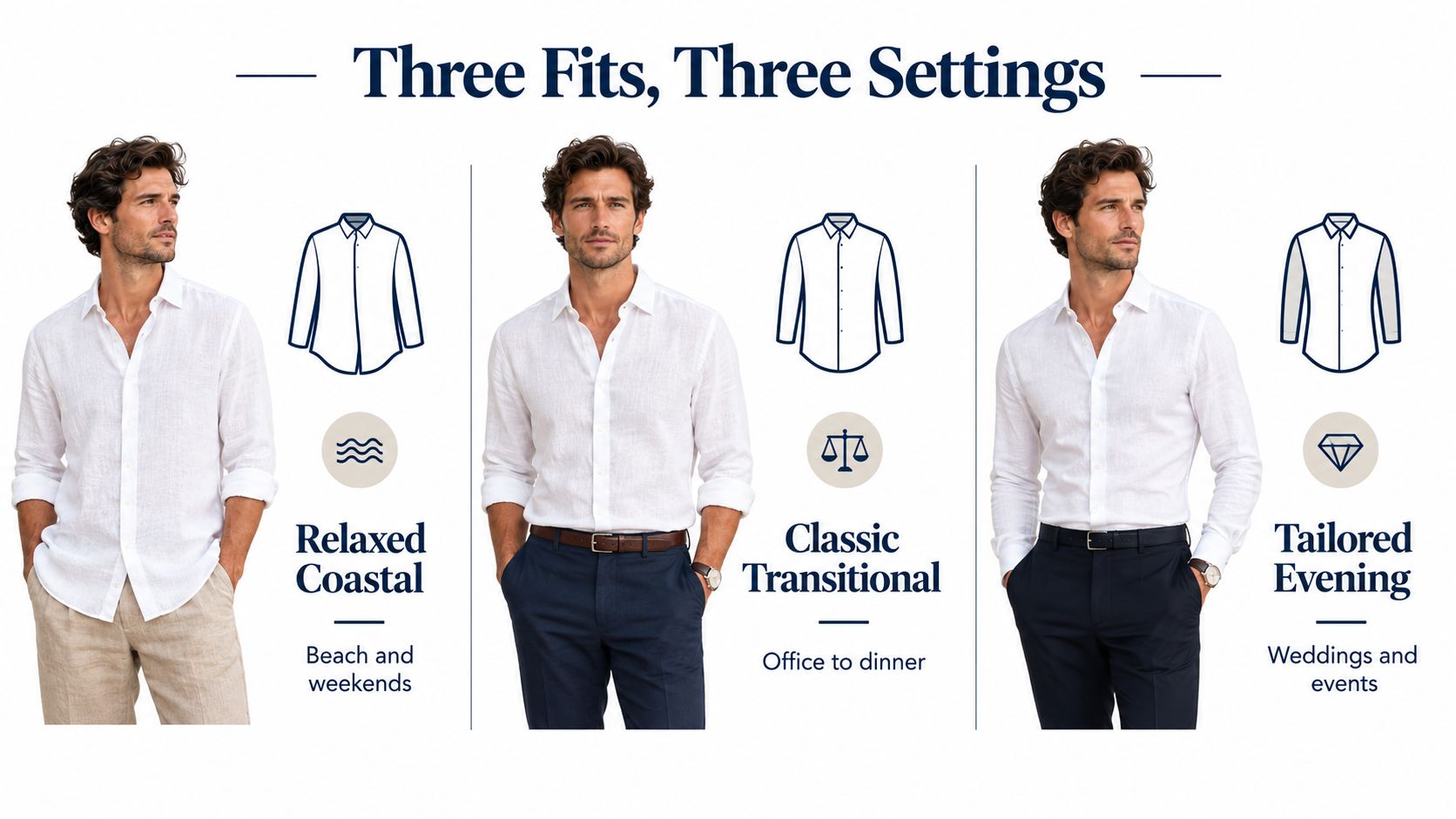
The relaxed coastal fit has room through the chest and body, a shoulder seam close to the natural shoulder, and sleeves that can be pushed or rolled without fighting you. Wear it after a swim, over a tee, or with drawstring trousers. The hem can sit lower, but it shouldn't swallow the seat or flare like a tunic.
The classic transitional fit keeps a balanced body and a clean shoulder. It works with chinos, dark denim, and lightweight tailoring. This is the safest choice if you want one shirt for travel, office-adjacent settings, and dinner. Button the collar, tuck the front, and the shirt gains authority without losing its ease.
The structured evening fit sits closer to the torso, but it shouldn't strain at the buttons or restrict the shoulder blades. Choose it for a late-summer wedding, a rehearsal dinner, or any event where the shirt needs to look deliberate. A spread collar and firm cuff reinforce the dressier direction, while a camp collar and loose hem pull the garment back toward the coast.
Three fit checks that matter
- Shoulder seam: It should land near the point of your shoulder. Too far out looks sloppy. Too far in restricts movement.
- Sleeve length: With arms relaxed, the cuff should reach the wrist. For a jacket, it can show slightly. For a beach shirt, it can sit a touch looser.
- Body taper: A little shaping keeps the shirt polished. Excess taper turns sitting, driving, and post-dinner movement into a negotiation.
Sizing charts aren't universal. Measure a shirt you already like, then compare chest, shoulder, sleeve, and body measurements rather than trusting a familiar letter size. This shirt measurement guide is a useful reference when one brand's medium fits like another brand's small.
Roll from the cuff, not the elbow. Make the first fold wide enough to cover the cuff, then use a second fold for a clean, secure sleeve that stops below the forearm.
That roll works because it looks purposeful. A loose, collapsing sleeve suggests you forgot the shirt had cuffs. Keep both arms even unless you're actively carrying something or cooking over a fire.
Collar choice completes the fit. A classic collar supports trousers and a blazer. A camp collar belongs near water, patios, and late lunches. A band collar feels modern but can become too casual for a formal wedding. Match the collar to the setting before you match it to a trend.
Pure Linen Versus Cotton-Linen Blends
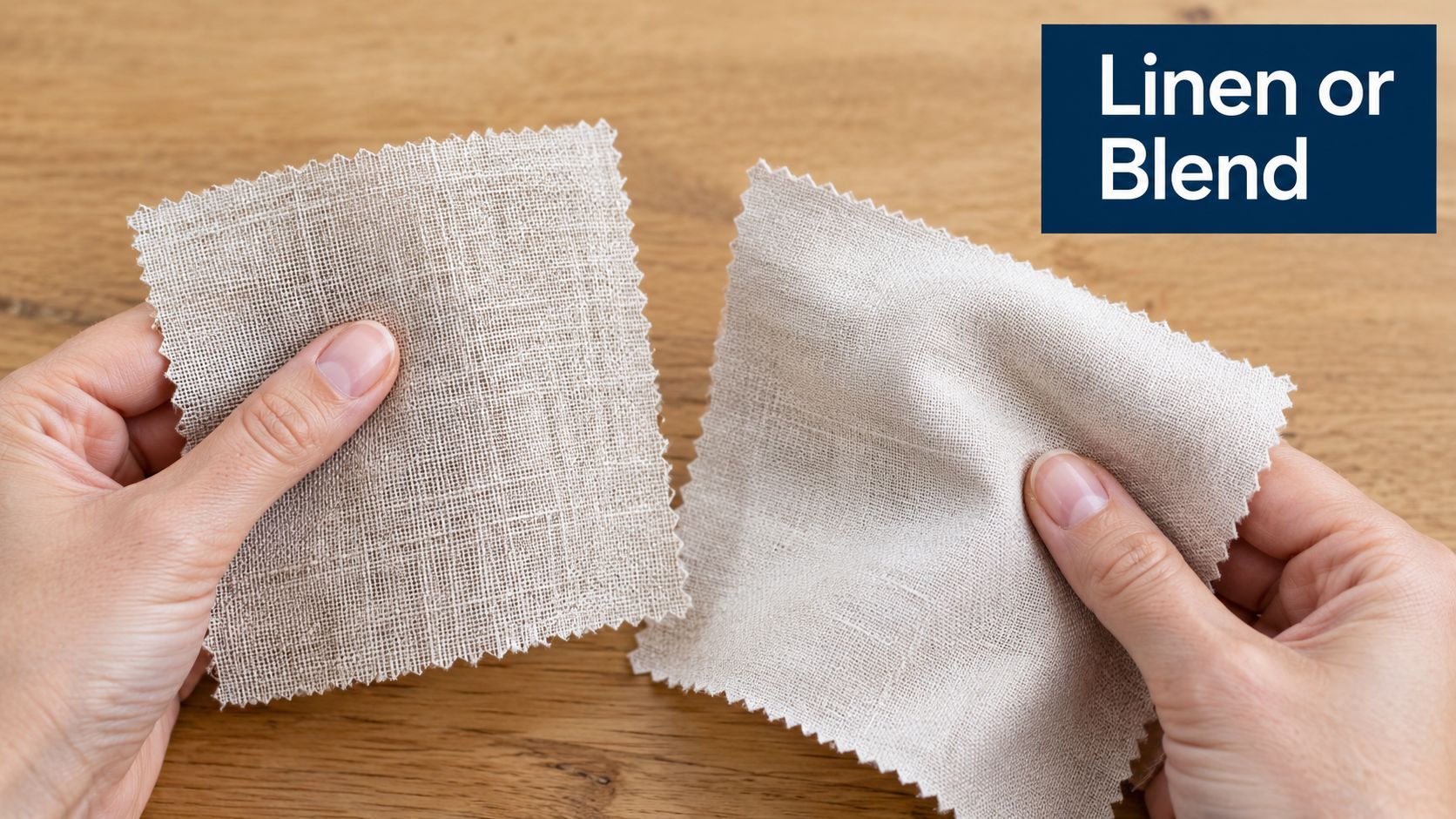
Pure linen has the clearest identity. It feels dry, breathable, and slightly irregular, with a crease pattern that records the day. It also asks you to accept more maintenance and more visual movement. That's exactly why it excels on a coastal weekend, a warm cabin trip, or any setting where relaxed confidence matters more than immaculate lines.
A cotton-linen blend is the practical commuter. Cotton usually adds softness, body, and a smoother drape, while linen keeps the fabric from feeling dense in warm conditions. The result often looks less rumpled after travel and gives you more coverage when white transparency is a concern. If you need one shirt for a plane, a casual office, and dinner, a blend is usually the smarter choice.
Linen-tencel blends can offer a fluid hand and a softer fall. They tend to look more contemporary and less rustic, which suits a polished vacation outfit or a minimalist travel uniform. The tradeoff is character. If you want the visible texture and dry snap that make linen unmistakable, pure linen remains more satisfying.
Make the decision by destination
Choose pure linen for beach-to-bar evenings, warm outdoor dinners, and trips where wrinkles look like evidence of a good day. The fabric's texture becomes part of the outfit, especially with sandals, washed denim, or relaxed trousers.
Choose cotton-linen for weddings, business-casual travel, and repeated packing. It generally gives you a smoother surface and a little more visual stability, which helps when the shirt needs to look polished after a long drive.
Choose a linen-tencel blend when drape matters most. It suits a tucked shirt, a fine-gauge knit over the shoulders, or a dinner setting where you want linen's warmth management without a strongly rustic texture.
Don't assume a blend is a compromise. It can be a better tool for a specific transition. Pure linen wins when the day should remain visible in the clothes. A blend wins when the shirt needs to negotiate several dress codes without constant attention. This guide to linen blend men's shirts offers a useful comparison point for that decision.
White also changes the equation. A dense blend can reduce the worry of sheerness, while a loosely woven pure linen may need a white or skin-tone undershirt. Avoid a dark base layer under white linen. The contrast announces itself before you do.
Styling the Shirt From Beach to Après
The beach day ends, the bar opens, and your white long-sleeve linen shirt should already have a second job. Change one piece at a time, usually the trousers, shoes, base layer, or sleeves, so the outfit keeps its character while matching the next setting.
Beach to boardwalk
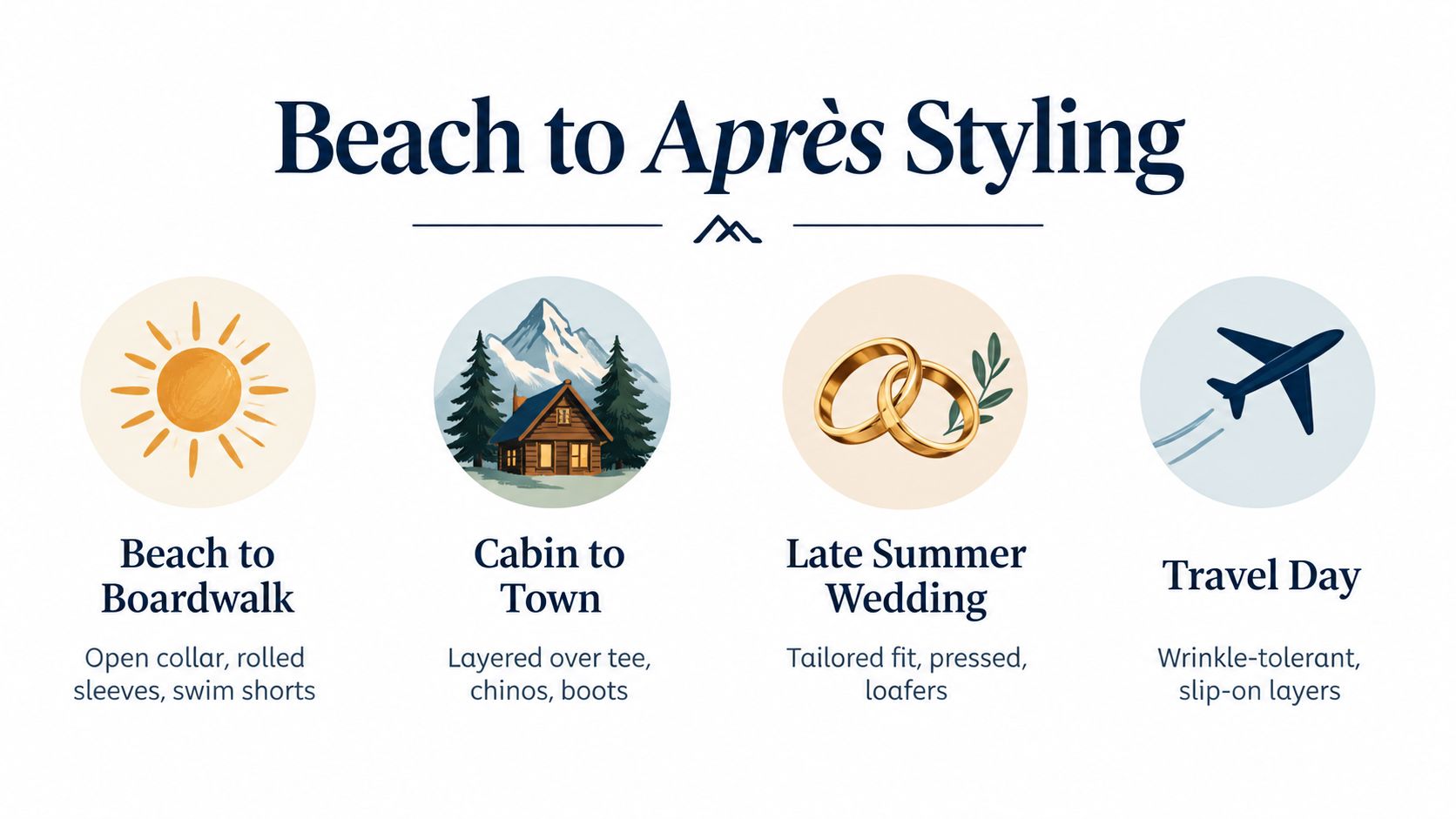
Wear the shirt open over swim shorts with loose sleeves and a relaxed collar. Leather sandals suit the sand; clean canvas sneakers make the move to the boardwalk. Before dinner, button the middle of the shirt, roll the sleeves evenly, and replace swim shorts with drawstring trousers or faded five-pocket pants.
Keep the shirt sun-warmed, not flattened into stiffness. Leave the top button open, but stop the opening well above the navel unless the restaurant is effectively a beach bar.
Cabin to town
At the cabin, linen works as a lighter alternative to flannel. Wear it over a tee with chinos, then add boots or sturdy sneakers. If the porch is cold, put a fleece or overshirt on top. Remove that layer when the temperature rises, and let the white shirt sharpen the outfit for lunch in town.
Long sleeves earn their space here. They cover your arms on the drive, block a porch breeze, and create a cleaner line once conversation moves indoors. In serious mountain cold, linen is not insulation. Put it under a proper thermal base layer or a warm overshirt such as a High Sierra flannel instead of asking it to do a job it cannot do.
Late-summer wedding
Choose a fitted cut, a smooth weave with limited transparency, and trousers with a clear crease. Tuck the shirt into a navy, stone, or charcoal suit, then finish with loafers and a simple belt. Keep the collar structured and the sleeves down through the formal portion.
Linen suits a warm wedding because its texture relaxes tailoring without making the outfit theatrical. Fit still decides the result. Transparent cloth, beach sandals, or a collapsing collar will pull the shirt out of formal territory. Read the dress code, then let linen provide the comfort.
Travel day
Travel calls for restraint. Wear the shirt over a tee with relaxed trousers and slip-on shoes, or place it over a fine knit when the cabin turns cold. Pick a wrinkle-tolerant fabric and keep heavy bag straps from grinding into the shoulder.
At the destination, tuck the shirt and change shoes before dinner. This men's vacation shirt guide shows how to build a compact travel wardrobe around layers that change roles.
Watch the styling breakdown before packing. Its visual examples show how one shirt can move from activity to conversation without filling the bag with backup outfits.
For group trips, coordinate without creating a costume. Matching white linen shirts can suit a bachelor weekend, groomsmen dinner, or cabin gathering when the color and general fit align. Let each person choose different shoes, hats, and finishing details. The best shared outfit leaves space for individual stories once the activity ends.
Keeping White Linen Crisp and How to Build the Rest of the Look
White linen looks best when it has been cared for, not over-managed. Wash it gently, remove it promptly, reshape it while damp, and air-dry it in the shade. Care guidance from Charles Tyrwhitt's linen shirt instructions specifically advises prompt removal after washing, damp reshaping, avoiding tumble drying, and drying on a line or rack away from harsh direct sun.
Don't chase a perfectly flat surface after every wear. Linen's creases are part of its appeal, but deep, careless wrinkles make a shirt look neglected. Smooth the placket and collar by hand while damp, then use a warm iron only where the shirt needs definition.
A simple care ritual
- Wash gently: Use a mild detergent and avoid harsh treatment.
- Reshape damp: Align the collar, cuffs, side seams, and hem before drying.
- Air-dry in shade: This helps reduce creasing and protects the fabric from unnecessary heat.
- Store with room: Hang it on a broad hanger or roll it loosely for travel instead of crushing it under dense layers.
If you want the same logic in a shorter-sleeve option for hotter beach days, compare this men's short-sleeve white linen shirt guide.
Complete the Look
Build around the transition, not a single destination.
- Cabin nights: Add a High Sierra layer over the shirt when the porch turns cold and the fire gets good.
- Coastal weekends: Reach for a High Water terry-lined piece when you're moving from water to boardwalk.
- Headwear: A simple cap or brimmed hat keeps the outfit grounded and gives the white shirt a little contrast.
- Underlayer: Choose a clean tee in a muted tone for cabin mornings and travel days.
- Hands-free details: A functional koozie or compact accessory keeps the social kit practical without loading your pockets.
Join the Vital Few newsletter for first access to product drops, field-tested social apparel, and ideas for living well after the adventure ends.
California Cowboy builds shirts, robes, and outerwear for the moment the activity stops and the gathering starts, from coastal layers to High Sierra après-ski apparel. Visit California Cowboy to assemble a white-linen transition kit that keeps you comfortable, socially confident, and ready for the next drink, dinner, or serendipitous encounter.

