


The lift has stopped, the beach wind has picked up, and your technical layers are suddenly doing a poor impression of evening wear. There's salt on your skin, woodsmoke in the air, or maybe just the faint scent of a parking-lot tailgate where someone has opened a cooler with the confidence of a man who packed exactly one warm thing. This is the handoff from adventure to conversation, and a men's terry cloth hoodie is built for that useful, slightly chaotic moment.
It isn't a substitute for a serious ski shell or a heavyweight winter layer. It's the piece you reach for after the hard part, when you want to holster your tech, dry off, settle in, and remain socially confident enough to accept a second drink. Think cabin deck, post-surf taco stop, first coffee after sunrise, or the drive home when the heater hasn't caught up with your wet hair.
The Art of the After-Adventure Look
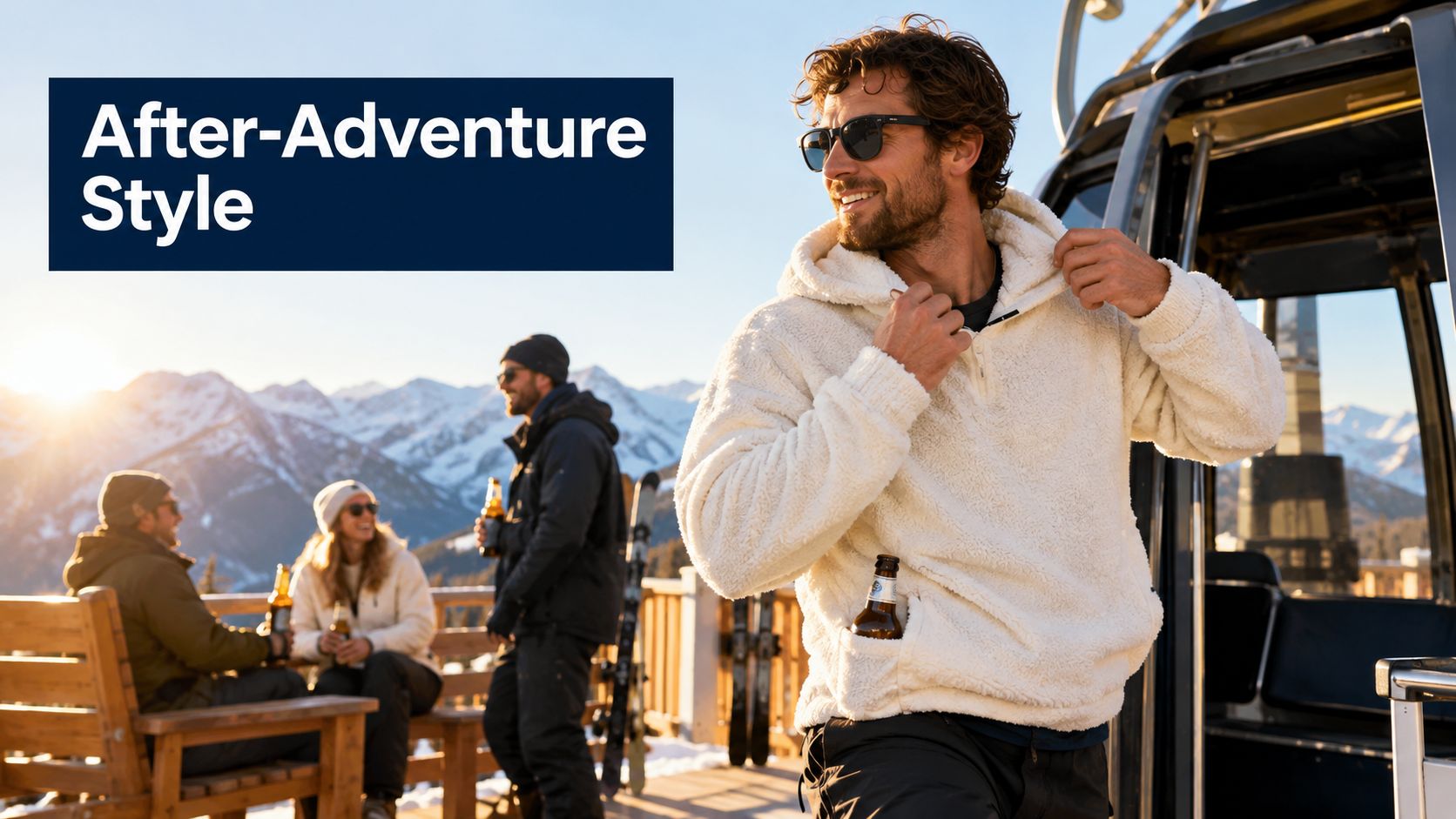
The best après-ski apparel earns its keep after the mountain, not while you're trying to conquer it. Picture the last lift running through blue evening light, boots feeling heavier than they did that morning, and a group of friends debating whether to head straight to the bar or make one heroic stop at the cabin first. You're warm from movement, chilled at the edges, and wearing clothing designed for weather rather than conversation.
That transition needs more than softness. It needs comfort without looking like surrender. A terry hoodie gives you a relaxed silhouette for the drive, enough structure for the lodge, and a surface that feels right when your base layers are no longer damp but your body hasn't quite returned to idle. The same logic applies after a brisk beach run, when the sand is everywhere and the wind has turned your wet shirt into a personal grudge.
Clothing for the social handoff
California Cowboy's view of what après-ski wear means is useful because après isn't just a dress code. It's the moment you stop performing the activity and start enjoying the people around it. Clothing matters because discomfort makes you leave early, fuss with your phone, or sit beside the fire while mentally composing an escape plan.
A well-chosen hoodie supports life offline in small, practical ways:
- It softens the landing: After cold air, salt water, or a long drive, a comfortable inner surface helps you settle without changing into pajamas.
- It keeps the outfit intentional: Pair it with denim, relaxed trousers, or terry bottoms and you'll look ready for the next stop, not trapped in the previous one.
- It invites movement: You can sit on a cabin step, lean against a bar, or walk to the taco truck without feeling overdressed or underprepared.
Practical rule: Dress for the first hour after the activity, because that's where the stories usually get better.
That hour is where serendipitous encounters happen. Someone from the next table joins the conversation. A friend produces coffee. The person who swore they were going home stays for the fire. The right hoodie doesn't create the evening, but it removes enough friction to let the evening happen.
Understanding the Terry Cloth Advantage
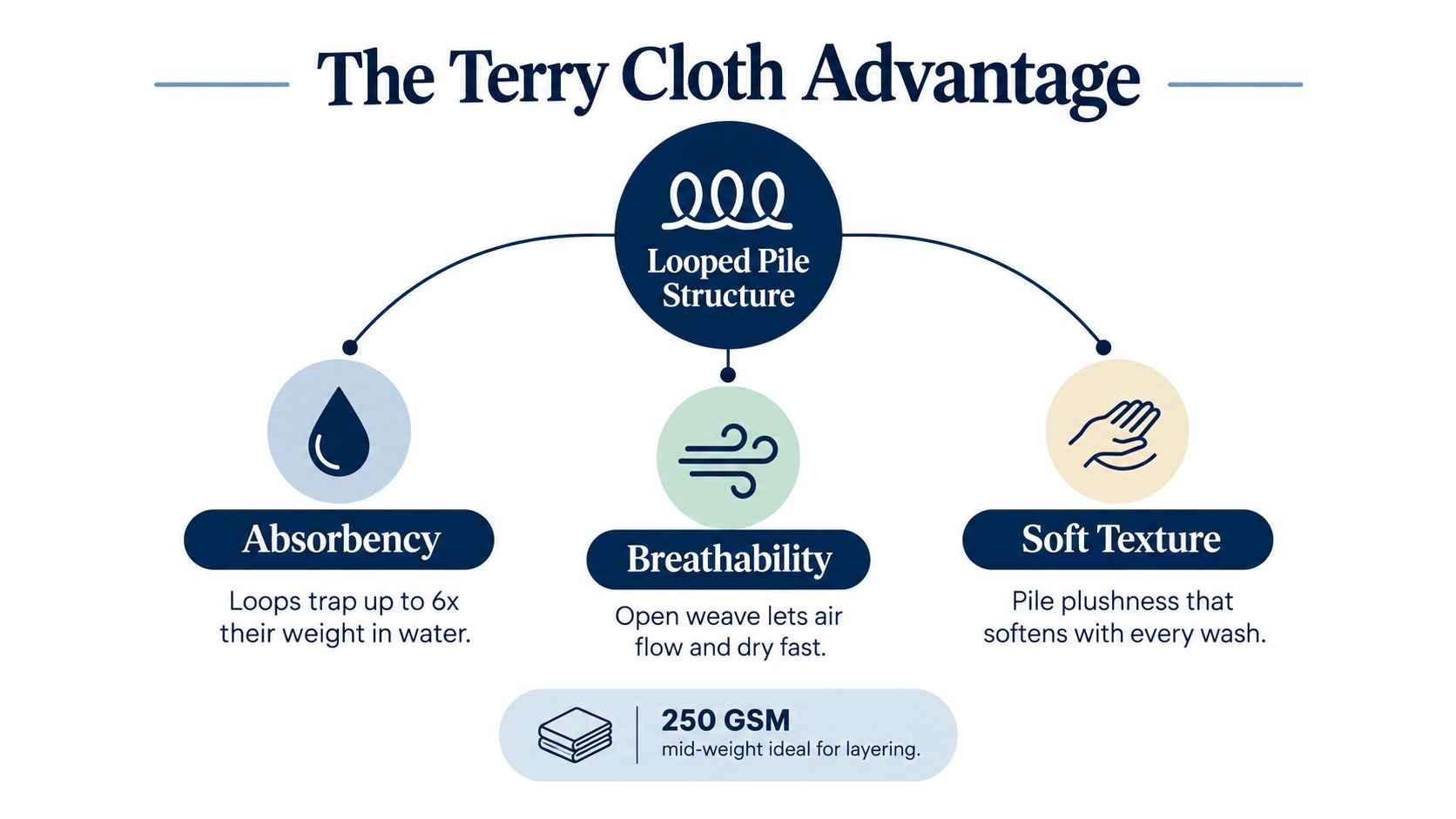
After a cold run, a surf session, or a long drive, the useful garment is the one that handles the transition without looking like technical equipment. Terry cloth earns its place here through uncut loops on one or both sides, which create more surface area than a flat knit. Those loops draw in moisture through small capillary channels, giving the fabric its familiar connection to towels, robes, and resort wear. Textile guidance on terry's looped structure links greater pile height with stronger water absorption.
For a fuller picture of how looped pile behaves in a garment, see our guide to what a terry robe is. The practical limit matters: a hoodie can manage residual moisture, but it still needs time and airflow to dry. That balance makes terry useful as social technical apparel, carrying you from activity to conversation without demanding a full outfit change.
Why French terry works so well
Traditional terry has a towel-like feel, with loops that may appear on both sides. French terry places loops on one side and a flatter surface on the other. That construction reduces bulk against the skin while preserving the fabric's ability to handle dampness, making it better suited to a hoodie worn through changing settings.
Its history matches that role. Loop-pile textiles were documented in ancient Egypt around 4000 BCE and in pre-Columbian Peru. The modern Western version was industrialized in 1850 by English towel maker Christy after he observed handwoven terrycloth in Turkey. The history of terrycloth traces the material's move from utility into clothing, loungewear, and leisure.
Terry expanded through loungewear, playsuits, and beach cover-ups in the 1950s, then became closely tied to resort wear and summer dressing in the 1970s. Drake's account of terry's fashion history also records toweling shirts, shorts, and jackets in the French Riviera and French Polynesia during the 1950s. That lineage explains its easy place beside a pool, on a cabin porch, or at a lodge bar. Terry has always worked between function and leisure.
From Slopes to Waves, Versatile Use Cases
A terry hoodie is most useful when your day has more than one chapter. Heavy fleece excels when insulation is the only assignment. A thin performance layer handles exertion well. Terry occupies the middle ground, helping with mild warmth, breathability, and residual moisture when you're moving from one setting to another.
After skiing, that means wearing it over a base layer for the walk from the locker room to the bar, then taking it off once the fire and drinks do their work. Après-ski clothing is designed for that shift from slopes to social settings, including bars, chalets, and mountain villages, where comfort, warmth, and style meet. A hoodie makes sense because it's easy to remove indoors and doesn't force you to remain dressed for weather that you've already left behind.
The coastal version of the same story
The beach has its own transition ritual. Wetsuit off, towel misplaced, hair full of salt, and a plan that has somehow expanded from “one coffee” to lunch and a sunset drink. A terry hoodie gives you a more polished alternative to sitting in damp boardshorts while pretending you're not cold.
The same logic appears in men's après-surf wear, where the focus is on what happens after the water. Wear the hoodie over a tee, add easy trousers or shorts, and you've got a beach-to-bar outfit that can handle the drive home, the roadside burrito, and the friend who insists on one last stop.
A weekend itinerary that actually works
For a cabin weekend, start with a tee or thermal layer under the hoodie for morning coffee. Add a flannel when the deck gets cold, then remove it indoors without rebuilding the outfit from scratch. The hoodie also works for the unglamorous stretches that make a trip memorable, including carrying firewood, making breakfast, and losing badly at cards.
After-ski layering guidance commonly favors removable layers and mid-layers that insulate without restricting you once activity ends. After-ski clothing advice from Monnet Sports places fleece, wool, and cashmere in that mid-layer conversation, while terry offers a more relaxed option for mild conditions and recovery periods. It won't replace a warm technical mid-layer in serious cold. It can make the hours around the activity far more pleasant.
Key Features to Look for in Quality
Start with the fabric construction, then inspect the details that determine whether the hoodie works outside the sofa. Standard terry is highly absorbent but can feel bulky. French terry is usually a more practical choice for a men's hoodie because the flatter side wears more comfortably and the lighter construction layers more easily.
French terry hoodies typically range from 240 to 320 GSM, offering a balance of warmth and breathability for all-season wear and active lifestyles, according to hoodie fabric guidance from East Xinwei. GSM is useful, but it isn't a personality test for the garment. A higher weight may feel more substantial, while a lower weight may move more easily and dry sooner. Construction, fit, and finish still decide whether the piece feels premium.
Read the hoodie like a buyer
Look for these details before you commit:
- Fabric hand-feel: The surface should feel comfortable against the skin, not harsh or overly slick. A looped interior can be soft without becoming plush fleece.
- Pocket placement: A kangaroo pocket is comfortable, but additional secure storage matters when you're carrying keys, cards, sunglasses, or a phone around wet gear.
- Closure choice: A pullover gives the classic lounge profile. A full zip offers faster ventilation and easier temperature control indoors.
- Hood construction: A hood should sit comfortably without collapsing over your eyes or pulling the neckline backward.
- Seam quality: Clean, reinforced seams matter around the shoulders, cuffs, pocket openings, and zipper.
The towel-lined hoodie approach is especially relevant for coastal and poolside use, where the garment needs to function as more than a decorative sweatshirt. Look for a design that manages moisture without becoming robe-like or so bulky that it dominates the rest of your outfit.
Fit is where premium purchases succeed or fail
Terry can drape beautifully, but it can also look shapeless if the cut is careless. A relaxed fit should give you room through the torso and shoulders without dropping the shoulder seam halfway down your arm. If you want to layer beneath it, check the armhole and cuff rather than just buying a larger size.
Reviews across premium French terry products show why shoppers should check measurements, read comments about shrinkage, and avoid assuming every brand uses the same block. Some buyers prefer sizing up for a looser silhouette, while others report that fit and hand-feel vary between products and colorways. The product page tells you what the maker intended. Customer feedback tells you how that intention behaves in real life.
Styling and Care for Long-Lasting Wear
The cleanest way to style a terry hoodie is to give it one structured companion. Pair it with straight-leg denim, canvas trousers, or fitted joggers. Add a wool beanie for mountain evenings, a washed cap for the coast, or simple sneakers that can survive a walk from the parking lot to the bar.
Avoid stacking too many soft pieces unless you're deliberately aiming for cabin wear. A hoodie with terry pants and slippers can be excellent on a deck, but add a flannel or overshirt when you're heading into public. That extra layer gives the outfit shape and keeps the look relaxed rather than accidentally becoming a hostage situation involving a blanket.
Care that preserves the hand-feel
Terry rewards boring maintenance. That's good news. You don't need a ritual involving moonlight, cedar smoke, and a retired textile professor.
- Wash with similar textures: Keep rough canvas, abrasive zippers, and heavy hardware away from the softest terry pieces when possible.
- Use cool or cold water: This helps reduce stress on color and shape, especially after exposure to salt, chlorine, or sun.
- Avoid overloading the machine: Loops need room to rinse properly, and crowded loads encourage friction.
- Dry gently: Follow the care label, and don't leave the hoodie compressed in a damp beach bag or ski pack.
- Empty every pocket: Keys, bottle openers, and stray wax can turn an easy wash into an expensive lesson.
The fabric may soften with wear, but softness isn't the same as weakness. A well-made hoodie should retain its shape when you sit, drive, and stand around a fire. If the cuffs loosen quickly or the pocket sags after ordinary use, the problem is probably construction rather than your laundry technique.
Dress for the setting, not the fantasy
For a post-surf afternoon, wear the hoodie over a dry tee with shorts or relaxed trousers. For après-ski style, use it beneath a jacket before the lifts close, then let it become the visible layer once you reach the lodge. For cabin wear, add a substantial flannel and boots that don't look nervous around mud.
The goal is social technical apparel. Every piece should help you move between activities without forcing a costume change. You're not dressing for a product photograph. You're dressing for coffee, weather, friends, and the possibility that the person at the next table has a better story.
The Perfect Gift and Personal Touches
A terry hoodie makes a strong gift because it solves a real problem without feeling overly practical. It suits the friend who spends weekends between surf checks and backyard dinners, the skier who treats the parking lot as a second venue, or the traveler who wants one comfortable layer that doesn't look defeated after a long drive.
Start with the recipient's habits, not the event. A frequent swimmer may value absorbency and a roomy hood. A cabin regular may prefer a heavier hand-feel and a fit that accommodates layers. Someone who travels light will care about whether the hoodie packs cleanly and works with more than one outfit.
A better gifting checklist
- Choose the silhouette first: Pullovers feel classic and relaxed. Full zips offer more control indoors and make layering easier.
- Use the recipient's existing clothes: If they live in slim denim, avoid an extremely oversized hoodie. If they prefer relaxed trousers, a little extra drape may be welcome.
- Consider personalization: Monogramming turns a useful layer into a keepsake for birthdays, milestone trips, weddings, and group weekends.
- Pair it with a shared ritual: Coffee, a bottle, or a planned cabin morning gives the gift a story rather than making it another item in a box.
For a broader companion gift, a guide to top alcohol gifts from Blind Barrels can help you choose something suited to a fireside pour or a celebration. Keep the pairing personal. A hoodie and a bottle work best when they reflect how the recipient spends time with people.
For wedding parties, bachelor weekends, and coordinated group gear, custom monogrammed clothing gifts offer a way to create a shared look without forcing everyone into novelty uniforms. Choose a consistent color family, then let each person keep some individuality through footwear, hats, or layers. Matching should feel like belonging, not evidence from a themed-party investigation.
Why California Cowboy Stands Out
The useful test for a terry hoodie is simple. Can it help you leave the activity behind without losing the character of the day? It should feel comfortable after exertion, presentable enough for a social setting, and functional enough that you aren't forced to carry every small essential in your hands.
California Cowboy's PCH Full Zip Hoodie is one example of that approach, using 465 gram French terry with details such as a double-needle stitched bottle pocket, zip dry pocket, bottle opener pocket, sunglass secure loop, and secret pen pocket. Those features are not decoration. They address the small logistical annoyances that appear when you're standing around after the surf, walking from the gondola to the lodge, or trying to keep your phone away from a wet cooler.
Social technical, without the laboratory coat
The broader idea is straightforward. Clothing can support real-world connection by reducing friction. A secure pocket means you can put your phone away. A comfortable hood means you can stay outside longer. A layer that handles the drive home, the cabin deck, and the first drink means fewer interruptions and more time for the people who came along.
For an early morning version of the same ritual, explore best instant coffee for camping from Cartograph Coffee. The point isn't to build a perfectly optimized adventure system. It's to make the ordinary transitions feel considered, whether that means coffee before a trail, a hoodie after a wave, or a warm layer once the mountain day is done.
The mens terry cloth hoodie belongs in that space between performance and leisure. It isn't the warmest garment you own, and it shouldn't pretend to be. Its strength is breathable comfort, moisture awareness, easy layering, and social confidence when the main event has ended but the day still has plenty of life in it.
For the next beach weekend, cabin trip, or après-ski gathering, choose a layer that helps you stay present instead of retreating to your phone or your car. The right hoodie won't make the story for you. It'll make it easier to stay for the next chapter.
California Cowboy makes shirts, robes, hoodies, outerwear, and accessories designed for post-adventure comfort and life lived offline. Visit California Cowboy to find a terry-forward layer for the beach-to-bar handoff, the cabin deck, or the first drink after the lifts close, then join the Vital Few for product drops and field-tested stories from the social side of adventure.

