


The smell of woodsmoke follows you through the lodge door. Cold mountain air still bites your cheeks, snow melts at the cuffs of your pants, and your hands want a mug before they want a phone. This is the moment for a quarter zip sherpa pullover, when the activity is over and the social part of the day is just getting started.
Sherpa feels like a soft landing after skis, surfboards, long drives, and parking-lot tailgates. It also has limits. The deep pile brings warmth and texture, but it isn't the layer I'd choose for a hard uphill effort or a wet storm. Think of it as stationary-warmth cabin wear, made for the drive home from the beach, the first drink after the lifts close, and morning coffee on a cabin deck while you holster your tech and wait for a serendipitous encounter.
The First Ten Minutes After the Last Chair
The last chair spins empty. Boots crunch over packed snow, a lodge chimney sends woodsmoke into the blue air, and everyone in your group moves with the slow, satisfied stiffness of people who've spent the afternoon outside. The jackets come off first. Then the gloves. Nobody wants a technical lecture. They want warmth, a seat, and something that looks socially confident enough for the bar.
A quarter zip sherpa pullover earns its place in that first ten-minute window. You pull it on before your boots are fully unlaced, close the collar against the draft, and settle near the fire with a steaming mug. The raised pile feels plush against a base layer, while the quarter zip gives you a simple way to release heat once the room fills.
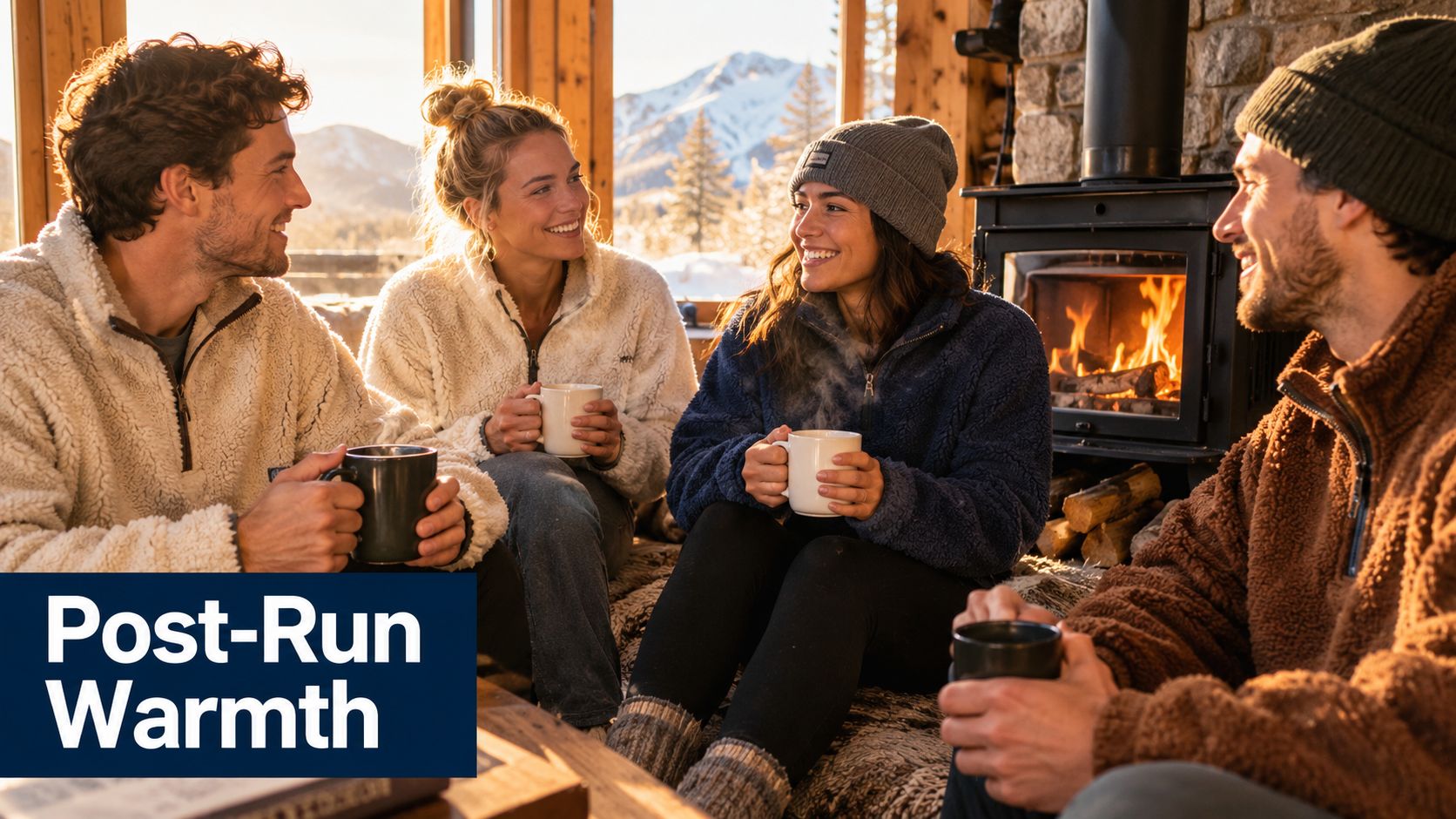
The honest assignment: A sherpa quarter zip is a lifestyle layer first. It excels when you stop moving, start talking, and want warmth without looking like you never left the mountain.
That distinction matters. Sherpa can handle a walk to the lodge, a cabin deck, or a cold tailgate, but it isn't a substitute for a breathable technical midlayer during sustained exertion. Its strength is comfort in calm, cold air. Its personality is generous, tactile, and a little indulgent.
The silhouette itself has staying power. Sweater zippers were already around in the 1930s, when the Talon Company perfected the zipper, and quarter zips gained popularity in the 1950s before fading somewhat in the 1960s as fleece became more common, according to this quarter zip and sherpa fabric overview. The modern version pairs that established shape with a loftier fabric.
What a Quarter Zip Sherpa Pullover Actually Is
Start with the surface. Sherpa is a raised, curly pile designed to resemble sheep's wool, commonly built over a flatter knit backing. The backing gives the garment structure, while the pile holds pockets of still air close to the body. Independent fabric guidance describes common sherpa constructions around 250 to 400 GSM and pile heights of roughly 3 to 8 millimeters in this sherpa fabric buyers guide.
GSM means grams per square meter. It isn't a complete warmth score, but it helps you compare fabric weight. A heavier, higher-loft sherpa generally feels warmer and bulkier than a low-loft version. Higher-loft constructions use longer staple fibers to trap more still air, increasing thermal retention without requiring a rigid outer shell.
Next comes the quarter zip. The zipper usually starts at the upper chest and runs toward the base of the collar. Open it to release heat around your neck and chest. Close it when a cold breeze moves across the cabin deck. That small opening is the garment's most practical feature because it gives you temperature control without making you remove a warm layer.
The construction details worth noticing
Look for a collar that stands on its own instead of collapsing into your neck. Ribbed cuffs should grip the wrist without feeling restrictive, and the hem should sit flat rather than ballooning over the hips. A kangaroo pocket adds hand warmth, while a zippered pocket keeps keys or a card from disappearing into the pile.
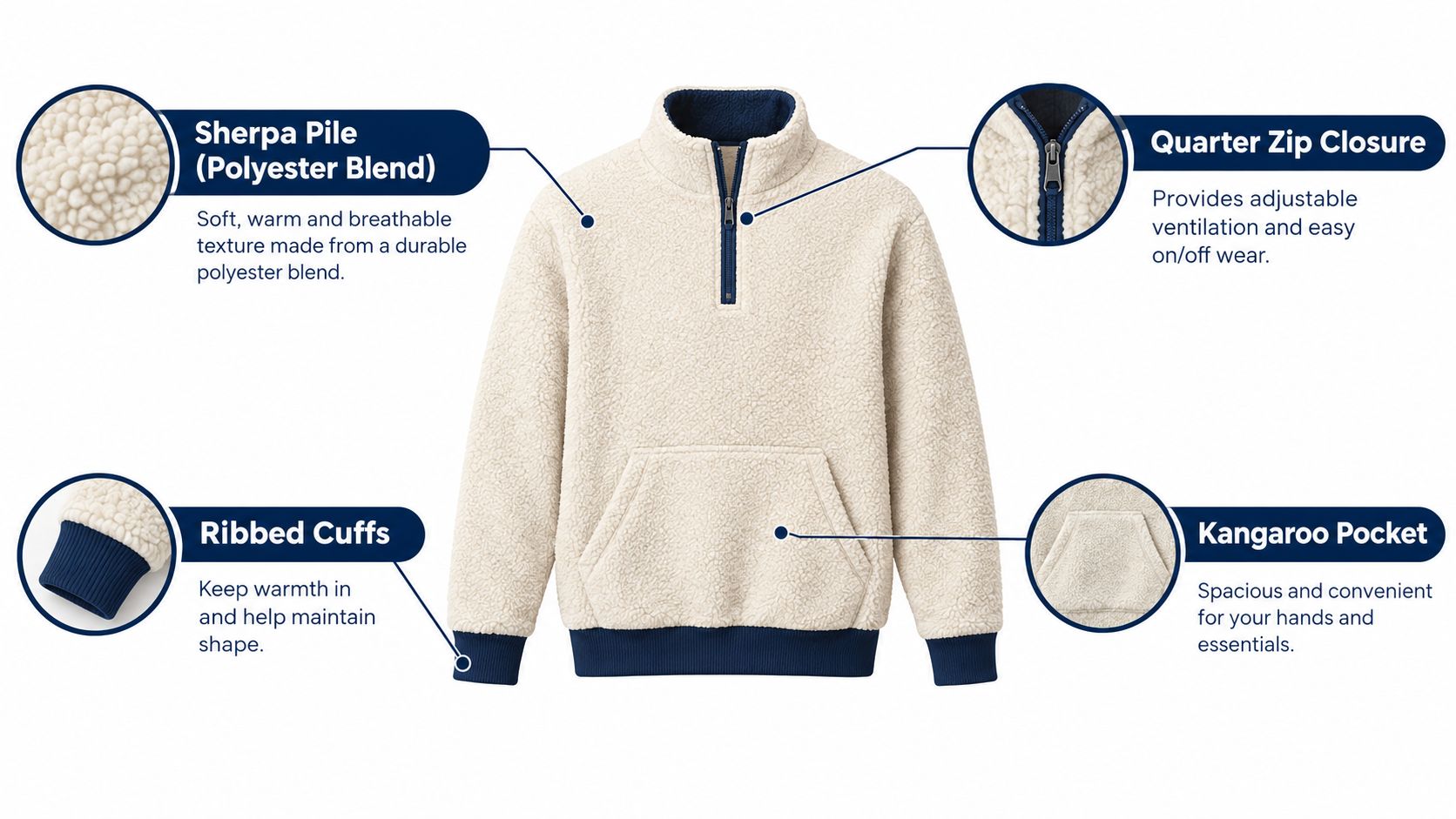
Check the shoulder seams and zipper garage, too. The pile should look even around friction zones, and the zipper should move without catching the curly fibers. Side panels can reduce visual bulk and improve movement, but they also create more seams to inspect.
The warmth comes from the pile. The wearability comes from the backing, cuffs, collar, and closure. A good quarter zip sherpa pullover balances those pieces instead of just adding more fluff.
Sherpa vs Fleece vs Teddy and Fuzzy Knits
Sherpa isn't automatically the right answer. It wins at plush warmth while sitting still, but smooth fleece usually handles movement and layering better. Teddy fleece occupies the middle ground, and fuzzy knits often make more sense when drape and appearance matter more than insulation.
The raised pile creates the trade-off. It can trap more air and feel warmer at rest, but it also tends to abrade, pill, mat, and snag more readily than a smooth fleece. Zippers, Velcro, rough seat backs, and pack straps are the usual culprits. For a useful primer on a lighter, more breathable alternative, compare sherpa with this lightweight breathable fabric guide.
| Fabric | Warmth | Weight | Breathability | Snag Risk | Best Use |
|---|---|---|---|---|---|
| Sherpa | High at rest | Medium to high | Low to moderate | High | Après-ski, cabin decks, fireside lounging |
| Smooth fleece | Moderate to high | Light to medium | Better | Lower | Active layering and travel |
| Teddy fleece | Moderate | Medium | Moderate | Moderate | Everyday softness and casual wear |
| Fuzzy knits | Variable | Light to medium | Variable | Moderate to high | Style-first outfits and indoor wear |
Pick by behavior, not by texture
Choose sherpa when you expect long periods of sitting, chatting, or watching the weather from a porch. Choose smooth fleece when you'll hike, ski, travel through changing temperatures, or wear a shell over it. Teddy fleece works for everyday softness without quite as much visual bulk.
Fuzzy knits belong in a different lane. They can look polished with trousers or denim, but their insulation is often secondary to hand feel and drape. If you want a deeper look at high-pile construction, California Cowboy's high-pile fleece notes offer useful context without pretending every lofty fabric behaves like technical fleece.
My recommendation is simple. Buy sherpa for the transition after activity, not for the activity itself. That one decision prevents most buyer's remorse.
Where a Sherpa Quarter Zip Earns Its Keep
Sherpa comes alive when the body stops producing as much heat. The lift ride is over, the trailhead conversation begins, or the tailgate turns from setup to hanging out. The pile traps warmth in calm air, so the pullover feels generous when you're sitting on a bench, leaning against a truck, or holding a mug on a cabin deck.
It works particularly well for après-ski lounges and fireside chairs. You can wear it over a base layer, close the neck while walking outside, then open the zipper once the room warms up. It also travels neatly in spirit, even if the bulk takes up real space in a bag. On a cabin weekend, it can serve as a couch layer, a makeshift pillow, or the piece everyone borrows after dinner.
Where it loses the argument
Don't wear sherpa for high-output exertion. Skinning uphill, trail running, or shoveling heavy snow for an extended stretch will push the pile past its comfort zone. Sherpa doesn't move moisture as efficiently as a smoother technical fleece, and sweat can flatten the loft while making the inside feel clammy.
The same logic applies to uncertain weather. Sherpa adds warmth but doesn't provide meaningful wind resistance on its own. In wet snow, use it under a protective shell only if you have enough room, because the loft creates serious bulk and can compress beneath tight outerwear.
For shoppers building a broader cold-weather wardrobe, this guide to cold weather golf apparel is a useful comparison point because golf exposes the same tension between warmth, movement, and temperature control.
Practical rule: If you're sweating before you reach the chair, choose smooth fleece. If you're sitting down after you reach it, sherpa earns the invitation.
A well-designed quarter zip makes the boundary easier to manage. The zipper gives you a vent, but it can't turn a warm, high-pile fabric into a breathable performance layer. Use the garment where its strengths are obvious, and it will become the piece you reach for without thinking.
Fit, Sizing, and How It Layers
A sherpa pullover needs room to loft. Too tight, and the pile compresses across the chest and shoulders. Too loose, and the garment turns into a fuzzy box that swallows your shape. Aim for a relaxed fit that skims the upper body, lets the zipper lie flat, and leaves enough space for a substantial base layer.
Check these fit points first
- Shoulders: The seam should sit close to the shoulder edge without dropping far down the arm.
- Chest: Zip the pullover fully. If the zipper bows, pulls, or strains, the chest is too tight.
- Sleeves: The cuff should finish at the wrist bone. Ribbing may stretch, but it won't rescue a sleeve that starts too short.
- Hem: Look for enough room to sit without the hem riding sharply upward.
- Back: Reach forward as though you're holding a mug or steering a car. The fabric should move without pulling across the shoulder blades.
Women's and unisex cuts need separate attention. Women's sherpa pullovers often run slightly boxy. Size down one when you want a cleaner shoulder line and plan to wear a tee or thin base layer underneath. Keep your usual size for an oversized cabin look. Unisex versions commonly bring a broader chest and longer hem, so pay close attention if you're between sizes. This unisex sweatshirt sizing advice can help you compare measurements before ordering.
Build the layer around the weather
For a cold chairlift ride, wear merino or synthetic long sleeves underneath. The base layer manages moisture better than sherpa, while the pullover supplies the cozy insulation once you slow down. Add a hardshell only in wet snow or sharp wind, and check that the shell doesn't crush the pile across the shoulders.
For milder conditions, wear the quarter zip over a tee. The practical range is broad enough for cool mornings, travel days, and evenings when temperatures fall after sunset, but comfort depends on wind and activity. Open the zipper before you feel overheated. That small adjustment is more effective than peeling off the entire garment.
Use the California Cowboy men's fit guide as a measurement reference, then compare the garment's intended silhouette with your own layering habits. The right size isn't the one that looks sleek on a hanger. It's the one that still looks composed after a base layer, a long drive, and a second round by the fire.
Care and Washing to Keep the Pile Alive
The pile creates the comfort and the maintenance problem. Raised fibers catch on rough surfaces, collect lint, and flatten under friction. Collars, cuffs, zipper garages, elbows, and the sides of a kangaroo pocket deserve extra attention because those areas meet hands, bags, tables, and seat backs most often.
Wash less frequently than you might wash a smooth tee. Air the pullover outside after a smoky evening, spot-treat food marks, and give it time to release odors before reaching for the machine. That approach protects the loft and keeps unnecessary agitation away from the fibers.
A low-drama washing routine
- Turn it inside out. This shields the visible pile from direct abrasion.
- Use cold water and a gentle cycle. A mild detergent is enough for ordinary wear.
- Skip fabric softener. It coats fibers and can crush the loft that gives sherpa its warmth.
- Avoid the dryer. Tumble heat can damage the pile and shrink the knit backing.
- Dry with patience. Lay the pullover flat or hang it carefully in a well-ventilated place.
- Re-fluff only with air. If needed, use an air-only setting briefly with clean tennis balls, never heat.
Care note: Once the pile collapses, the garment loses more than its appearance. Fewer air pockets remain to slow heat loss, so the pullover feels less insulating.
Store sherpa folded rather than on a hanger. The fabric's weight can pull at the shoulders and leave stretched points that don't disappear easily. For pilling, use a sweater comb or fabric shaver with a light touch. Don't rake aggressively across the surface, especially near seams or zipper tape.
The zipper deserves its own habit. Close it before washing so teeth don't catch on the pile, and clear trapped fibers with your fingers after drying. Treat the pullover like a soft technical object, not a disposable sweatshirt, and it can stay presentable through repeated cabin seasons.
Styling It from Slope to Chalet to Bar
Après-ski dressing has moved beyond literal ski uniforms. Coverage for 2026 describes the category as a year-round aesthetic that travels from resort settings into city life, while another style report connects its acceleration to the Gucci and The North Face collaboration in 2021. The result is more useful than a costume. One sport-adjacent piece, one fashion piece, and enough texture to make the outfit feel intentional.
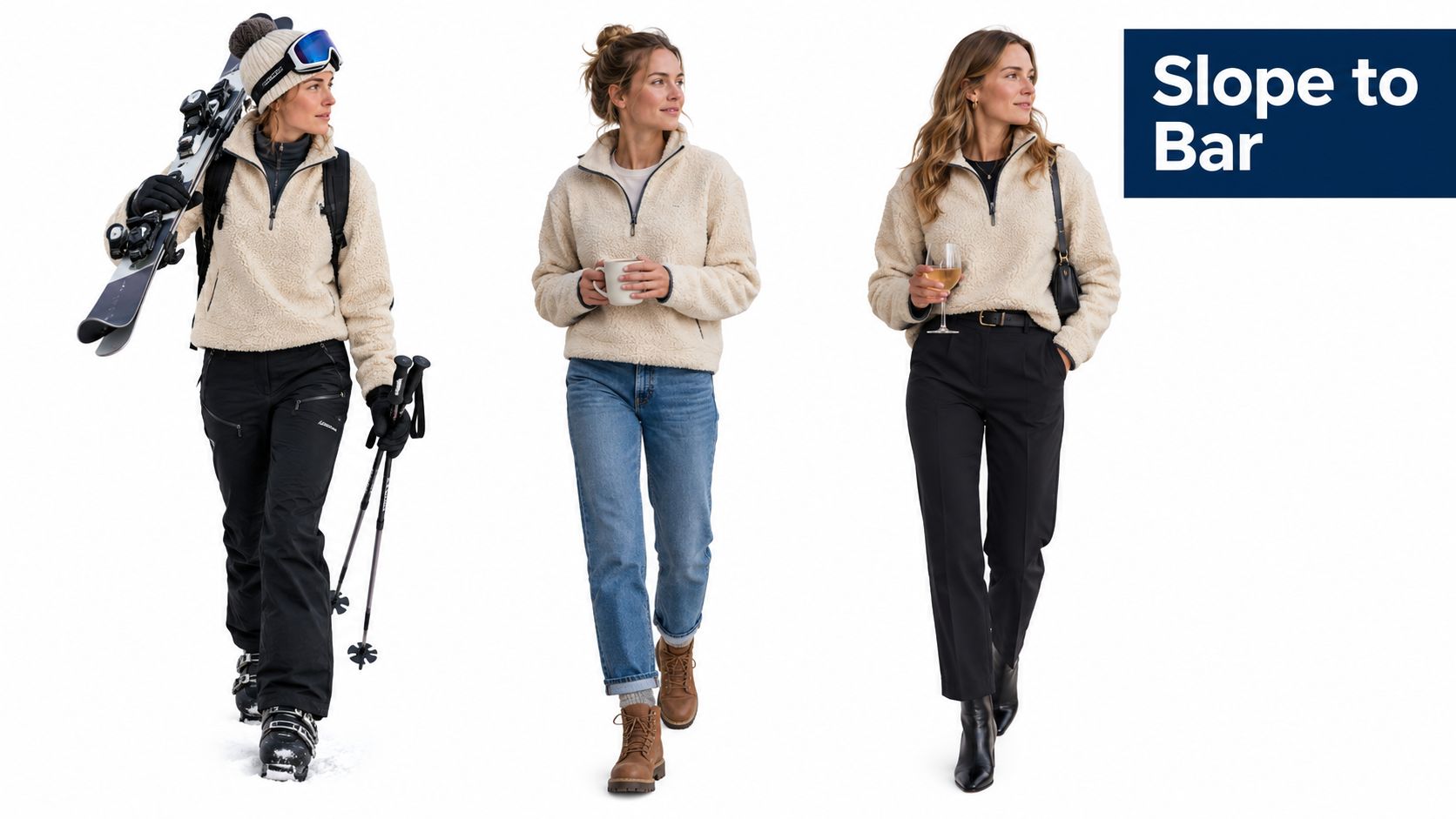
The mountain-to-lobby outfit
Start with a thin merino base layer under the quarter zip. Add technical ski pants or insulated trousers, then bring in a waxed-cotton or flannel overshirt if the weather allows the extra bulk. A wool beanie and après-ski boots finish the lift-line-to-lobby transition without making you look like you're headed back onto the course.
Keep the overshirt open if the sherpa has a strong texture or contrasting collar. If the outfit feels broad through the torso, leave the quarter zip untucked and let the vertical zipper create a clean center line.
The après-ski outfit guide is a useful source of additional combinations for the same slope-to-social handoff.
The chalet look
Swap technical pants for relaxed indigo or ecru denim. Add a curved-hem flannel, leather Chelsea boots, or shearling-lined boots. Simple silver or leather accessories pick up the zipper hardware without making the outfit look overworked.
A half-tuck can give a shorter frame more definition, especially with a longer unisex hem. Taller wearers can leave the pullover loose over denim. Curvier frames often get the cleanest line by keeping the base layer smooth, opening the quarter zip slightly, and avoiding a bulky overshirt underneath.
The bar version
Treat the sherpa like a textured sweater. Wear it over a clean white tee or rollneck, pair it with cropped wool trousers, and finish with minimalist sneakers or neat boots. A compact crossbody keeps your hands free for a drink and makes the outfit feel urban rather than lodge-bound.
A 2026 skiwear guide describes après-ski clothing as moving “from slope to chalet to bar” without a full outfit change, with a base layer fitted enough to wear alone once the jacket comes off, as explained in this skiwear style guide. That principle works perfectly here. The sherpa supplies warmth and visual interest, while the base layer keeps the outfit functional after the pullover comes off.
For a sharper social read, pair one sport item with one fashion piece. A lifestyle report describes the current direction as more refined, more urban, and more practical, addressing the challenge of meeting people after activity without changing clothes, as outlined in this après-ski style report. That is the quarter zip's sweet spot. It lets you holster your tech, keep your hands available, and walk into the next room looking prepared for conversation.
The Buying Checklist and Complete the Look
A good sherpa pullover reveals itself quickly if you know where to look. Run your hand across the chest, inspect the shoulder seams, and operate the zipper before you think about color. The garment should feel substantial without turning stiff, and the pile should look even rather than patchy or glossy.
What to check before buying
- Dense, even pile: Look for consistent loft, especially at the elbows, cuffs, collar, and zipper area. Visible knit backing in high-friction zones is a warning sign.
- Smooth quarter zip: Run the zipper from the hem of its track to the collar stand. It should stop cleanly without catching fibers.
- Stable ribbing: Stretch the cuffs and hem lightly. They should recover instead of looking loose immediately.
- Clean shoulder construction: Flat or covered seams reduce irritation and give the pullover a cleaner outline under a shell.
- Back movement: Reach forward and rotate your shoulders. The zipper shouldn't buckle when the fabric stretches.
- Real heft: A reassuring weight usually signals meaningful loft, but don't confuse weight alone with quality. Even construction matters more.
Glossy synthetic shine, thin elbow patches, uneven pile, and a zipper that snags are all reasons to keep walking. A dramatic collar can't compensate for weak finishing, and an oversized silhouette won't hide poor shoulder alignment once you add a base layer.
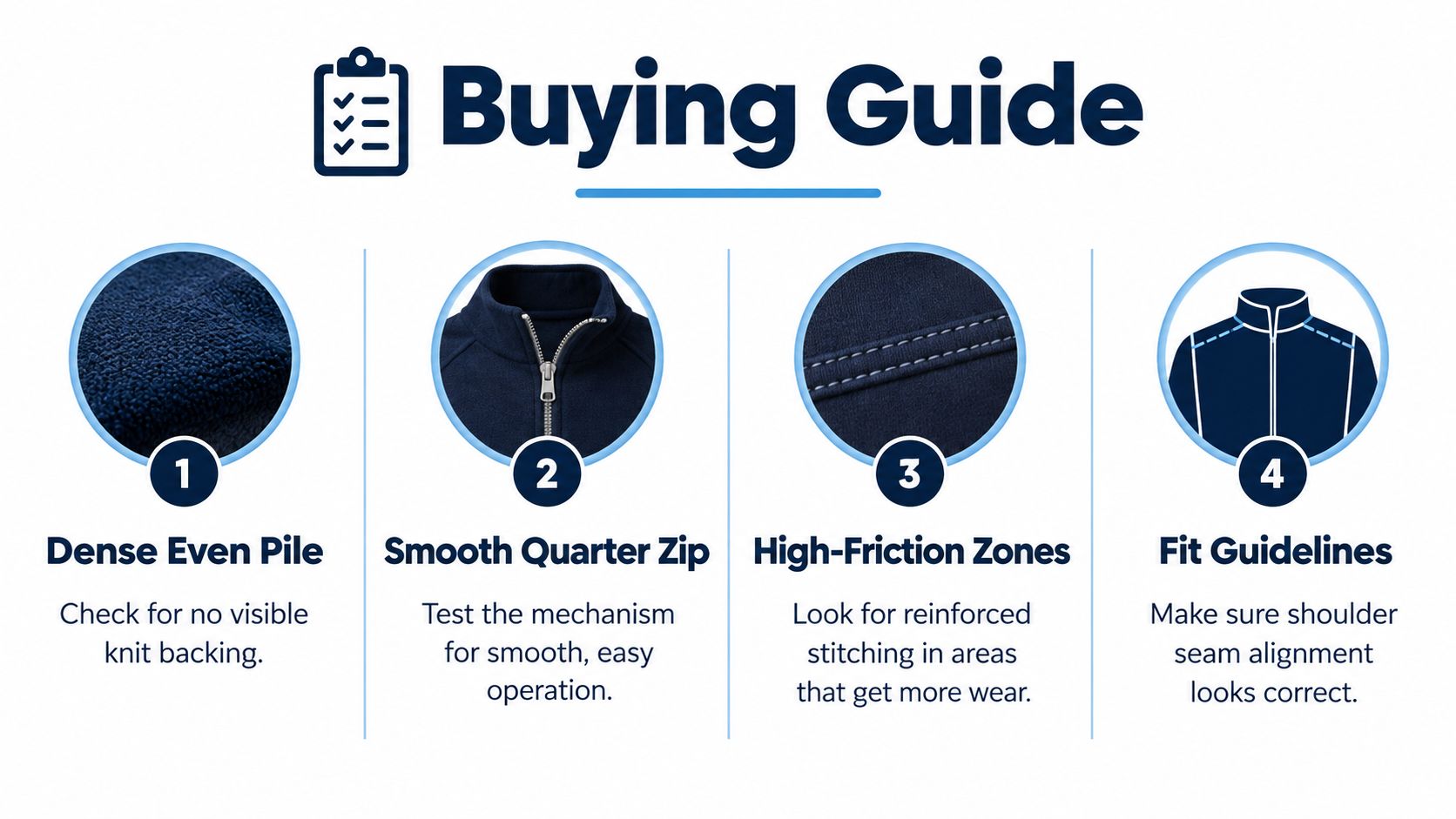
Complete the look
Build around texture, then control the proportions. A matching beanie handles the alpine side. A brushed-cotton flannel or waxed-canvas overshirt adds structure. Insulated denim and shearling-lined boots keep the outfit grounded when the pavement is cold.
For a cabin weekend, add a clean tee, a practical koozie, and a robe for the late-night walk from the firepit. A cabin trip packing list can help you assemble the rest of the kit without packing five versions of the same warm layer.
California Cowboy offers social-living apparel built around post-adventure comfort, including the Astral Half Zip, a fluffy fleece top with a water-resistant zip pocket, kangaroo pocket, and cozy hood. Explore the Vital Few collection for companion pieces that can carry you from lift to lounge to late dinner, then join the community ready to trade screen time for a real table, a warm drink, and a few good stories.

