


The last run ends, the chairlift chill follows you into the parking lot, and the first breath near the lodge carries woodsmoke, wet wool, and the promise of a warm drink. Your gloves are damp, your boots are suddenly too tight, and your friends are already heading toward the bar. The right apres-ski outfit isn't another piece of ski equipment. It's the layer that helps you feel comfortable, look like yourself, and stay present when the mountain day turns social.
Good apres ski men’s style is less about changing into a whole new outfit and more about knowing what to keep on, open, or take off. With a smart middle layer and a few useful details, you can move from the lift-side bar to a fireside dinner without packing a second wardrobe.
From Chairlift Chill to Fireside Connection
A final run can leave you warm and damp, but the walk from the lift to the lodge brings a different kind of cold. Your helmet comes off, your gloves land near the heater, and the group looks for somewhere to gather. Maybe that's a crowded bar beside the slopes. Maybe it's a cabin deck where someone's already poured the first drink. Either way, you've just shifted from moving fast outdoors to standing around, talking, and cooling down.
That transition is what après-ski clothing needs to handle. A good layer shouldn't feel like a damp piece of ski gear indoors or like a flimsy shirt in the evening air. It should give you enough warmth and storage to relax, with a little polish for an unplanned dinner or a conversation that lasts longer than expected.
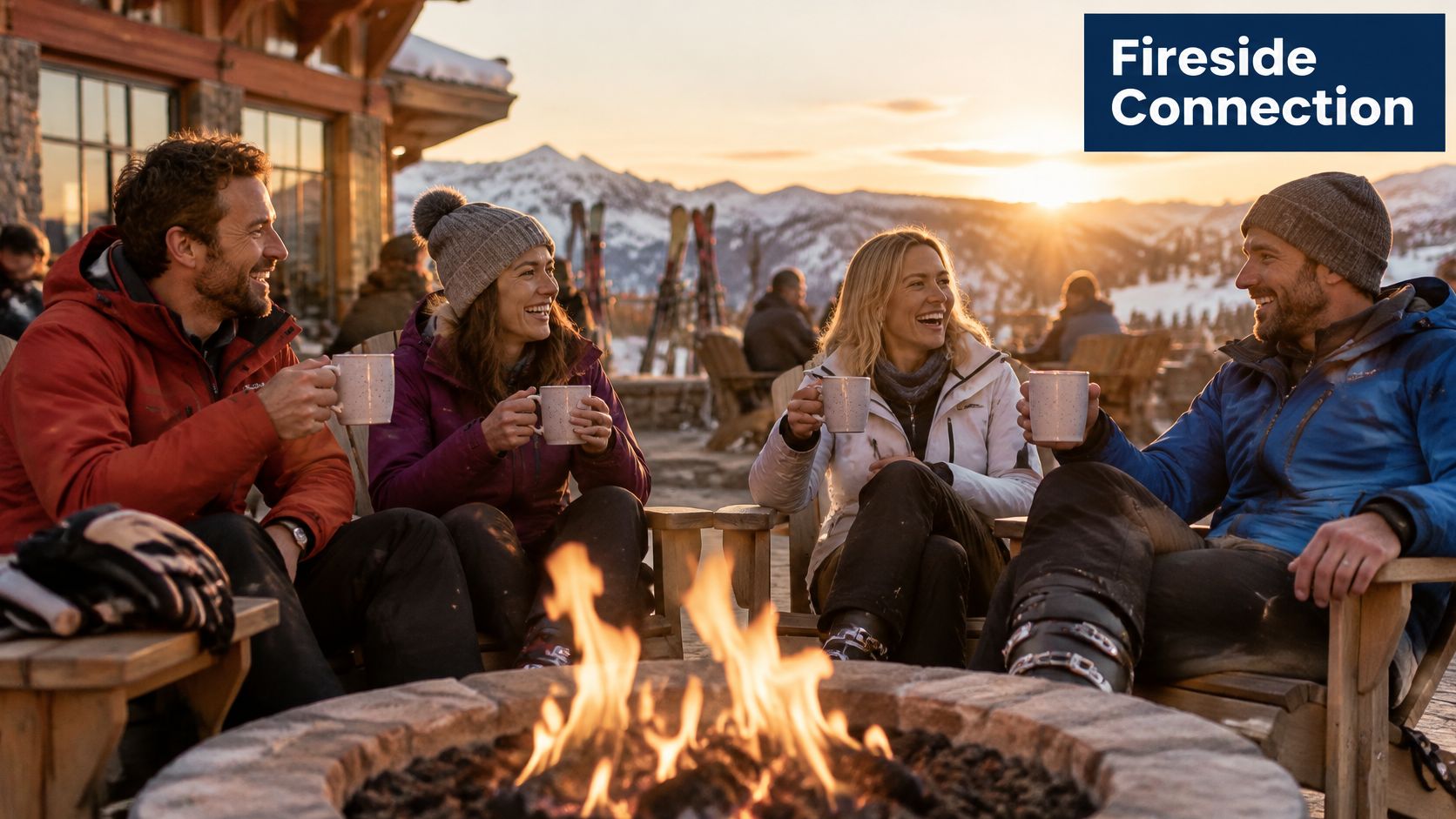
A smaller wardrobe often works better than an ambitious one. Start with a base layer for perspiration, add a removable warm layer, and keep weather protection close for the walk back. Your middle layer does the social work: it can look intentional when the ski jacket comes off, then adjust as you move between a snowy patio and a heated room.
If you're planning a group weekend alongside the mountain time, these group trip ideas from MyPerfectStay can help with the wider itinerary. For more ideas on choosing comfortable pieces for time away from the slopes, explore men's luxury loungewear for cabin downtime. The aim is simple: keep the practical layers, lose the performance mindset, and make room for good company.
What Après-Ski Clothing Is Really For
Après-ski means more than changing out of ski clothes. It's the social stretch after outdoor activity, when a day on the mountain carries on over food, drinks, and conversation. The tradition developed from post-ski gatherings associated with recreational skiing in 19th-century Scandinavia, then expanded into hotels, mountain huts, restaurants, bars, and resort nightlife, as CNN's account of après-ski culture describes.
That history helps explain the clothing problem. You might leave a cold lift-side bar for a heated lodge, then settle into a cabin or restaurant. A garment that feels perfect while you're standing outside can become stifling indoors. One that looks right at dinner may not be comfortable for the walk over icy streets.
Comfort apparel isn't safety equipment
A shirt, overshirt, or robe is lifestyle apparel, not protective ski gear. Helmets and goggles belong to the safety system on the mountain; a warm mid-layer is for comfort as you move between the slopes and the places where people gather afterward. Keeping those roles distinct makes it easier to choose a social layer without expecting it to do a helmet's job.
The same idea applies to cabin wear for men. You want warmth, ease, and a look that feels at home around a fire, but you don't need to dress like you're about to start another run. A soft shirt over a base layer may be enough for the lodge. A robe may suit a quiet cabin morning or late evening better.
The best outfit leaves some attention for the people in the room. Keep essentials secure, holster your tech when you can, and give yourself a chance to be socially confident without fussing over every detail. That's where serendipitous encounters tend to fit: between the first drink and the second story about the run that nearly went sideways.
Build a Layering System That Changes With the Room
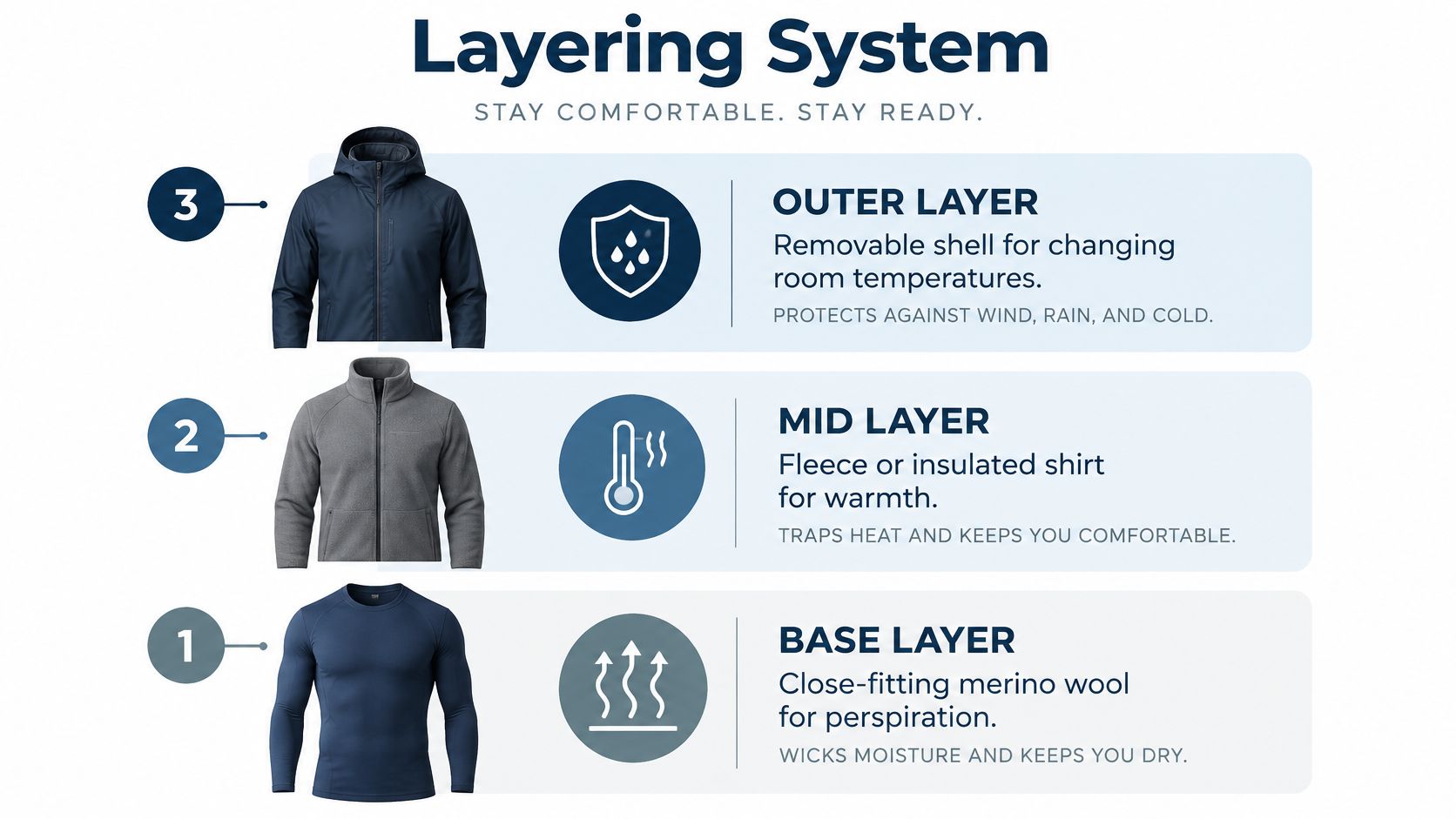
A dependable mountain outfit separates moisture control, insulation, and weather protection rather than asking one bulky garment to do everything. That approach is also the basis of Oberson's alpine layering guidance. Each layer has a job, and the removable middle layer makes the system adaptable once you leave the slopes.
Give each layer one clear job
Start with a close-fitting merino-wool or synthetic base layer. It sits next to your skin and manages perspiration. Merino can suit the resort-to-lodge stretch because it offers warmth and odor resistance; synthetics are useful when heavier exertion makes quick drying a priority.
Add a fleece or insulated mid-layer to trap warmth. Make sure it leaves room for the base layer without squeezing it flat. If the mid-layer compresses the layers underneath, the system won't feel as comfortable when you stop moving.
Finish with a windproof, water-resistant outer layer for snow, wind, and exposed walks. You can remove it indoors, then put it back on when the group heads outside. That's more practical than trying to wear one heavy garment from morning to the final round.
| Layer | Primary Job | Best Après-Ski Moment | Choose For |
|---|---|---|---|
| Base layer | Manage perspiration next to the skin | Cooling down after a run | Close fit and comfortable wear |
| Mid-layer | Hold warmth while staying removable | Moving from the lift-side bar to a lodge | Easy-open closures and room to move |
| Outer layer | Limit exposure to wind and snow | Evening walks or time outdoors | Weather resistance and useful pockets |
Keep the middle layer easy to open or remove. Ventilation, flexible fit, comfortable cuffs, and practical pockets matter when you're moving around before settling in. A high collar can help with drafts; when you take off your outer shell, the mid-layer should still feel presentable on its own.
For a closer look at combining warmth with adaptable layers, use this thermal-layering guide for ski trips. Think of the goal as warmth without getting locked into it.
Choose the Right Flannel Robe or Insulated Shirt
A flannel, robe, and insulated shirt can all work after skiing, but they solve different problems. A flannel gives you a strong fireside look. A robe is an easy choice for cabin downtime. An insulated shirt bridges cold outdoor moments and relaxed social settings without feeling as bulky as full outerwear.

Pick by setting, not by a single warmth ranking
A luxury flannel shirt is a natural choice when the ski jacket comes off and you want a little more structure than a base layer. Check how it fits over your usual layers and whether its fabric feels comfortable indoors. A shirt that's too tight can restrict movement; one that's excessively heavy may feel like too much once the lodge heats up.
An insulated shirt can be useful when it's cold outside but you still want something you can wear into a bar or cabin. Look for practical details such as a comfortable collar, cuffs that limit drafts, and durable pockets. Those are among the considerations in Alpy's guide to evaluating ski outerwear, which treats outerwear as a transition garment rather than something for slope conditions alone.
A robe makes the most sense when you're settling into a cabin, getting ready for a relaxed evening, or stepping out for morning coffee. It isn't a replacement for weather protection on a long outdoor walk, but it can be an easy comfort layer once you've returned indoors.
For a closer look at how different shirts work in this setting, browse lined flannel shirts for men. Treat concealed pockets as useful storage, not a reason to keep checking your phone.
When you're comparing pieces, pay attention to more than the fabric label:
- Warmth: Does it suit a cold walk outside, a heated lounge, or mostly indoor downtime?
- Breathability: Will it feel comfortable after exertion, or hold on to too much warmth?
- Storage: Can you keep a few essentials secure without bulky pockets?
- Movement: Does it layer easily over a base layer and let you reach, sit, and move?
- Formality: Would you feel comfortable wearing it from the lodge to a casual dinner?
For a visual introduction to an après-ski shirt style, take a look at this short video before you settle on your own cabin-to-lodge layer.
Style Each Stop Without a Full Second Outfit
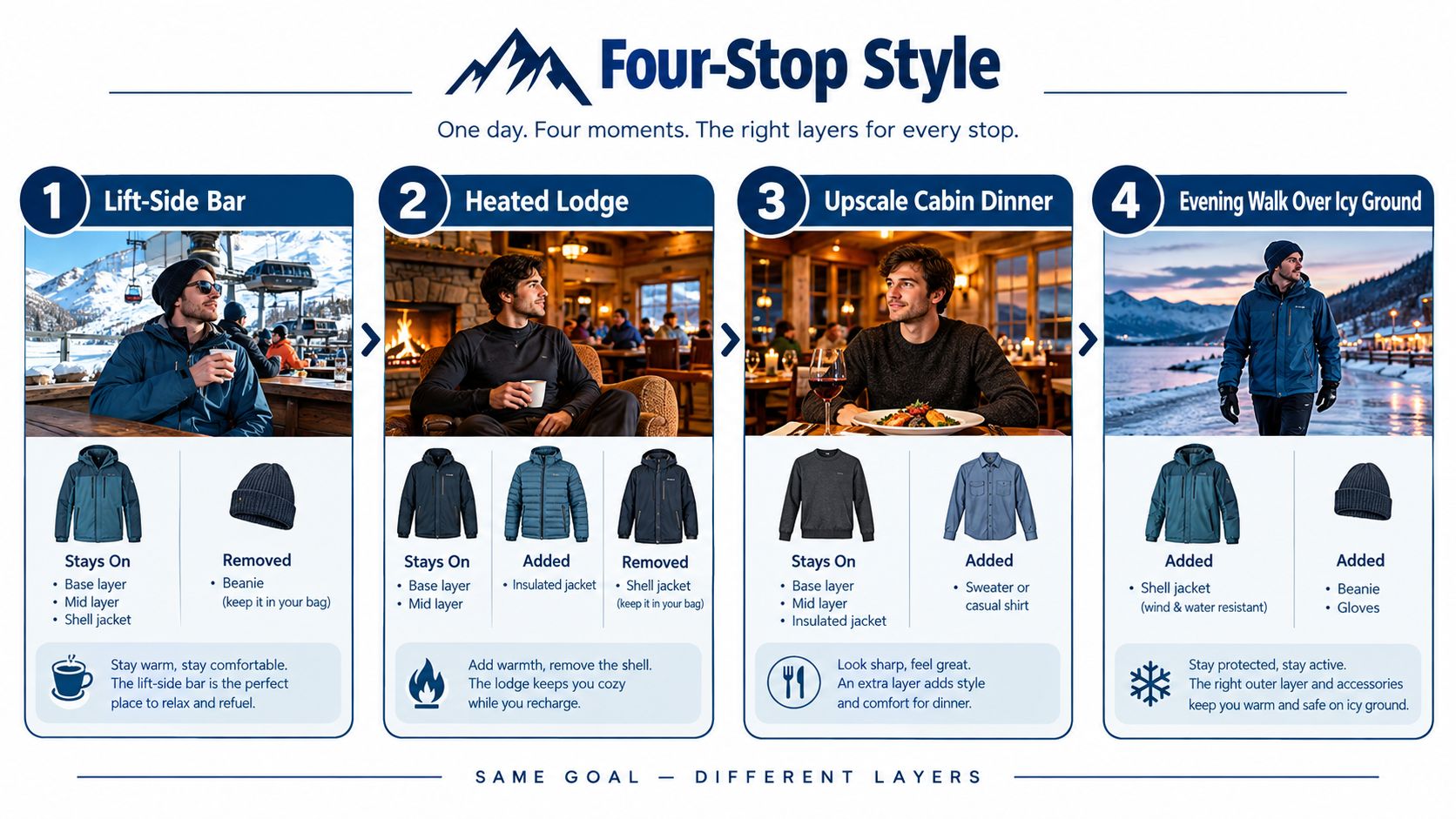
Your day may include a snowy lift-side bar, a warm lodge, an upscale cabin dinner, and a walk over icy streets. Those settings don't require four outfits. They do ask you to make a few deliberate changes, especially when the room temperature or dress code shifts.
A four-stop rhythm
At the lift-side bar, keep the weather layer on if you're still outside or the doorway keeps letting cold air in. Unzip it when you start to warm up, rather than waiting until you're uncomfortable. A flannel or insulated shirt underneath should look like a deliberate layer, not an emergency substitute for your ski jacket.
In the heated lodge, take off the outer layer and let the middle layer do its job. If you're still too warm, open the shirt or remove it briefly. Keeping the temperature adjustment simple helps you settle into conversation instead of repeatedly adding and removing everything you packed.
For an upscale cabin dinner, check the setting before you arrive. A clean, well-fitting shirt can look more at home than visibly technical ski gear. One guide to what men wear for après-ski also highlights the differences between casual bars, restaurants, and winter footwear. The useful lesson isn't a rigid dress code: match the layer to the room and keep footwear practical for the ground outside.
On the evening walk, put your weather layer back on and choose footwear with grip. The polished layer underneath helps you arrive looking ready for the evening; the outer layer handles the cold. You don't need to choose between mountain practicality and looking comfortable at dinner.
Practical rule: Keep the outer layer close, but let the middle layer set the tone indoors.
The right flannel, insulated shirt, or robe can make the transition feel natural. Your clothes shouldn't announce that you planned every stop. They should make it easy to say yes when someone suggests one more drink, a cabin dinner, or a short walk to see the snow.
Read the Social Technical Features
Your gloves are in one hand, your drink is in the other, and someone is handing you a third thing you did not plan for. That firepit moment becomes the true test of an après-ski layer. The features worth paying for are the ones that remove small frictions as you move from lift-side bar to heated lodge to late-night cabin.
Social Anatomy
- Breathable lining: Keeps a warm layer comfortable after activity.
- Dry pocket: Gives small essentials a protected place of their own.
- Champagne pocket: Holds a drink steady when your hands are busy.
- Bottle opener loop: Keeps an opener within reach.
- Sunglasses loop: Gives your sunglasses a home when they come off.
Storage like this exists to free your attention. A secure pocket lets you stow your phone away and focus on the people around you. Pockets organize practical items; you still choose to be present.
California Cowboy's High Sierra flannel shirts are one example of après-ski apparel built around a thermal lining and pockets for a phone, bottle opener, and beverage. For a different cabin setting, the water-resistant pocket apparel guide offers more context on storage as a clothing feature.
Practical storage supports a hands-free evening. Deciding to put the phone away remains your call. A good social layer gives your essentials a place so your attention can go elsewhere.
Decide What to Buy Rent or Capsule
You don't need a separate wardrobe for every mountain weekend. The right choice depends on how often you travel, how much space you have, the weather, and whether your plans include a quiet cabin or a dinner that calls for a more polished layer.
Three ways to build your kit
Buy a piece you expect to wear beyond the ski trip. A washable flannel, comfortable insulated shirt, or robe can earn its space if it also works at home or on other weekends. Check the fit over your base layer before you commit; a shirt that feels fine standing still may bind when you reach or move around.
Rent when you want to try a particular look or piece without adding it permanently to your closet. That can make sense when luggage space is tight or the item suits a specific event more than everyday wear. Check the fabric, fit, and care instructions before planning to use it across several days.
Build a capsule from clothes you already own. Start with the base layers and outerwear you trust, then add a single social middle layer that works across the lodge, cabin, and travel day. For occasional travelers, this can be more useful than buying a complete set of specialized mountain clothing.
| Your situation | Consider | Check before you decide |
|---|---|---|
| Occasional trip, limited luggage | A small capsule from versatile pieces | Indoor comfort and ease of drying |
| Frequent mountain weekends | Adaptable insulation and weather protection | Fit over layers and pocket placement |
| Planned dinner or group event | One socially presentable middle layer | Formality and comfort while seated |
| Multi-day cabin stay | Washable layers that can be reworn | How the fabric feels after exertion |
“Luxury” doesn't have to mean a closet full of technical gear. It can mean one durable, washable, socially presentable layer that works at the lodge, cabin, airport, and home. For a multi-day stay, make sure you have a plan for damp clothing and enough room in the fit to layer comfortably.
Pack the Mountain Weekend and Complete the Look
Pack for the moments between activities, not just the time on the mountain. You'll want enough protection for cold outdoor transitions, a comfortable layer for the lodge, and something relaxed for the cabin. Use this cabin trip packing list as a companion when you're organizing the rest of the weekend.
| Category | Pack | Why It Matters |
|---|---|---|
| Base layers | Close-fitting merino or synthetic tops | Helps manage perspiration beneath warmer layers |
| Mid-layer | One versatile fleece or insulated shirt | Adds warmth and can be removed indoors |
| Social layer | A luxury flannel | Brings structure to the lodge or casual dinner |
| Cabin comfort | A robe | Makes downtime and morning coffee more comfortable |
| Weather protection | A windproof, water-resistant outer layer | Helps on snowy walks and exposed outdoor stops |
| Footwear | Winter footwear with grip | Makes icy paths easier to navigate |
| Accessories | A hat, tee, and koozie | Adds practical finishing touches without another outfit |
Complete the Look
Keep the finishing touches simple. A hat is useful outdoors and easy to take off inside. A clean tee works beneath a flannel or insulated shirt, and a koozie can be handy when the group moves from the lodge to the cabin deck. Choose accessories that support the day rather than create another costume change.
Before you zip the bag, check that your layers fit together and that your social shirt feels comfortable both open and closed. Keep weather protection accessible, not buried beneath the cabin clothes. Then leave a little room in the schedule for an extra fireside conversation or the walk that turns into a new dinner plan.
California Cowboy makes shirts, robes, and outerwear designed for social living and post-adventure comfort, including High Sierra après-ski styles and cabin layers. Explore California Cowboy for a versatile piece to wear from the mountain to the fireside, and join the Vital Few newsletter for product-drop access and inspiration for your next weekend away.

