


The best women's après-ski pants balance warmth, easy movement, and hands-free convenience, not slope performance alone. For resort activity, look for roughly 10,000–15,000 g/m²/24h breathability and at least 10,000 mm waterproofing, with about 20,000 mm better suited to wetter conditions.
The smell of woodsmoke is starting to replace the clean bite of snow. Your cheeks are cold, your legs have done enough work for one afternoon, and someone has already found a sunny table near the lodge bar. That is the moment when the right pair of après-ski pants for women earns its place.
The best pair doesn't merely survive a lift ride. It lets you sit comfortably, move through a crowded room, find your phone without excavating a backpack, and make the transition from skis to sweaters without looking like you wandered into dinner wearing half your equipment. That's Social Technical dressing, clothing designed for the moments after the activity, when connection matters more than another performance metric.
Whether you're planning a High Sierra cabin weekend, a snowy resort dinner, or a coastal escape where warm trousers meet a sunset deck, the useful question is simple: can these pants keep up when the day becomes less athletic and more social?
The practical test: If you can't sit, walk, store your essentials, or use the restroom without a full outfit negotiation, the pants aren't ready for après.
The Art of the Mountain Transition
At lift close, the mountain changes character. The wind sharpens on the walk toward the village, goggles disappear into helmet compartments, and the lodge windows glow against the blue snow. Someone suggests one drink. Someone else knows a place with better music. Suddenly, the outfit that felt perfectly competent on the final run feels too stiff, too noisy, or too committed to the slope.
That shift is the heart of après-ski. A polished pair of women's snow pants should move through it without demanding a costume change. You want enough protection for a cold terrace, enough flexibility to climb lodge stairs, and a shape that works with a fine-knit sweater, winter boots, and a warm hat. Cabin wear should feel relaxed, but not like an excuse to abandon personal style.

A skier who heads straight from the lift to a terrace needs a different solution from someone returning to a chalet to change. The first person may prefer an insulated shell with a clean waist and discreet storage. The second might choose a softer, more relaxed trouser that layers over thermals and feels natural beside a fireplace. Neither is automatically better. The right choice depends on how much time you'll spend exposed to snow, how long you'll sit still, and whether the evening includes a restaurant, a walk through the village, or a lively bar.
Planning those transitions early helps. A useful ski trip planning guide can help organize the wider day, but your clothing plan should account for the unplanned parts too, such as a longer terrace stop or an impromptu dinner. Those are often the moments people remember.
Performance without the uniform
Technical ski pants protect you from weather. Après pants also need to communicate ease. That might mean a less aggressive silhouette, a softer hand feel, or a waistband that stays comfortable when you're seated over a second drink and a plate of something salty.
A strong outfit doesn't ask you to choose between High Sierra gear and laid-back luxury. It takes the useful parts of both. The pants should protect the lower body, but they should also leave room for laughter, movement, and the occasional serendipitous encounter with someone you haven't seen since last season.
For more outfit ideas around the transition, this guide to what to wear après-ski is a useful reference. The goal isn't to look overdressed. It's to feel socially confident enough to holster your tech, leave the phone in a secure pocket, and stay present for the conversation.
Engineered for Comfort and Warmth
Warmth becomes more complicated once you stop moving. While skiing, your body generates heat and your clothing needs to release moisture. At a lodge table, the wind finds the gap at your ankle, the cold settles into the seat of your pants, and the warmest part of the afternoon may be behind you.
That's why insulation and breathability should be considered together. Heavy insulation can feel wonderful during a static wait or a cold walk, but it may hold too much moisture when you're carrying equipment, walking uphill, or dancing once the room warms up. Moderate insulation often creates a more versatile balance for pants that need to work outdoors and indoors.
Read the waterproof rating properly
A hydrostatic-head rating describes the pressure a fabric can resist before water penetrates. Think of it as the height of a water column pressing against the material, expressed in millimeters. Market ratings commonly range from 5,000 mm to 20,000 mm, while independent gear guidance treats approximately 10,000 mm as a practical benchmark for snow and heavy rain, and around 20,000 mm as better for wetter or more exposed conditions. Ski clothing guidance explains the relationship between waterproof ratings and winter use.
A rating below 5,000 mm is better reserved for light rain or dry snow. A 5,000–10,000 mm fabric suits average snow and lighter precipitation, while 10,000–15,000 mm is a sensible range for moderate rain and everyday resort conditions. Fabrics in the 15,000–20,000 mm range offer more protection in heavy rain or wet snow, and ratings above 20,000 mm are intended for prolonged exposure, strong wind, or pressure from sitting and kneeling. This waterproofing guide breaks down those ranges by precipitation and exposure.
The number isn't the whole garment. Taped seams, sealed zippers, a sound outer treatment, and a good fit determine whether water stays out. A high-rated fabric with open seams can lose the practical advantage you thought you bought.
Balance insulation and vapor movement
For resort activity that continues into après, a useful benchmark is around 10,000–15,000 g/m²/24h breathability, paired with at least 10,000 mm waterproofing. Wetter maritime climates or long periods sitting on snow may justify approximately 20,000 mm waterproofing. Women's ski-pant guidance places these ratings in the context of activity, layering, and changing weather.
Moderate synthetic insulation around 40–60 g/m² can preserve warmth without making the entire trouser bulky. Concentrating it around the seat, thighs, or knees makes particular sense for après because those areas lose heat when you sit still, while your lower legs may need more freedom for walking and changing footwear.
A polished compromise: Choose insulation where you need passive warmth, then use stretch, articulation, and a comfortable rise to preserve movement.
Uninsulated shells aren't inferior. They're often the smarter choice for active skiers who run warm, layer heavily, or expect variable conditions. Insulated pants make more sense for cold resort days, outdoor terraces, and anyone who dislikes building an outfit from several bulky layers. For a softer alternative with a more lounge-oriented attitude, winter wool pants offer a different route to cold-weather comfort.
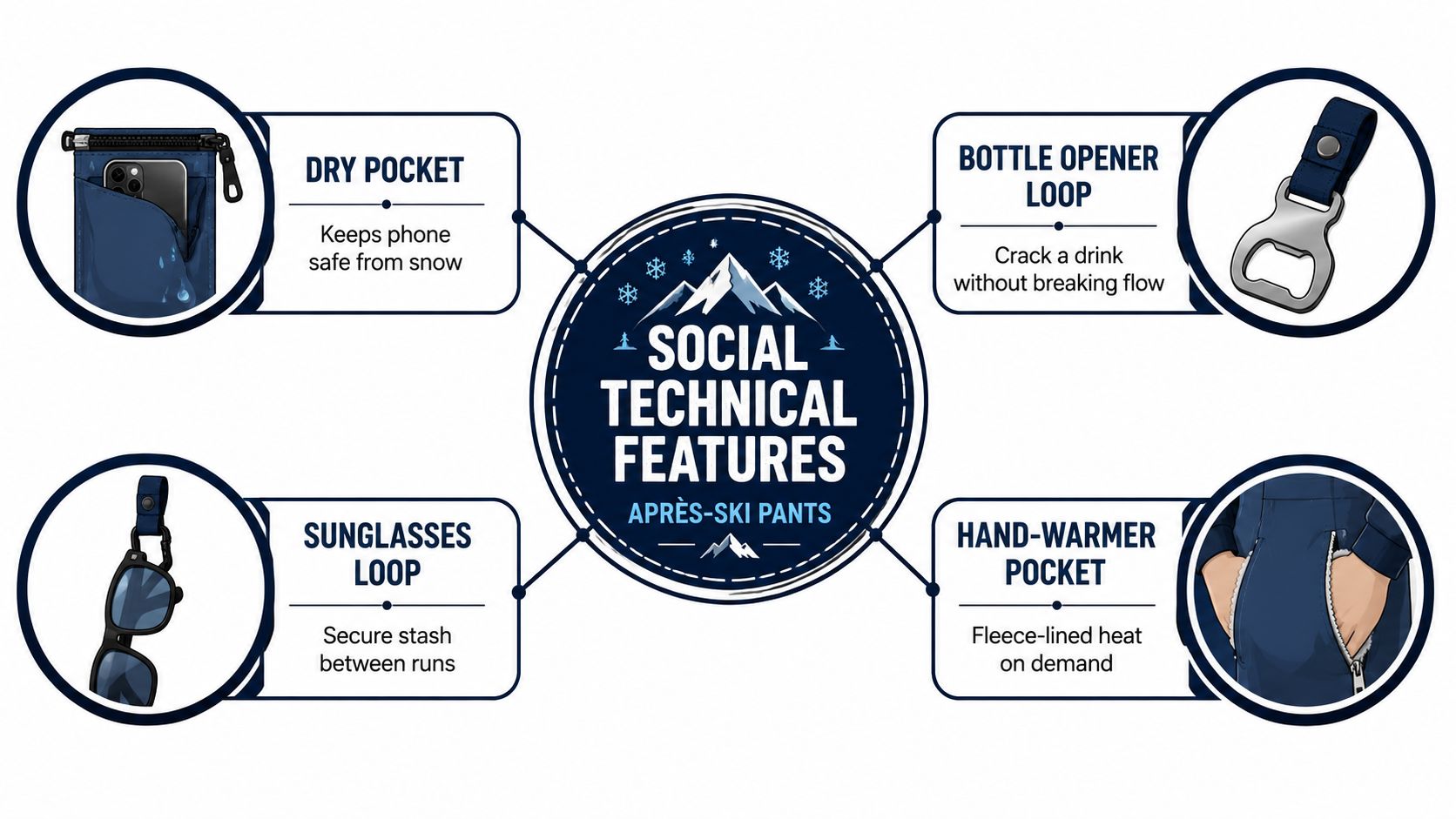
The Social Technical Features
Technical clothing usually talks about storms, abrasion, and mobility. Après clothing has another vocabulary: Where does my phone go? Can I sit comfortably? How quickly can I use the restroom? Can I keep my hands free while carrying a drink?
Those questions aren't frivolous. They decide whether you stay engaged with your group or keep interrupting the evening to manage your belongings and layers.
Start with the pocket audit
Women's designs have often provided fewer or smaller pockets than men's versions. That becomes obvious the moment you need to carry a phone, card, gloves, lip balm, or room key without wearing a pack. A pocket should be large enough for the object you carry and placed where it won't interfere with sitting.
Look for these details:
- A dry pocket: A sealed or water-resistant compartment helps protect your phone from snow and wet surfaces.
- A stable hand pocket: Fleece lining adds comfort, while a secure opening keeps cards and keys from escaping when you sit down.
- A sunglasses loop: This gives you somewhere to stash eyewear between bright runs and dim interiors.
- A bottle opener loop: It sounds playful because it is, but the best social features remove small interruptions from the evening.
- A useful back pocket: A secure rear compartment can work well for a card or folded receipt, provided it doesn't become uncomfortable under pressure.
A pocket that exists only for visual symmetry isn't useful. Test it with your actual phone before buying. Sit down. Bend your knees. Walk with your hands full. Social utility lives in the details you notice only after wearing the pants for hours.
Treat restroom access as a design requirement
Bibs provide excellent coverage and can feel secure during active skiing, but bathroom access may require removing multiple layers. High-waisted pants are quicker and easier, especially when paired with a flexible waistband or a side zip. Stretch trousers can offer the most natural transition into lodge settings, but they need enough structure and weather resistance for the conditions you'll face.
Drop-seat designs are beginning to address the problem directly. They can be especially useful for long days when you don't want to choose between a secure upper fit and a fast restroom break. The important point is to inspect the mechanism, not just the marketing language. A complicated system that catches on layers is no improvement.
Check the seated silhouette
The standing fit tells only half the story. Sit in the pants while wearing the base layer you expect to use. The waistband shouldn't cut into your stomach, the back rise shouldn't pull down, and the knees should remain comfortable without the fabric bunching into pressure points.
Water-resistant pocket apparel is a useful reference point for thinking about storage beyond the standard ski-pant checklist. The most successful après clothing doesn't look like equipment storage. It keeps the equipment close, quiet, and out of the way.
Styling for Every Winter Escape
A good après outfit doesn't announce that you've been trying to solve a technical problem. It looks intentional because the technical decisions happened earlier, at the fitting room or packing table.
In the High Sierra, start with an insulated trouser, a fine merino or thermal layer, and a chunky knit that stops at the hip or tucks cleanly into the waistband. Add grippy winter boots, a warm hat, and a short jacket with enough shape to keep the outfit from becoming one large block of fabric. The result feels ready for a cabin deck, a village walk, or a fireside drink.
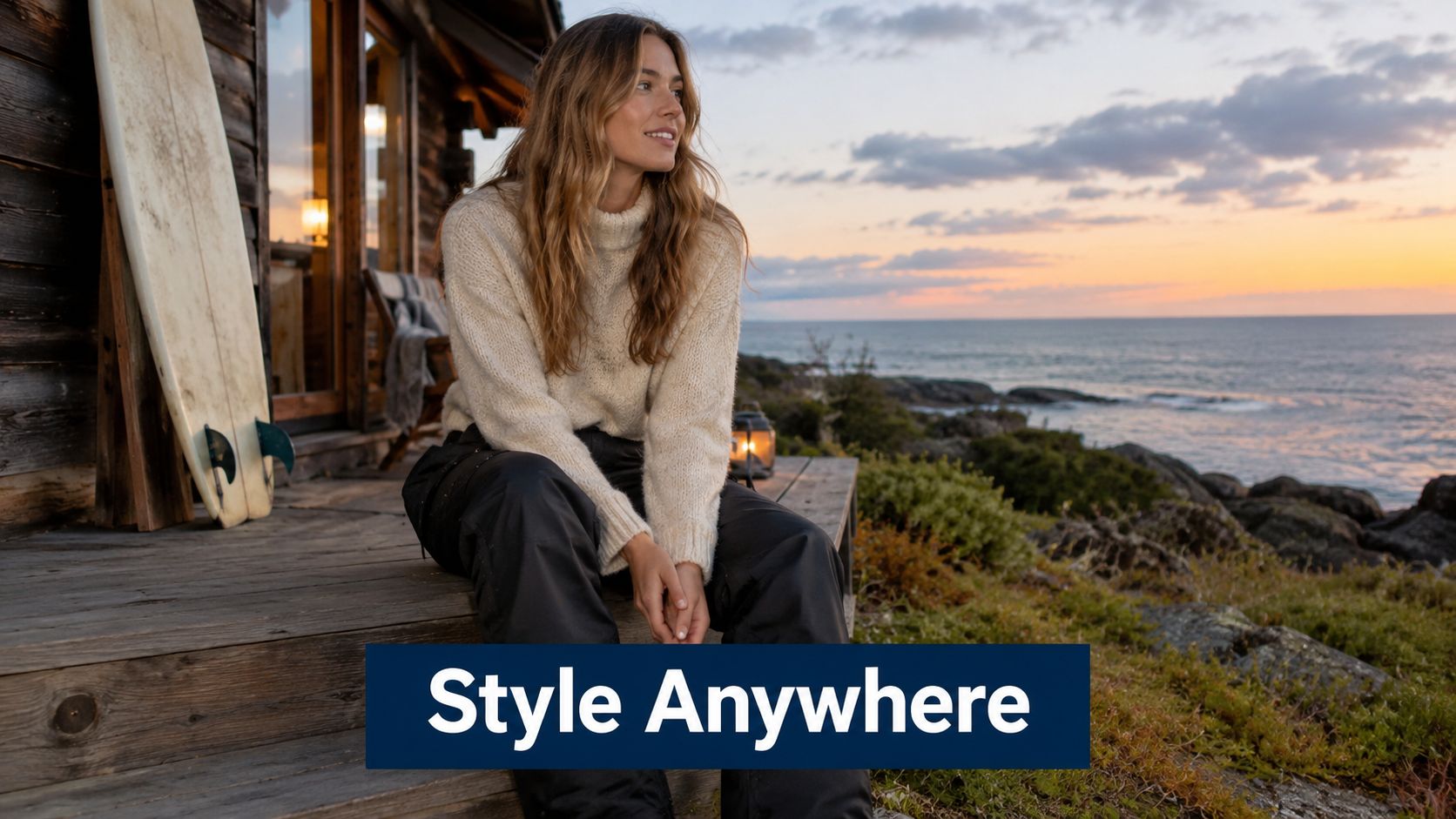
For a coastal escape, the formula changes. Choose lighter technical pants or a clean stretch trouser, then pair them with a terry-lined shirt, relaxed tee, or soft fleece. The outfit should handle the drive home from the beach, a walk to dinner, and the chill that arrives when the sun drops without looking like full ski gear. California casual works best here, practical enough for weather, relaxed enough for a deck conversation.
Build around the destination
The same pants can read very differently depending on the layers around them.
- Cabin weekend: Insulated pants, a textured sweater, thick socks, and a simple winter boot create warmth without visual fuss.
- Lodge terrace: A clean shell, a fitted thermal, a cropped puffer, and sunglasses keep the silhouette clean while preserving weather protection.
- Coastal evening: Stretch pants, a terry-lined layer, a lightweight jacket, and low-profile boots make the transition from post-surf comfort to dinner feel natural.
- Village nightlife: Choose a dark, matte finish and a shaped top layer. Avoid excessive straps, loud hardware, or anything that makes sitting at a restaurant feel like a gear test.
The trick is to let one item carry the technical story. If the pants are insulated and weatherproof, the sweater can be soft and expressive. If the pants are lighter, use the outer layer to provide warmth. That balance keeps the look socially confident instead of overbuilt.
A polished winter wardrobe can move between mountain and coast because both settings reward comfort, texture, and pieces that invite people to linger. This winter lodge style guide offers another useful perspective on combining practical layers with a more relaxed after-adventure mood.
A visual reference can help when you're building outfits across different settings:
The strongest outfit is the one that doesn't need constant adjustment. You should be able to accept a spontaneous invitation, walk outside for a photo, or stay on the porch for another conversation without changing the entire plan.
Finding Your Perfect Fit
Fit determines whether technical pants feel like clothing or equipment. It affects warmth because extra space can create cold gaps, and it affects appearance because excess fabric can overwhelm a sweater or jacket. Try pants with the layers you wear on a daily basis, not just a thin fitting-room top.
Compare the main cuts
A slim cut creates a clean line with shorter jackets and refined boots. It works well when the fabric has stretch and the insulation is controlled, but it can become restrictive if you plan to wear substantial thermals underneath.
A straight cut offers a useful middle ground. It accommodates a base layer without appearing oversized, and it tends to work across lift rides, lodge seating, and village walking. For many people, this is the safest silhouette when one pair needs to handle several parts of a trip.
A relaxed cut prioritizes layering and movement. It suits thick knits, active skiing, and a more casual cabin wardrobe, but the waist and hem need attention so the pants don't slide or drag when you change footwear.
Bibs alter the fit conversation altogether. They distribute support above the waist and can improve coverage during active movement, yet their upper construction may make indoor transitions slower. Choose them when secure coverage matters more than rapid changing.
Test the movement points
Stand, sit, squat, and take a long step. The knees should bend without pulling the waistband down. The seat should remain covered when you lean forward, and the hem should sit cleanly over the boot without catching under the sole.
A higher back rise can improve seated comfort, particularly when the pants are worn on a terrace or during a long drive. Articulated knees and stretch-woven fabric help preserve mobility while keeping the silhouette tidy. These features matter more than choosing a smaller size for a sharper standing look.
Fit also changes with insulation. A lightly insulated shell may need room for a base layer, while a warmer trouser may already include enough volume. Don't size up automatically. Check the garment's actual layering guidance, then judge the waist, seat, thighs, and knees together.
Try-on rule: The right pair should feel comfortable before you start negotiating with it. If you need to tug, fold, or brace the waistband every time you sit, the cut isn't working.
Care and Packing Essentials
Good care protects both the appearance and the weather performance of winter pants. Start by reading the manufacturer's instructions, closing zippers, emptying pockets, and washing technical garments with a product intended for performance fabrics. Avoid fabric softener when the care label warns against it, since residue can interfere with the fabric's finish.
Water-repellent treatment deserves particular attention. A study of two- and three-layer waterproof materials found that cyclic wrinkling reduced hydrostatic resistance by as much as 90%, while water-vapor resistance changed by no more than 7% after 20,000 cycles. The textile study details how compression and repeated wrinkling can weaken water resistance. In practical terms, pants may still breathe reasonably well while becoming much more vulnerable to wet snow at creases around the knees, seat, and lower legs.
Pack without crushing the performance
Roll or fold pants along their natural seams rather than forcing them into a tight corner. Keep sharp footwear, ski edges, and hard accessories away from the face fabric. If you arrive with damp clothing, let it dry fully before storing it for the return trip.
- Air them out: Dry pants completely before placing them in a suitcase or closet.
- Protect the finish: Restore the manufacturer-approved DWR treatment when water stops beading on the outer fabric.
- Inspect high-wear zones: Check the seat, knees, cuffs, zippers, and taped seams before the next trip.
- Use professional help when needed: Delicate construction or stubborn marks may justify a specialist service such as Tumble Laundry dry cleaning, especially when the care label calls for professional handling.
Don't judge a garment's condition only by whether it looks clean. A saturated outer fabric can feel heavier and less comfortable, while damaged seam tape can compromise protection before a visible hole appears. Respecting the care instructions is part of keeping a favorite pair ready for the next cabin weekend.
For a broader packing system that protects clothing and keeps transition pieces accessible, use this cabin trip packing list. Pack the pants where you can reach them, not beneath the items you'll need only after the trip.
Complete the Look
The finishing pieces should make the pants feel more like an outfit and less like a weather response. A ribbed beanie softens a technical shell. A clean tee under a heavy overshirt keeps the look relaxed. A fleece-lined layer adds warmth without demanding another bulky jacket.
Choose accessories that support the evening rather than clutter it. A hat should stay secure in wind and look natural indoors. Gloves belong somewhere accessible, whether that's a generous pocket or a small bag you can leave at the table. A compact pair of sunglasses remains useful on bright terraces, while sturdy boots keep the village walk comfortable after the pavement turns slick.
The best après-ski pants are not necessarily the most technical pair in the shop. They're the ones that solve the ordinary problems that can ruin a good afternoon: cold seats, wet knees, lost phones, awkward bathroom breaks, and restricted movement. Once those distractions disappear, you can stop managing your outfit and start enjoying the people around you.
That's the point of life offline. Put the phone somewhere dry, holster your tech, order the next round, and stay for the story that only comes out when nobody is rushing back to the lift. Your winter wardrobe should help you make room for those serendipitous encounters.
California Cowboy makes apparel for the after, from High Sierra layers and social technical pieces to robes and coastal comfort designed for life beyond the activity. Visit California Cowboy to find warm, functional clothing that helps you stay hands-free, socially confident, and ready for the next conversation.

