


The lift-house noise fades behind you. Your cheeks are cold, your gloves smell faintly of snow, and the cabin deck still holds the day's last warmth. Someone is pouring a drink, someone else is arguing about the best run, and your technical jacket has done its job. Now it's time to holster your tech, loosen the layers, and become socially confident without looking like you wandered out of a costume rental.
That's where a men's flannel shirt in black and white earns its place. It carries woodsmoke, cabin coffee, salted parking lots, and the first drink after the lifts close. It handles the transition from activity to conversation, the part of the day when practical clothing has to become social clothing.
The Après Window and Why Black-and-White Just Works
The après window starts before anyone calls it après. It's the drive back from the beach, the first beer after the lifts close, the morning coffee on the cabin deck, and the loose half-hour when strangers become a group. Savills' ski report on resort life and après-ski environments treats that period as part of the resort experience, including restaurants, bars, nightclubs, spas, wellness facilities, and drink prices. That matters because the shirt you wear after the activity has to do more than keep you warm.
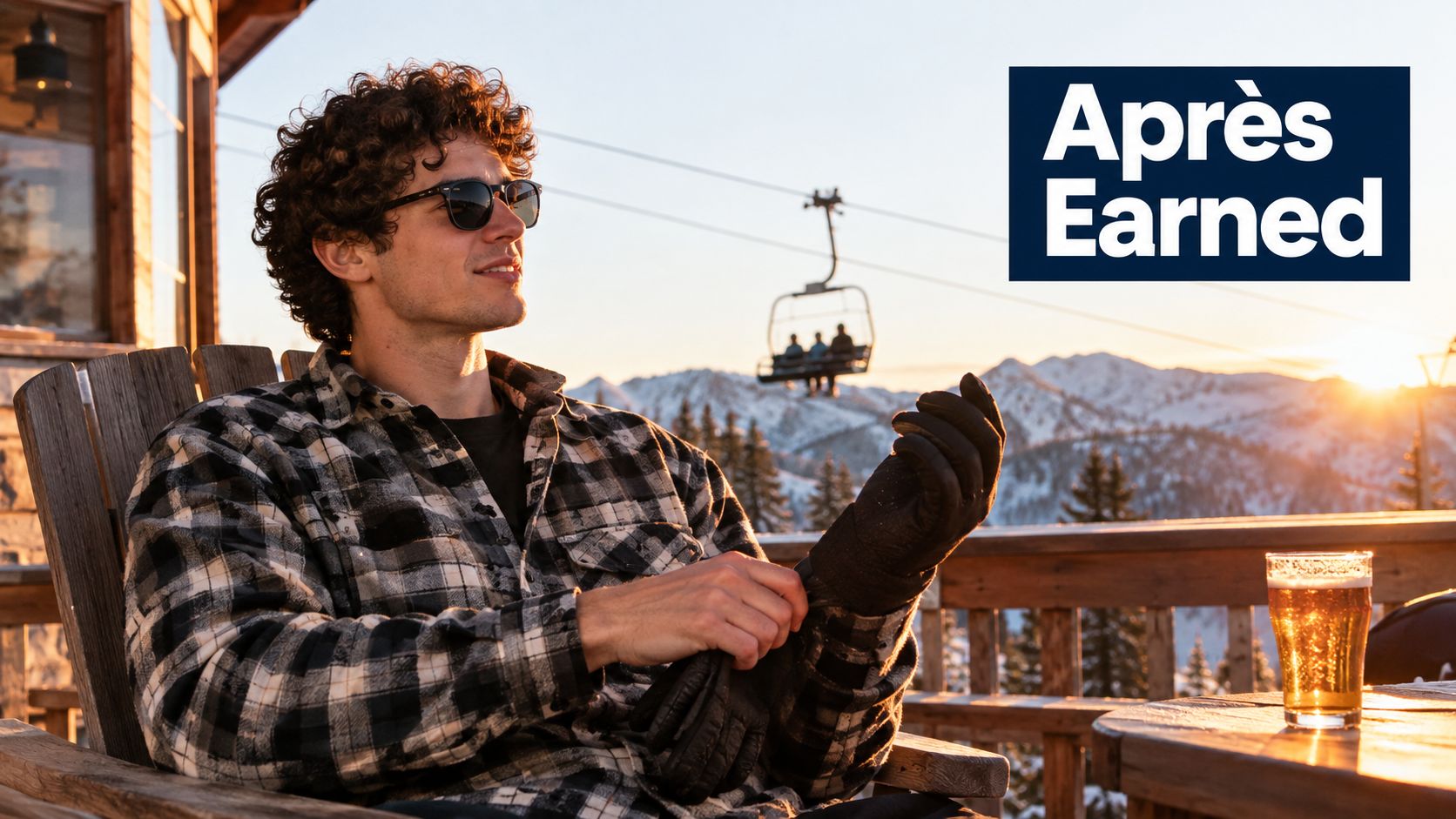
Black-and-white plaid often outperforms louder red combinations in that setting. It has enough contrast to look deliberate under fluorescent bar lights, enough neutrality for selvedge denim, and enough ruggedness for a firepit where sparks and melted-snow rings are part of the evening. Red-and-black brings a stronger heritage signal. Black-and-white leaves more room for the rest of the outfit.
The social uniform after the gear comes off
The pattern also has history behind it. Flannel originated in Wales during the 17th century, where carded wool was valued for warmth in wet, windy conditions. Its American outdoor identity grew through durable wool and cotton garments worn by laborers, hunters, and other outdoorsmen. In 1850, Woolrich introduced its Wool Buffalo Check Shirt, helping establish the large alternating-check format as a recognizable American outdoor pattern. Woolrich's history of the buffalo check shirt gives the pattern a useful lineage without requiring you to dress like a lumberjack.
That heritage works especially well in black and white because the palette feels contemporary. It can move from a snowy deck to a polished bar without picking a fight with boots, dark chinos, a wool vest, or a leather belt. If you're building a complete men's après-ski outfit, start with the layer that can survive all three lighting environments: golden-hour deck, bar glare, and firelight.
Field rule: Choose the black-and-white flannel when the day will move between outdoors and indoors. It's the most adaptable plaid in the rotation, but it's still a cool-weather specialist.
For a first drink after the lifts, a good whiskey deserves the same restraint as the shirt. ROCKS Whiskey Chilling Stones' guide to whiskey chilling stones is a useful resource if you're bringing a thoughtful cabin gift instead of another novelty bottle opener.
Decoding Fabric Weight, Brushed Face, and Blend
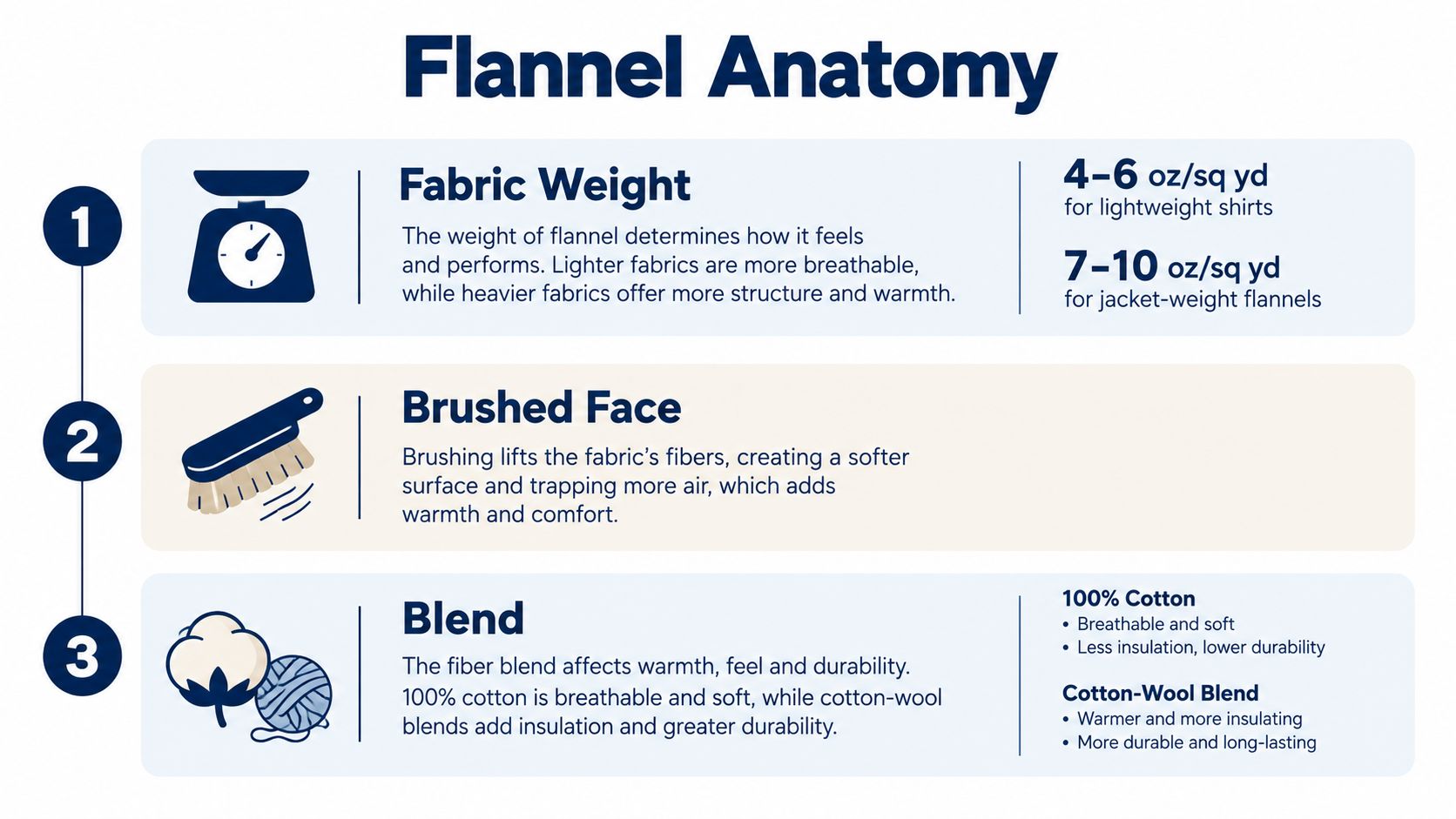
A flannel's label tells you less than its construction. Two shirts can both say “cotton flannel,” yet one feels like a shirt and the other behaves like a light jacket. The difference comes down to fabric weight, surface brushing, moisture behavior, and fiber blend.
Fabric weight is usually expressed in ounces per square yard or GSM. Lightweight flannels suit indoor layering and travel. Heavier versions hold more structure and feel more protective on a deck, but they also take longer to dry and occupy more space in a duffel. The useful question isn't whether a shirt is heavy. It's whether the weight matches the transition you'll wear it through.
What your fingers can tell you
A brushed face has raised fibers that feel soft and slightly fuzzy. Those fibers help create a layer of trapped air, which contributes to warmth and comfort. A smooth woven shirt may look crisp but won't provide the same tactile insulation. Brush quality matters, too. An uneven nap can pill, flatten, or lose its soft hand after rough washing.
Yarn-dyed fabric generally builds color into the yarn before weaving, which can help create a more stable plaid appearance. Piece-dyed fabric is colored after the cloth is made. Neither method automatically guarantees longevity, but yarn-dyed construction often gives a plaid more depth because the pattern comes from differently colored yarns rather than a surface treatment.
Here's the practical blend ranking:
- Cotton: Breathable, familiar, and comfortable against skin. It's a strong choice for cabin mornings and moderate activity, but it can hold moisture.
- Cotton-wool: Warmer and more insulating, with a more substantial hand. It suits cold decks and fireside wear, though it may need gentler care.
- Cotton-polyester: Often quicker to dry, more resistant to wrinkles, and useful for travel. The tradeoff can be a less natural hand and less breathable feel.
Technical textile evidence shows that thickness and lower fiber moisture increase insulation, while wet fabric can lose insulation sharply. In cotton-flannel testing, heat loss stayed high while moisture remained present, then dropped suddenly by 48% after drying. The result is familiar: a damp shirt feels cold even when it feels thick and brushed. The textile insulation study supports the advice your grandfather probably gave without the laboratory language: dry the shirt.
The four tests that matter in a duffel
Before buying, check whether the shirt has enough room for a base layer, whether the nap feels even, and whether the fabric recovers after you squeeze it. Then judge it against the trip:
- Breathability: Important for cabin interiors and post-surf transitions.
- Drying speed: Critical after sweat, melted snow, or sea spray.
- Abrasion resistance: Relevant around backpack straps, benches, and tailgate gear.
- Wrinkle recovery: The difference between arriving ready for dinner and looking like you slept in the garment bag.
For a deeper look at how plaid construction changes the way a shirt wears, compare the material logic in this guide to men's plaid flannel shirts. Ignore marketing words such as “premium” until the fabric answers those four tests.
Pattern Variations That Change the Whole Outfit
Black and white isn't one look. The scale of the check changes the shirt's social volume. A large buffalo check announces heritage workwear before you say anything. A small gingham can pass under a bomber jacket at dinner. The yarn contrast, repeat size, and openness of the grid determine whether the shirt feels rugged, tidy, or technical.
Use scale as the formality dial
A large buffalo check, especially around two inches, creates a bold visual block. It works with denim, boots, canvas jackets, and outdoor settings. A mini buffalo keeps the same two-color logic but tones down the costume signal. It's easier to wear under a vest or over a plain tee.
Gingham has a smaller, regular check and reads cleaner. It's the choice for someone who wants flannel warmth without announcing “logging competition.” Tattersall introduces a more orderly grid, often with thin lines that feel closer to a casual button-up than a traditional camp shirt.
Windowpane is the underused option. Its open grid gives the eye more breathing room, so the shirt won't overwhelm a white tee, shoulder-to-shoulder layer, or textured sherpa. It works when you want the fabric to provide warmth while the rest of the outfit carries the personality.
| Pattern | Typical Scale | Formality Cue | Best Setting |
|---|---|---|---|
| Buffalo check | Large, bold blocks | Heritage and rugged | Tailgate, cabin deck, firepit |
| Mini buffalo | Smaller repeated checks | Casual but controlled | Travel, bar, layered streetwear |
| Gingham | Small regular checks | Clean and approachable | Casual dinner, town, coffee |
| Tattersall | Fine intersecting lines | Neat and understated | Remote work, dinner, travel |
| Windowpane | Open grid | Modern and restrained | Sherpa layering, après bar, casual office |
Match the pattern to the room
A black-and-white buffalo check is excellent when you want the shirt to anchor the outfit. A windowpane shirt is better when the jacket, hat, or boots need to lead. Gingham pairs naturally with a bomber. Tattersall works with dark chinos and a cleaner sneaker. None of these is "more masculine" or "more authentic." They send different signals.
If your closet already has loud outerwear, choose the quieter grid. If your outerwear is plain, use buffalo check as the visual engine. Retro button-up shirts for men can help you compare that old-school shape with a more restrained black-and-white plaid.
Three Outfit Systems Built Around One Shirt
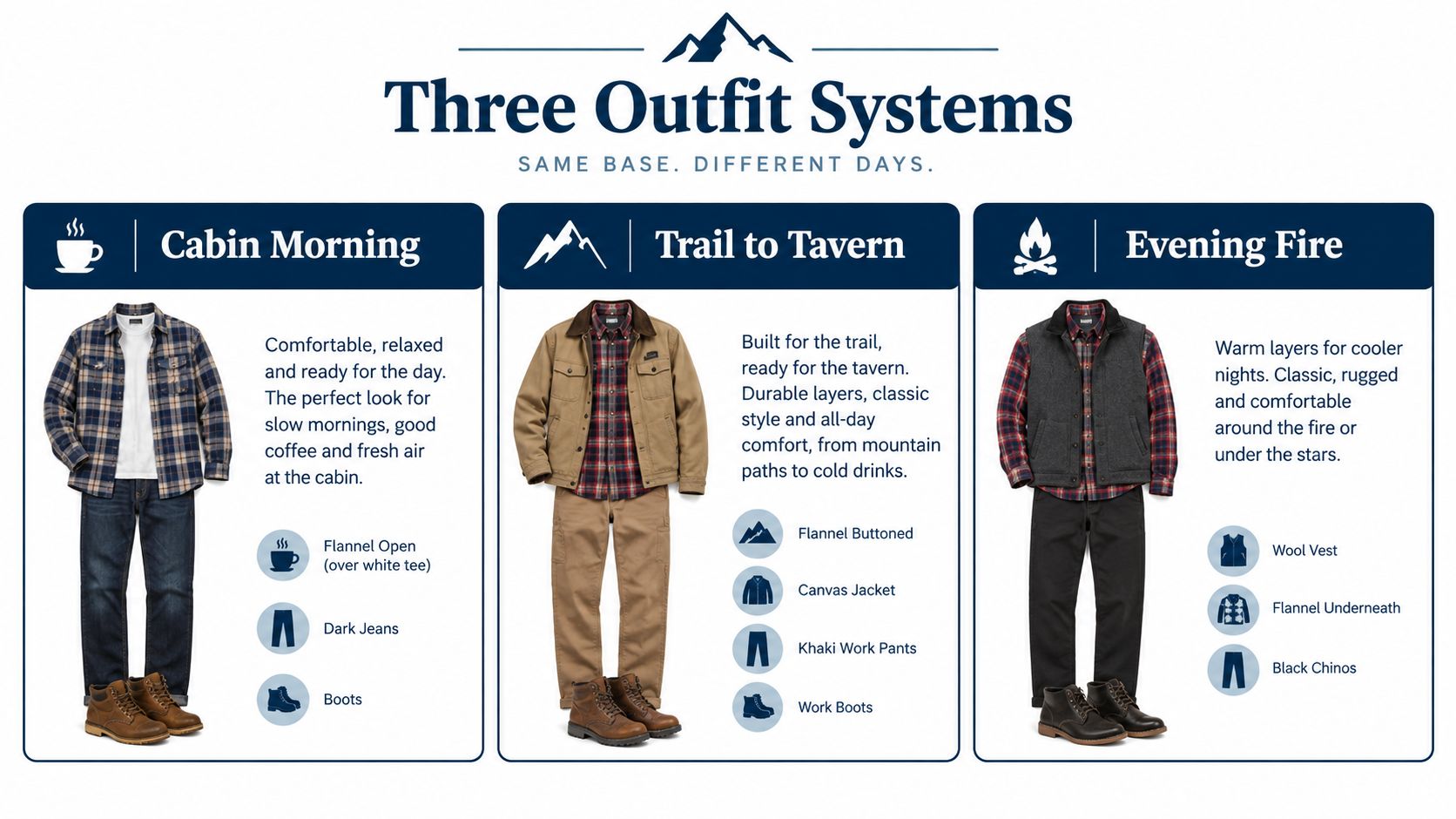
A useful flannel doesn't need a different personality for every trip. It needs three reliable systems, each built around a different moment. The same black-and-white shirt can look relaxed at breakfast, capable in a parking lot, and intentional beside a fire if the supporting layers change.
Cabin morning
Start with the flannel open over a long-sleeve tee. Add dark denim or raw-hem sweatpants, wool socks, and boots that can handle a wet deck. The shirt should feel easy through the shoulders, because cabin mornings involve reaching for coffee, stacking wood, and leaning over a kitchen island while someone explains a questionable pancake technique.
The useful details are modest. You want pocket depth for a wax tin or lighter, a hem that doesn't flare when worn open, and enough length to stay put when you sit. Here the shirt behaves like cabin wear for men, not formalwear pretending to be outdoorsy.
Parking-lot tailgate
Button the shirt and tuck it under a vest or canvas jacket. Pair it with dark selvedge denim and boots that can handle salted asphalt. The goal is not to look like you planned a uniform. The goal is to have a uniform that looks unplanned.
A water-resistant tech-storage pocket changes the game here. It keeps your phone away from wet blankets, condensation, and the mysterious puddle beneath the cooler. A bottle or can pocket is useful when your hands are full and the conversation is good. Keep the rest of the outfit visually quiet.
Fireside night
Layer the flannel over a merino henley, then add dark chinos and a wool vest. A leather belt, felt hat, or simple watch keeps the look intentional. The shirt's black-and-white contrast reads cleanly in firelight, while the texture keeps it from feeling office-bound.
A sunglasses loop matters more than decorative stitching. It gives your glasses a home when the sun drops, and it keeps you from setting them on a log where they'll meet a boot. For a compact weekend loadout, the weekend getaway gear recommendations from Sonoma County Navigator are a useful reference, especially when the trip involves both weather and social plans.
The best feature is the one you remember when your hands are full.
The three systems share one rule: don't over-layer the shirt. If the flannel is jacket-weight, let it be the outer layer. If it's lighter, use a vest or coat to provide structure. Après-ski outfit ideas for men can help you refine the transition without turning the outfit into a resort uniform.
Why the Color Itself Is a Thermal Design Choice
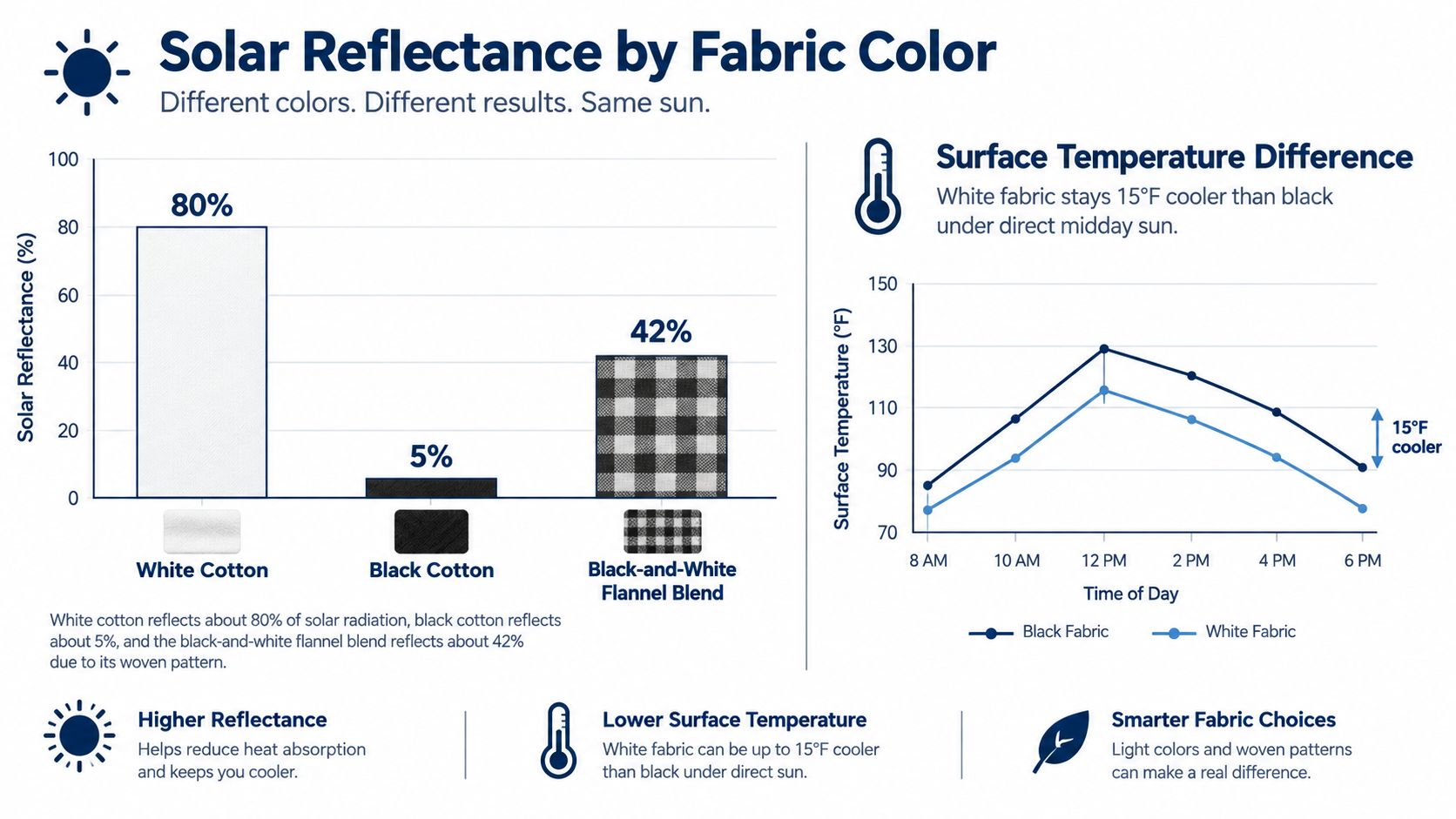
Step from a cold lift line onto a sunny deck and the black squares start working against you. Black-and-white plaid is not thermally neutral. A controlled study recorded average visible reflectance of approximately 2% for black fabric versus 85% for white fabric, with solar heat loads of about 145 kilogram-calories per hour for black clothing versus 92 kilogram-calories per hour for white clothing. The controlled textile study on black and white clothing shows the practical result: dark cloth heats faster in direct sun.
White squares do not erase the heat held by black yarns. Folds, creases, neighboring dark threads, and the shirt's overall pattern still build absorption. A predominantly black plaid can feel warmer on a south-facing deck, during a sunny drive, or while walking from a beach towel to a bar.
Where the pattern earns its keep
Black-and-white flannel earns its place in cool weather with low to moderate sun: the après window, evening cabin decks, shaded tailgates, and fireside dinners. That makes it useful social technical infrastructure for group trips, where one shirt must move from cold activity into conversation without looking like dedicated ski gear. Wear it over a breathable base layer and leave enough room for air movement.
Peak daytime heat is its weak lane. A dark plaid can feel punishing during a sunny travel day or a warm coastal transition. After post-surf activity, choose a lighter shirt or terry-lined layer rather than forcing flannel into direct-sun duty.
Use the pattern with layering discipline:
- Direct sun: Open the shirt, remove the vest, and avoid heavy stacks.
- Shade and wind: Button it and add a vest or jacket. For a full cold-weather layering stack, see this guide to thermal layering for ski trips.
- Evening firelight: Keep the dark plaid as the outer social layer.
Sun rule: Treat black-and-white flannel as a specialist's shirt for the après window, not a default layer for every forecast.
Good gear has a lane. This shirt owns the handoff between cold activity and warm conversation.
Caring for High-Contrast Plaid Without Killing It
Black-and-white plaid creates a maintenance problem that generic “wash cold” advice skips. Laundry experts advise against washing black and white garments together because dye transfer can dull the white areas. The contrast that makes the shirt look sharp can become gray and tired if you treat it like an ordinary dark.
The first-wash decision tree
Wash the shirt alone for its first cycle. Turn it inside out, use cold water, and choose a gentle detergent. A dye-trapping sheet is useful insurance, but it isn't permission to mix the shirt with pale garments.
A 2025 textile-colorfastness experiment found that black remained relatively consistent through repeated laundering, while colorfastness still declined across washes. The testing used hot water at 49°C or 120°F and a regular dryer, conditions harsher than most recommended care routines. The textile colorfastness discussion reinforces the sensible approach: reduce heat, friction, and mixed-load risk.
- First wash: Wash alone, inside out, in cold water.
- Ongoing washes: Keep the shirt with dark or similarly stable colors.
- Drying: Hang-dry when practical or tumble dry on low heat.
- Stains: Blot wax, beer, condensation marks, or raclette butter before washing. Don't grind the stain deeper with aggressive brushing.
- Avoid: Hot dryers, bleach, and fabric softener, which can flatten the brushed face and accelerate fading.
Cotton isn't automatically safer
The same experiment reported the best colorfastness for untreated 100% cotton among the tested samples, but every tested material experienced measurable changes under laundering. That means fiber content alone doesn't guarantee a crisp pattern. Construction, dye quality, water temperature, drying method, and abrasion all matter.
Dry the shirt promptly after snow, sweat, or sea spray. Moisture can compromise warmth before the fabric looks visibly soaked, and a damp flannel left in a duffel will develop the kind of smell that ends friendships. Give it air, preserve the nap, and don't mistake softness for permission to use high heat.
Why the High Sierra Earns the Premium Price
A premium black-and-white flannel earns its price when it replaces several specialized layers in your actual rotation. It should cover cabin coffee, a tailgate, a fireside drink, a remote-work afternoon, and a group trip without looking like the same shirt doing the same job every day.
Score the shirt against the things that matter in the field:
- Warmth: A brushed face and thermal lining help during cold transitions, especially when the lifts close and the social part of the day begins.
- Breathability: Cotton remains useful when you move indoors, provided the shirt isn't overloaded with heavy layers.
- Drying speed: Moisture management matters after activity, melted snow, or coastal spray. A shirt that stays damp becomes a bad mid-layer.
- Packability: The garment should fold into a duffel without demanding its own luggage category.
- Abrasion resistance: Backpack straps, benches, coolers, and cabin hardware punish decorative fabrics quickly.
- Formality: A controlled black-and-white pattern can move from a technical base layer to dinner without looking like expedition equipment.
The Social Technical details are what separate a serious shirt from a souvenir. A dry pocket protects your phone on a tailgate blanket. A bottle and can pocket keeps your hands free during the first round. A sunglass loop gives your glasses a reliable place at the fire. A hidden glove loop and pen pocket are small, but they matter when the day involves keys, notes, cards, and cold fingers.
Group travel needs reusable gear
Destination group events make this versatility more practical. Joy's 2025 budget data estimates average bachelorette-party spending at about $1,300 per person, approximately $600 more than in 2019, with about 10% of participants spending more than $3,000. Joy's bachelorette-party budget analysis supports a simple conclusion: group apparel should travel well and work beyond one staged photo.
Wedding-related travel has also moved away from local celebrations. CNBC reports that approximately 40% of bachelorette events took place in the bride's hometown in 2019, compared with fewer than 25% in 2025. The same report puts average 2025 bachelorette-party spending at about $1,300 per attendee and cites a 2025 Credit Karma survey in which 38% of Gen Z and millennial wedding guests said they had taken on debt to attend the event series. CNBC's reporting on destination wedding events makes the case for coordinated gear that works on the plane, at the rental house, during dinner, and after the official event.
That's where the High Sierra model fits. California Cowboy offers High Sierra flannel shirts with features including a thermal lining, bottle and can pockets, a water-resistant tech-storage pocket, a sunglass loop, a hidden glove loop, and a pen pocket. The High Sierra Flannels collection gives you a direct way to compare patterns, weight, and use cases without buying a novelty shirt that disappears after one weekend.
The value isn't a thread-count flex. It's fewer compromises, better transitions, and a shirt that helps you stay present when the phone is stored, the glasses are secure, and the conversation gets good. For early access to product drops and a faster route to useful social gear, join the Vital Few newsletter.
Complete the look with a simple tee beneath the flannel, a weather-ready hat for the deck, and a koozie for the tailgate. Keep the accessories functional and restrained. The shirt already has enough personality.
California Cowboy builds apparel for the moments after the adventure, including High Sierra flannels, practical layers, robes, tees, hats, and accessories designed for life offline. Visit California Cowboy to find a black-and-white flannel system that can move from cabin coffee to après drinks, then join the Vital Few for product drops and useful field-tested gear.

