


Woodsmoke clings to your jacket as the lifts go quiet. Salt water dries cold at your collar on the drive home from the beach, and somewhere between the trailhead and the first round at the cabin, the temperature drops hard. This is when outerwear earns its keep. A coat that disappears into your daypack but shows up ready for a parking-lot tailgate, a coastal bonfire, or a fireside drink gives you more than luggage convenience. It gives you freedom to holster your tech, stay outside longer, and look socially confident when a stranger becomes a new friend.
The Vibe-Check for Life Offline
The ski day ended an hour ago, but nobody wants to go inside yet. Boots are drying beside the truck, mugs steam in gloved hands, and the alpine air has that sharp bite that makes every laugh feel louder. Your coat is no longer just a barrier between you and the weather. It's the first thing people see while you're passing around snacks, finding a seat, or making a serendipitous encounter beside the lift parking lot.
That transition is where packable winter coats make sense. The right one lives in a daypack during the hike, then becomes the essential layer when the sun slips behind the peaks. It needs enough insulation for the cold, enough restraint for a relaxed outfit, and enough practical design to let you keep your hands free while the social part of the day begins.
California Cowboy's broader Life Offline philosophy treats clothing as equipment for real-world connection, not a reason to stay glued to a screen. A coat belongs in that conversation because it helps you move between places without changing the energy. Read more about that approach in Life Offline lifestyle gear.

Social Technical rule: If your coat works only while you're moving, it's incomplete. The real test starts when the adventure ends and everyone decides to linger.
A good packable winter coat should handle the drive home from the beach, the first drink after the lifts close, and morning coffee on the cabin deck. It should fold down when you need your pack for other gear, then recover its shape when the weather turns. Most of all, it should make you feel ready for the next conversation, not dressed like you're waiting for an airport announcement.
The Anatomy of Packable Winter Coats
At the après-ski tailgate, the coastal bonfire, or the cabin lounge, a packable coat has a second job. It must shift from technical gear to social layer without looking or feeling out of place. Down traps air while staying light, so it compresses efficiently inside a pocket or travel sack. The modern down jacket's story is commonly traced to 1935, when Eddie Bauer developed a warmer, lighter jacket after a near-hypothermia fishing trip in Alaska. The first down jacket is said to have been patented in 1936, a history detailed by Galleria Cavour Bologna's account of the down jacket.
By 2008, Rab's Microlight was described as one of the first micro-baffle down jackets, originally designed to pack into its own pocket and clip to a climbing harness. That milestone shifted insulated clothing toward mobility, compact storage, and variable-weather use. The coat now has to perform during the walk out, then look composed beside the fire.
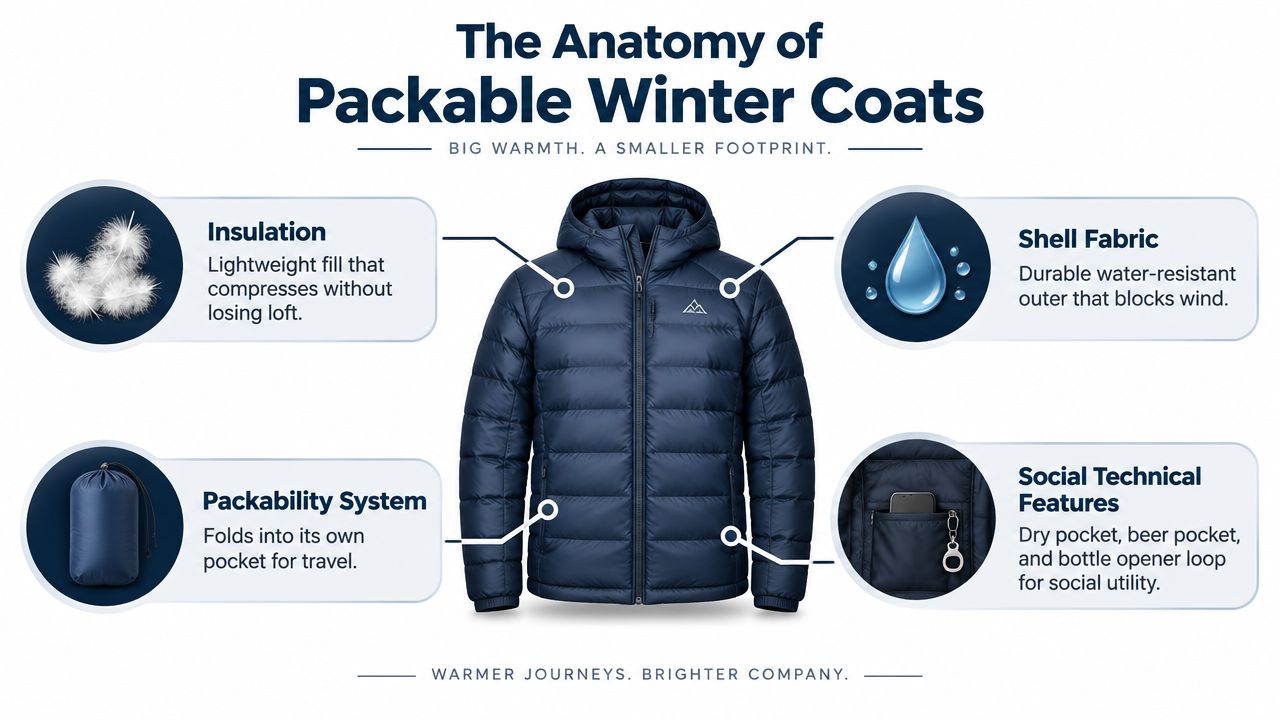
Insulation is the engine
Fill power measures how much loft one ounce of down produces in cubic inches. Higher fill power generally traps more air per gram, supporting better warmth-to-weight performance and easier compression. Technical buying guidance commonly places 700 to 800 fill power where a jacket can be built lighter and smaller for a similar warmth target, while 850-plus fill power often appears in premium ultralight and mountaineering pieces. REI's fill-power guide explains why the number matters, but it should never be read alone.
Fill weight shows how much insulation sits inside the coat. High fill power with very little fill may pack beautifully yet feel weak in deep cold. A lower fill-power coat with more insulation can feel warmer, though it will take up more space. For a long evening outside, choose the insulation that still feels comfortable once the conversation slows.
The shell decides the attitude
Independent testing commonly finds packable insulated jackets using lightweight 20D to 30D nylon or ripstop shells, often with a DWR finish, and insulation loads in the approximate 40 to 120 gram range, depending on intended use. Those figures appear in Travel + Leisure's packable jacket coverage. Thin shells reduce bulk, but they favor dry-cold adventures and stop-and-go wear over prolonged wet exposure.
A water-resistant shell handles light drizzle or snow. Waterproof construction goes further, combining DWR treatment with seam-sealed construction for sustained rain. That distinction matters on a coast, where mist, spray, and damp benches can greet you before the evening properly begins.
For comparing mobility, weather protection, and everyday wear, how to choose a trail jacket offers useful context. If warmth will come from a layered system, California Cowboy's High Pile Fleece collection provides another reference for building comfort without asking one coat to handle every condition.
Navigating the Warmth and Packability Trade-Offs
At the snowy truck, the grill is still cold and the conversation has slowed. Your tiny jacket is easy to carry, but it no longer feels like enough. Packability is one performance metric, not the whole verdict.
The useful comparison is fill power versus fill weight. Fill power describes how efficiently insulation lofts, while fill weight describes how much insulation the coat contains. High loft can reduce bulk, yet the actual warmth depends on both measures. Treat the pair as a decision, not a standalone warmth score.
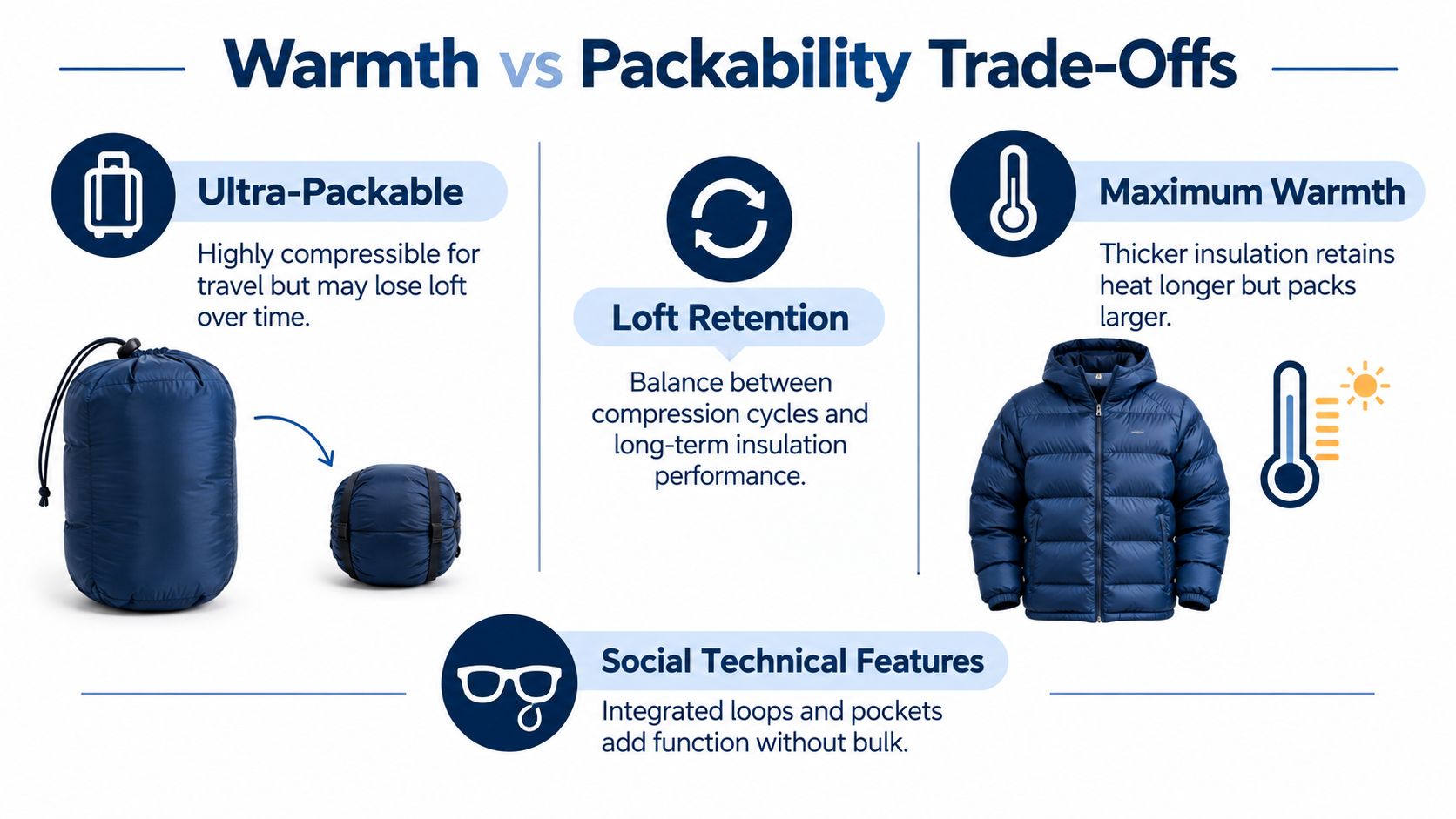
Two coats, two jobs
An ultra-packable jacket earns its place when it spends much of the day inside a carry-on, daypack, or vehicle. It works for travel, mild mountain conditions, and active movement that keeps your body producing heat. Once you stop in serious cold, the smaller insulation load leaves less margin.
A warmer coat carries more insulation and usually occupies more space. That extra volume can be annoying on a flight, then welcome during a long tailgate, a slow winter-village walk, or a cabin evening that keeps drifting outdoors. For the social-technical transition, choose the coat that stays comfortable after the adventure ends.
Guides often place 700 fill and above in a premium range for warmth without excessive bulk. Lighter city use can sit lower, and Field Mag's packable down jacket guidance provides that useful frame. Other consumer guidance recommends 600 fill or higher for colder conditions, with 700 fill and above presented as a practical balance between warmth and bulk. WellWhisk's puffer guidance also notes that fill power can range broadly from 350 to 1000.
Compression needs a time limit
Pack the coat for the journey, then give it room at home.
Down relies on loft. Long-term compression can prevent insulation from regaining its full shape, reducing the warmth and resilience the coat should provide. Store it loose in a breathable space. Use the pocket or stuff sack for transport, not permanent storage.
The practical test: Ask whether the coat is warm enough for the coldest moment you'll spend standing still, not merely the warmest moment you'll spend walking.
For a system that connects insulation, movement, and ski-trip planning, use this guide to thermal layering for ski trips. The coat should work as one adaptable piece, while the full layering system handles changing weather and the shift from trail to tailgate.
Choosing Your Coat by the Après Activity
Your destination tells you what “packable” needs to mean. A coastal weekend asks for different behavior than a mountain tailgate, and a group event rewards pockets that keep the evening moving.
Alpine and mountain transitions
For High Sierra gear and après-ski style, prioritize warmth when stationary. You'll want enough insulation for the lift-line walk, the drive home, and the conversation that begins beside the car. A low-denier shell can keep the coat light, but examine the insulation amount and weather treatment before trusting it on a cold night.
Luxury thermal layers earn their place. Wear a technical base layer under a relaxed flannel, then use the packable coat as the outer layer when the sun disappears. A hidden pocket keeps gloves, keys, and a phone out of the communal snack pile. A dedicated drink or champagne pocket changes the parking-lot tailgate game because you can carry the essentials without turning your outfit into a backpack.
California Cowboy's men's après-ski wear fits naturally into this broader cabin-wear conversation, especially when the evening shifts from technical gear to relaxed social layers.
Coastal and surf weekends
At the coast, water resistance matters more than expedition credentials. A DWR-treated shell can make sense for light drizzle, sea mist, and passing snow, while sustained rain calls for waterproof construction with seam sealing. SmarterTravel's explanation of packable winter jackets makes the distinction clear.
The ideal beach-to-bar outfit is easy to shed when the room warms up. A terry-lined shirt or towel-lined hoodie handles post-surf comfort, while the packable coat waits for the colder walk back to the car. Look for a dry pocket that separates damp essentials from your wallet and sunglasses. You don't need a coat that turns you into a gear catalog. You need one that understands the transition.
Group events and social utility
Music festivals, bachelor party outfit ideas, and coordinated group gear create a different problem. You're moving through crowds, carrying less, and looking for a place to put small items without losing the rhythm of the day. A bottle opener loop, sunglasses loop, and secure interior pocket can make a simple outer layer more useful than a visually louder piece.
If the event includes wine, dinner, or an outdoor gathering, explore the option of private event spaces at B R Cohn for a setting where polished layers and practical details both make sense. The coat should support the gathering, not announce that you've dressed for an entirely different expedition.
Choose by the moment after the activity. That's where the coat either joins the party or becomes dead weight.
Mastering Fit and the Art of Layering
A packable coat should leave room for a layer beneath it without turning your shoulders into padded furniture. Start with the garment you'll wear underneath. If that means a luxury flannel, sweater, or terry-lined shirt, try the coat over it and move your arms forward as if you're holding a steering wheel or passing a mug.
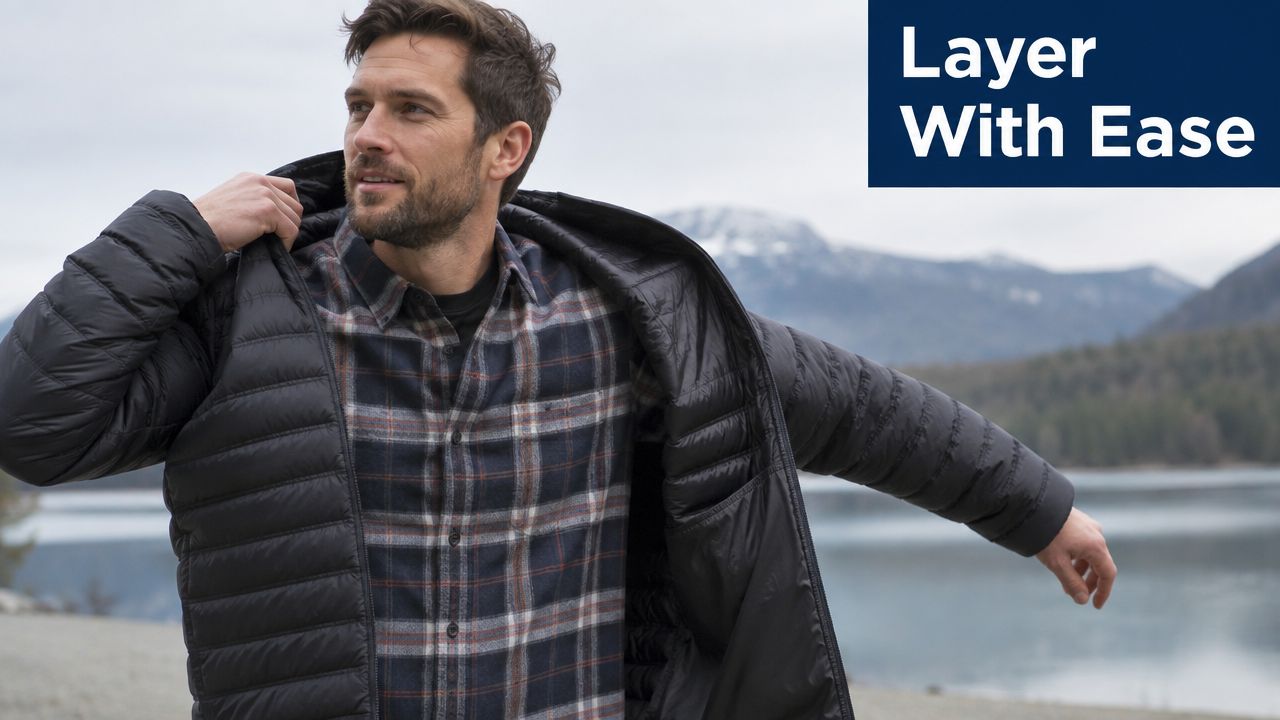
Fit for movement, not mirror drama
The shoulder seam should let you reach, drive, and lift a bag without pulling across the upper back. The hem should cover the area you want protected, but an overly long cut can interfere with sitting in a vehicle or moving around a crowded après bar. A slightly adjustable hem helps seal out cold air when you're standing around.
Cuffs matter more than people admit. Secure them over gloves, or leave enough room to slide over a flannel sleeve without bunching. Store the hood flat when you don't need it, and choose a collar that still looks intentional when the hood stays tucked away.
The fit should also survive the indoor transition. A coat that looks sharp outside but swallows your torso beside a fireplace won't feel versatile. Keep the base layer close to the body, make the mid-layer comfortable, and let the outer coat provide room for movement.
For reliable measurements before ordering, use California Cowboy's men's fit guide. It's a practical step, especially when you're balancing a relaxed cabin-wear silhouette with enough space for insulation.
A visual reference can help you see how a flannel and puffer work together in real conditions.
When the cabin heats up, remove the coat before you start sweating. That sounds obvious, yet many people wait until the insulation is damp from body heat, then pack it immediately. Keep the system modular. The coat should come off cleanly while the shirt underneath still looks ready for dinner.
Packing Techniques and Preserving the Loft
The pocket is for travel, not storage. That single distinction protects the insulation better than any clever packing trick.
Before you compress the coat, close zippers and snaps, empty every pocket, and shake the garment lightly so the insulation distributes across the baffles. Stuff it gradually rather than forcing it into a tight shape. If the coat has a dedicated sack, use it for a short journey, then let the garment expand when you reach the cabin or hotel.
A better travel routine
- Pack it last. Place the coat near the top of your daypack or carry-on so you can reach it before the temperature drops.
- Compress briefly. Use the pocket or sack during transit, not while the coat sits untouched for long periods.
- Restore the shape. Pull it out when you arrive, give it room, and let the insulation regain its loft before wearing it.
- Keep moisture moving. If snow or drizzle reaches the shell, dry the coat fully before packing it again.
- Follow the label. Washing instructions vary by insulation and shell treatment, so the care label should control the routine.
DWR finishes need care too. Harsh washing, residue, and poor drying habits can reduce the shell's ability to shed light moisture. Use the manufacturer's recommended cleaner and drying method, and don't put a damp coat into a closet or compression sack.
Down requires patience during drying because moisture can collect inside the baffles. Synthetic insulation can be more forgiving in damp conditions, but it still needs to dry thoroughly. Either way, store the coat loose in a cool, dry place where the insulation isn't flattened under other garments.
The common mistake is treating compact storage as proof of quality. A coat that packs small is useful. A coat that keeps recovering its loft after repeated travel is the one worth keeping.
Complete the Look and Final Thoughts
A packable winter coat becomes more convincing when the rest of the outfit understands the assignment. Start with a base layer that can handle movement, add a textured shirt for the social setting, and finish with accessories that make the transition easier rather than fussier.
The outfit builder
- Mountain foundation: Pair the coat with a luxury thermal layer, durable pants, and a knit hat for the walk from the lifts to the first drink.
- Cabin lounge: Add a relaxed flannel, clean tee, and comfortable boots. The coat can hang by the door while the mid-layer carries the room.
- Coastal reset: Choose a terry-lined shirt or post-surf layer underneath, then add a cap and an easy pair of pants for the beach-to-bar shift.
- Group weekend: Coordinate colors instead of identical outfits. Matching hats, tees, or robes give the group a shared visual language without making everyone look like a corporate retreat.
- Hands-free social kit: Use a coat with a dry pocket, sunglasses loop, and bottle opener loop when the day includes tailgating, festivals, or outdoor gatherings.
California Cowboy offers shirts, robes, outerwear, tees, hats, and accessories built around post-adventure comfort and social living. A hero layer such as the El Garibaldi Robe can take over once the coat comes off, while coordinated accessories keep the look ready for the cabin, coast, or group weekend.
The best packable winter coats don't win because they vanish into luggage. They win because they reappear at exactly the right moment, when the trail is finished, the fire is lit, and someone nearby has a good story. Holster your tech. Leave room for serendipitous encounters. Dress for the part of the day you'll remember.
Join the Vital Few newsletter for first access to premium drops, seasonal layers, and gear made for life offline.
California Cowboy makes shirts, robes, outerwear, and accessories for the moment after the adventure, when you're heading from the mountain, beach, or trail into good company. Visit California Cowboy to find social technical layers that keep you warm, hands-free, and ready for the ultimate après.

