


Salt has a way of staying in your cuffs. So does snow. By the time you're standing beside the car after a long day outside, your base layer is damp, your fingers are negotiating with the zipper on your gear bag, and somebody has already produced a hot drink from nowhere. This is the transition moment, the little stretch between activity and evening when your clothes need to stop performing and start making life more comfortable.
A waffle knit hoodie fits that gap beautifully. It's warm without feeling sealed up, textured without looking like technical equipment, and socially confident enough for the parking lot, the cabin deck, or the first drink by the fire. Holster your tech for a minute. The good part of the day is usually happening right after the official activity ends.
The Moment the Lifts Close
The last chair spins past the lift shack, skis knock against the bumper, and the Sierra Nevada air finds every opening in your jacket. Your boots are already unstrapped. Snow has turned gray around the tires. Someone is laughing at a fall nobody caught on camera, which is probably for the best.
You reach into the back seat and find the soft thing you packed for exactly this moment. The waffle knit hoodie goes over your base layer, over the beanie if the hood is generous, and halfway up the zipper. The change is immediate. Not dramatic. Just the satisfying return of warmth to your shoulders while your friends lean against the truck and hot drinks appear on the tailgate.
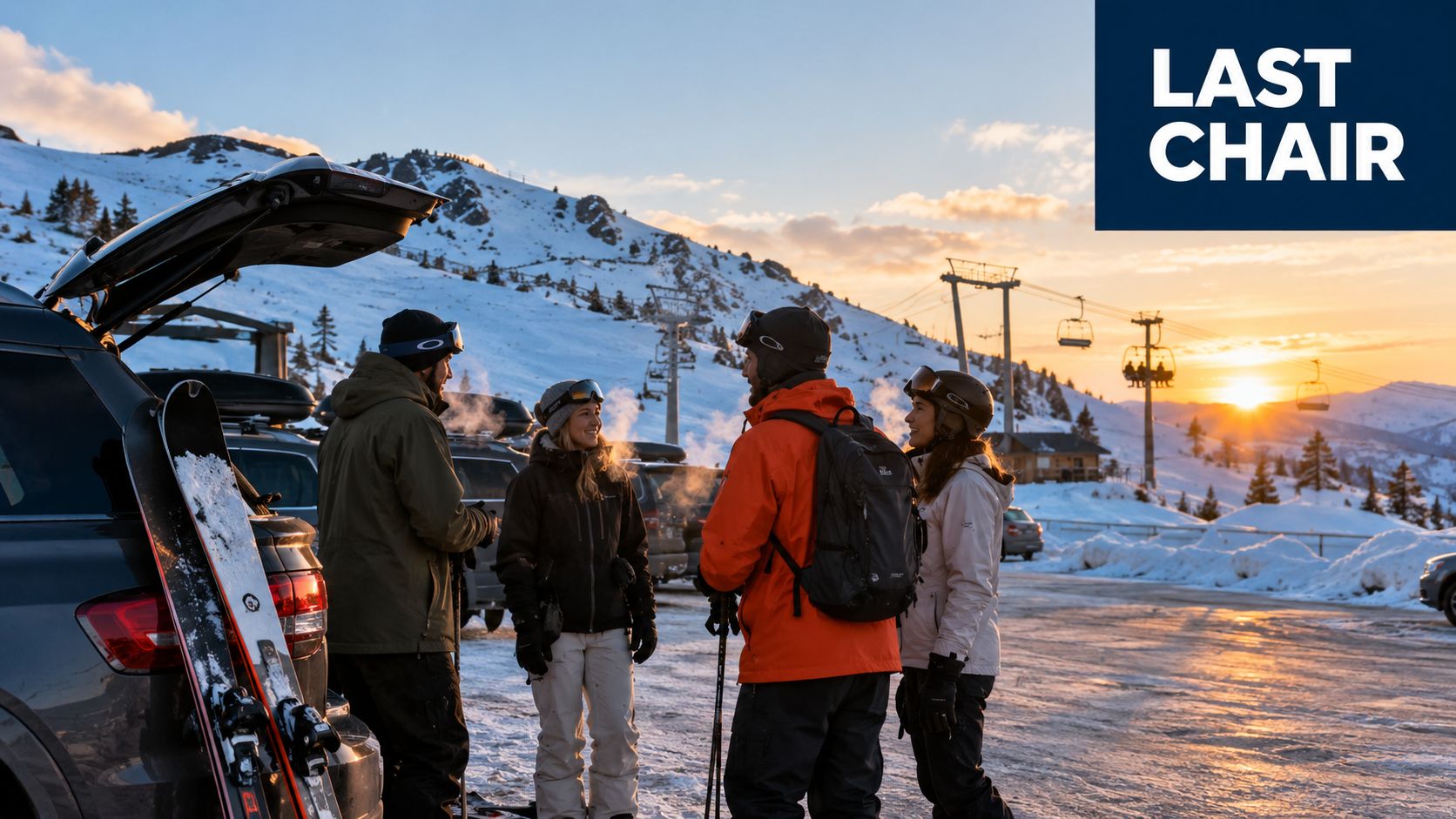
The hoodie earns its name from the après-ski apparel tradition. The hoodie isn't trying to replace a storm shell or win a chairlift argument with a blizzard. It's handling the messy middle, when your body is cooling down but the day isn't over. The parking lot becomes a social hub, gear talk turns into dinner plans, and nobody wants to retreat into a cold car wearing damp layers.
The garment also makes sense beyond the mountain. The same logic works after a beach drive, during a cabin breakfast, or at a fire pit where the temperature keeps changing and conversation keeps getting better. California Cowboy's guide to men's après-ski wear treats that period after the main event as its own style territory, and that's the right instinct.
Practical rule: Pack the layer you'll want when the activity ends, not only the one that gets you through it.
The appeal starts with the fabric. That recessed grid has a practical job, and it becomes obvious the moment you pull the hoodie on beside a freezing car.
How the Waffle Grid Works
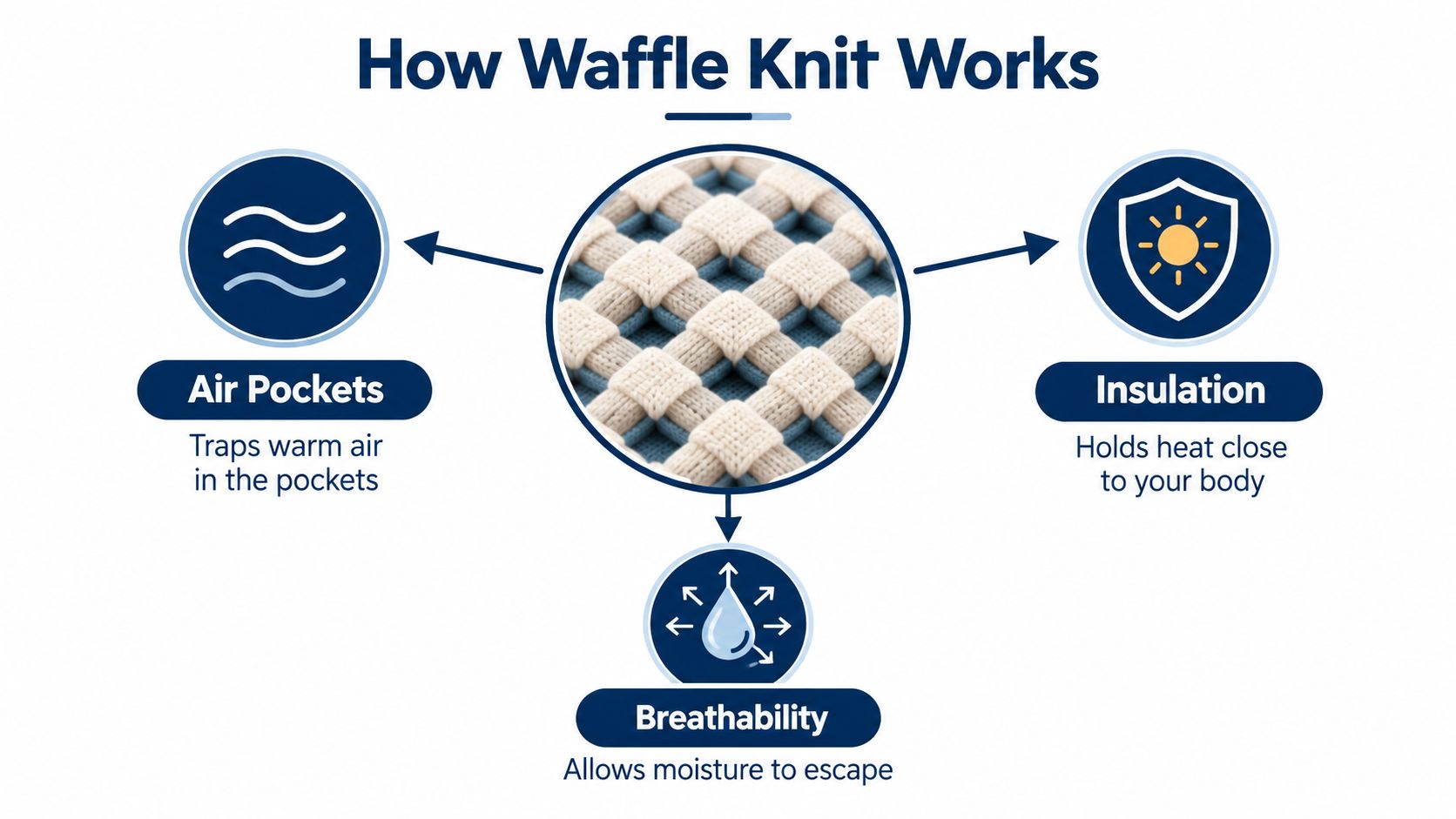
At a freezing parking lot, the hoodie's small breakfast-like grid earns its keep. The raised honeycomb elevations are about 1.5 to 3 mm high, creating texture that holds air near the body without turning the garment into a heavy slab. Club Martin's textile glossary describes this raised structure as part of waffle knit's insulating behavior.
The grid is the feature
A smooth knit rests fairly close to the skin. Waffle knit cuts recessed channels and raised ridges into the surface, forming many small pockets where air can stay still. Still air has a thermal conductivity of roughly 0.025 W/m·K, a commonly cited figure that helps explain the warmth of these air pockets. Fabric Consult's explanation of waffle knit insulation connects the fabric's air-cell design with its thermal performance.
The warmth arrives without fanfare. It feels less like a blast furnace and more like the hoodie has put a hand between you and the cold. The fabric creates loft, while its open geometry leaves room for body heat and moisture to move as you warm up. That balance shows up after a walk from the lift to the truck, or over morning coffee on a sunny cabin deck, when the temperature keeps shifting but nobody wants to change clothes.
Warmth without the marshmallow effect
Fabric weight still matters, but the grid lets designers pursue warmth through structure instead of adding material. A cited sample recorded an Rct thermal resistance of 0.12 m²·K/W at 200 gsm, and the source notes that a 200 gsm waffle knit can approach the warmth of a 280 gsm fleece through improved insulation efficiency.
That difference matters when you are driving home, ordering food, or leaning over a tailgate with a drink in hand. The layer can pack more easily and feel less bulky once the fire is doing its part. California Cowboy's waffle henley shirt guide shows how the same textile idea works in a lower-profile thermal garment.
The structure also has a long utility history. Textile histories place waffle knit's documented roots in the 1800s, with thermal applications growing through the late nineteenth and early twentieth centuries among laborers, soldiers, and outdoor workers. Fabric Almanac's history of waffle knit traces its path from utility clothing to modern everyday layers.
Waffle Knit vs Fleece vs Thermal vs French Terry
These fabrics often get thrown into the same drawer, usually right before a weekend trip. They don't behave the same way, though. A waffle knit hoodie is a transition layer first, while the others have different strengths.
| Fabric | Warmth | Breathability | Best For |
|---|---|---|---|
| Waffle knit | Moderate, with textured loft | High | Parking lots, cabin decks, fireside hangs |
| Fleece | High heat retention | Lower airflow | Deep cold and stationary outdoor time |
| Thermal | Light to moderate | High | Layering under a ski jacket or shell |
| French terry | Light warmth | Moderate | Gym sessions and warmer evenings |
Waffle knit for the in-between
Waffle knit has a lived-in hand. The surface feels substantial, but it doesn't usually carry the sealed-in sensation of dense fleece. That balance makes it useful after movement, when you're still warm from exertion but the air has turned sharp.
Fleece is the choice when cold is the main event. It traps more heat, but that can become too much once you're walking, loading equipment, or standing around with a cup in your hand. It also tends to show wear through pilling more readily than a clean, smooth thermal layer.
A thermal knit is usually the quieter player. It's lighter, smoother, and designed to disappear under a shell or overshirt. If your plan involves a ski jacket all day, a thermal may be the better foundation. If your plan involves taking the jacket off and staying outside, the waffle knit has more visual presence and more standalone credibility.
French terry for softer, warmer-weather plans
French terry uses loops on one side and a flatter face on the other. That construction feels soft and comfortable, but it doesn't create the same insulating grid. It's a strong option for gym sessions, travel days, and warm-weather evenings when you want a sweatshirt without much thermal ambition.
The practical answer is simple. Reach for waffle knit when the day keeps changing, fleece when the cold won't negotiate, thermal when you need a layer under something serious, and French terry when comfort matters more than insulation. For a deeper look at the heavier, high-loft alternative, compare the high-pile fleece guide.
What to Look for When You Buy
A good waffle knit hoodie should feel ready for the second location. You wear it after the mountain, then again at breakfast, then under a jacket when somebody suggests one last stop in town. The buying decision comes down to how well the details support that kind of movement.
Start with the shape
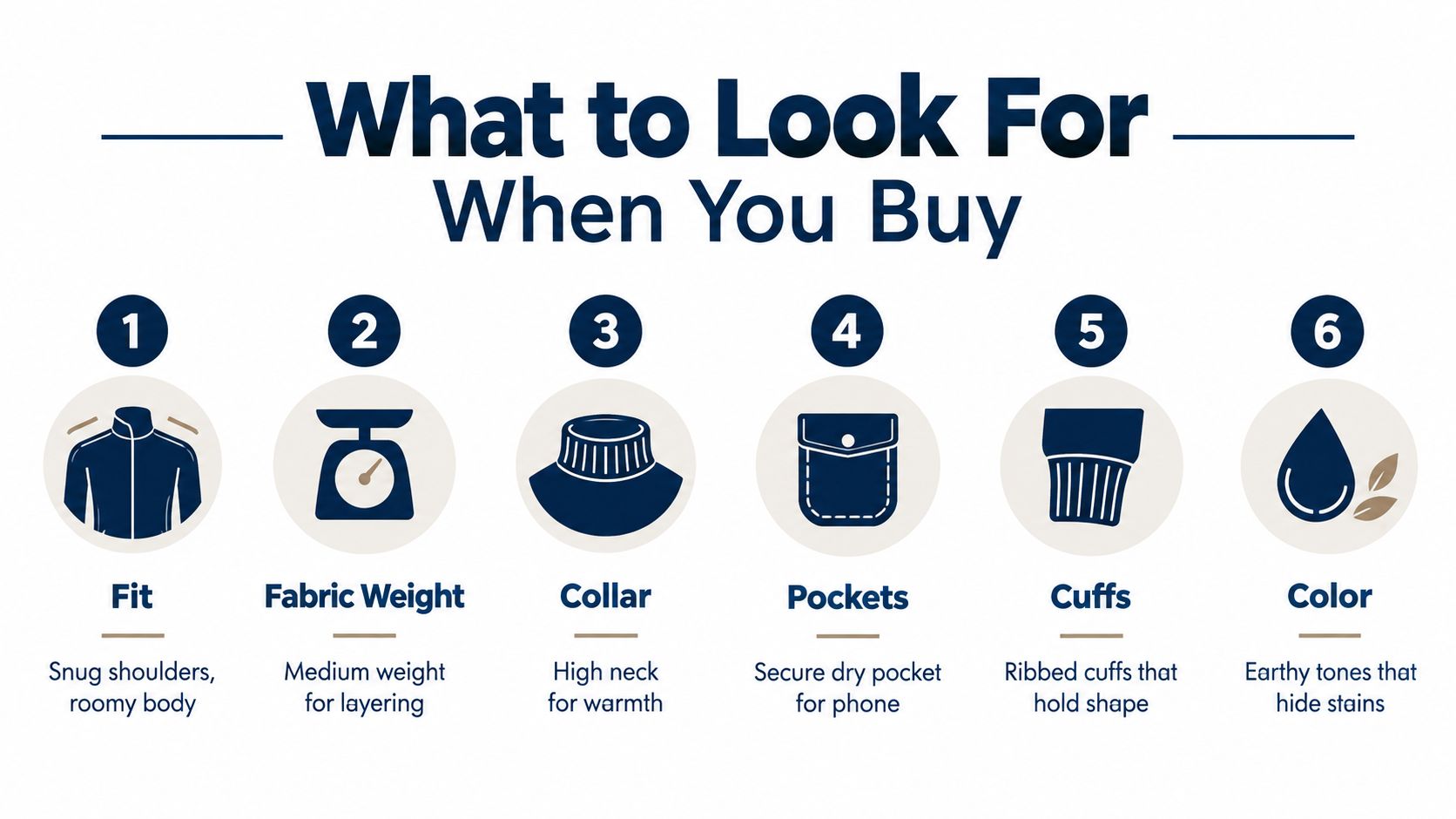
The shoulders should sit close enough to look intentional, while the body leaves room for a thermal underneath. A hem that lands just below the hip can tuck into snow pants without riding up, but it still looks natural with denim or joggers.
The hood deserves more attention than it gets. A double-layer panel and structured seam help it hold its shape when damp, and a well-cut hood can fit over a beanie without launching the crown into strange territory.
Inspect the working details
The pocket layout tells you whether the hoodie understands real life. A kangaroo pouch with a hidden zip compartment keeps a phone from disappearing into the car seat. Deep split hand pockets can swallow gloves without forcing you to remove them first. A pocket should serve the moment, not merely decorate the front.
Look at the cuffs and hem. Ribbing should spring back instead of collapsing after a single long afternoon. A brushed interior can add softness and loft, while a flat back keeps the outer silhouette tidy enough for town.
Fit check: Raise your arms, sit down, and reach into an imaginary back seat. If the body rides up or the cuffs lose contact, the hoodie won't feel right once the day gets busy.
Construction details matter under a pack, too. Flatlock seams can reduce rubbing, bartacks at pocket corners reinforce high-stress points, and a reinforced collar seam helps the garment survive repeated hood-up and hood-down use. These aren't glamorous features, but they're the reason a familiar hoodie remains the one you grab first.
For shoppers who want a broader view of relaxed performance layers, this on-course style with 2ndShotMVP offers useful context around hoodies that need to move from activity into casual settings.
Treat fabric weight as a behavior
A midweight waffle around 320 to 380 GSM gives the grid enough substance to trap warmth without becoming stiff. That range is part of the buying guidance for this style, not a universal guarantee, so feel the fabric and check the intended layering space before choosing.
Production stability matters here because the raised grid and loops can distort after laundering. A bulk-order guide recommends pre-testing with AATCC Test Method 135 or an equivalent home-laundering protocol, measuring length and width separately across swatches from different roll positions. It flags residual shrinkage above 5% in either dimension as a process-control warning sign. The shrinkage guidance is detailed by KnitFabric.
For more general hoodie construction and weight considerations, California Cowboy's guide to heavyweight hoodies gives you another useful reference point.
Three Ways to Wear It All Weekend
The best waffle knit hoodie is the one that disappears into your plans. It doesn't demand a costume change every time the setting shifts. It just keeps showing up, slightly rumpled and increasingly useful.
The first scene starts when the lift closes. Your snow pants are still on, the parking lot crunches under your boots, and the wind slides down from the lift shack. Pull the hoodie over your base layer, add a slouchy beanie, and wear the hood up when the air gets nosy.
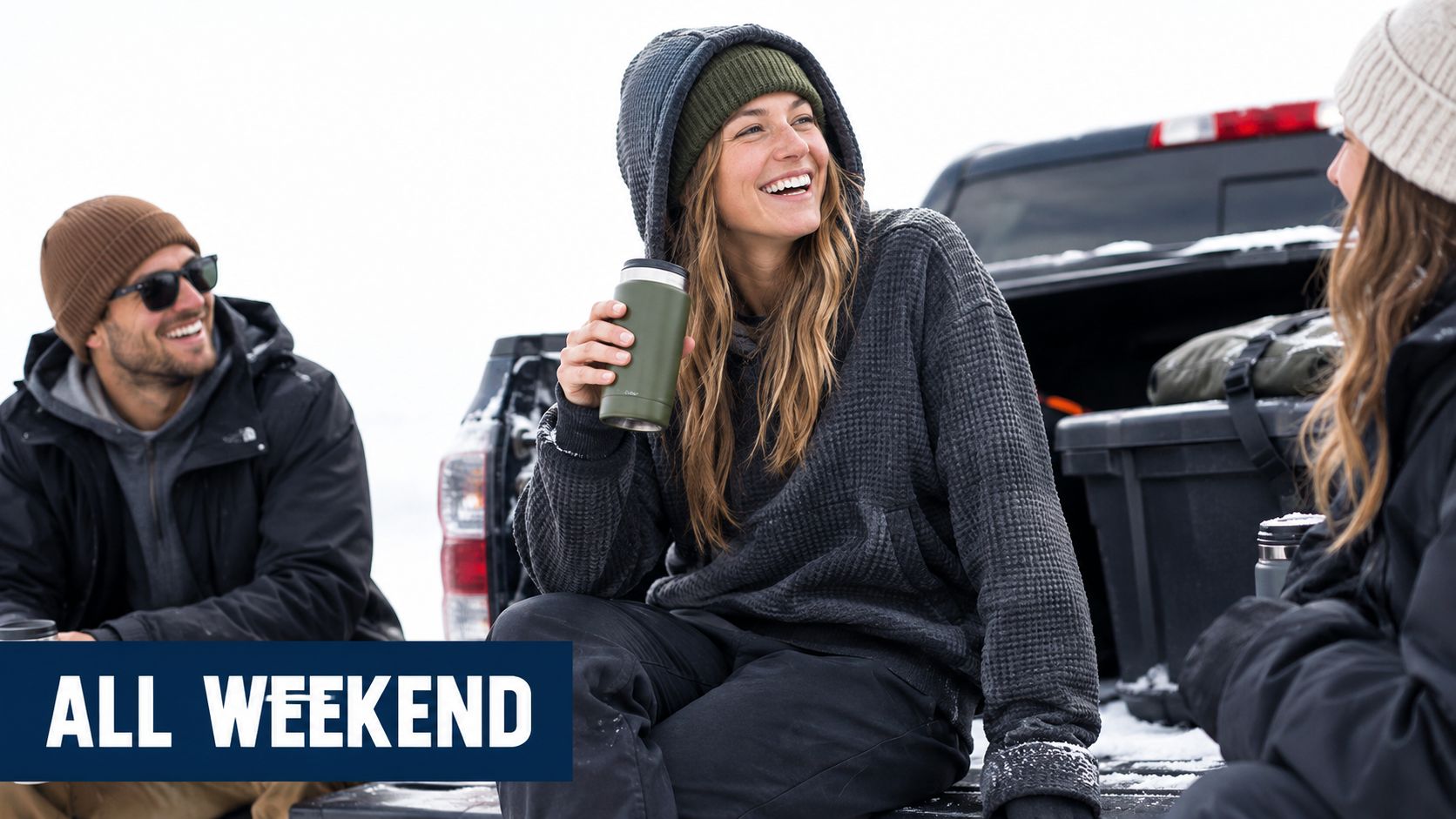
Bean boots keep the look grounded. The texture of the hoodie does the rest. You'll look like you came from the mountain, not like you're auditioning for a catalog titled Mountain Person Standing Near Wood.
Morning coffee on the deck
By morning, fog is lifting from the pines and the second coffee is doing its quiet work. Throw the same hoodie over thermals and wool socks, push the sleeves to your forearms, and let the hem fall loose over joggers.
The breathable structure matters in a very ordinary way. Direct sun warms your face and shoulders, but the deck still has a cold edge. You want a layer that holds your core comfortably without turning breakfast into a private sauna.
If the cabin is doing its job, there's a blanket nearby, probably with a history of coffee spills and good arguments. A practical knit throw blanket guide can help you choose one that belongs in the same relaxed cabin ecosystem.
Here's a visual pause for the full weekend rhythm:
The parking lot tailgate
Later, the truck bed gets lined with blankets, speakers lean against a cooler, and the hoodie takes on another role. Wear it under a waxed canvas jacket when the wind picks up, or leave it open over a flannel for a layered, rumpled look.
The kangaroo pocket can hold a phone or a small hand warmer. Deep hand pockets can take gloves. A structured hood can sit under a beanie without popping the crown. Those details matter because socially confident clothing lets you keep talking instead of rummaging through a gear bag.
For more ideas built around the same cabin-to-town movement, explore these weekend getaway outfits. The throughline is simple. One layer should be able to handle the drive home, the deck, and the group gathering without looking stranded in any of them.
Care That Keeps the Grid Alive
Waffle knit responds badly to a careless laundry day. Heat, agitation, and rushed drying can change the texture, stretch the shoulders, and leave the honeycomb looking tired before the hoodie has earned it.
Turn the hoodie inside out before washing. Use cold water, a gentle cycle, and mild detergent. Skip fabric softener, which can coat cotton fibers and flatten the cells that give the fabric its loft. Wash with similar weights rather than throwing it in with jeans and towels, because that's how a textured knit ends up wearing a fuzzy disguise.
A simple wash routine
- Protect the face: Zip the hoodie and turn it inside out before it meets the washer.
- Keep the temperature low: Cold water reduces stress on the knit and helps preserve shape.
- Choose gentle company: Wash it with other soft, similar-weight garments.
- Dry with patience: Lay it flat whenever possible. If you use a dryer, choose low heat and remove the hoodie while it's still slightly damp, then reshape it flat.
- Store it folded: Hanging a heavy, wet knit stretches the shoulders and hood. Folding keeps the line cleaner.
Cotton-heavy waffle knits need honest sizing decisions. One independent care guide warns that 100% cotton waffle knits can shrink roughly 3 to 7% without pre-washing or pattern allowances, while another care recommendation advises cold washing, low-heat drying or air-drying, and folded storage. Quince's cotton-cashmere waffle hoodie listing also reflects the category's move toward softer blends, which can change the care conversation.
Spot clean small marks instead of washing after every wear. Between washes, a handheld steamer on low can refresh the loft, but don't press the steamer into the surface. With sensible care, the hoodie gets softer and drapes more naturally over time. That's a rare garment win.
Complete the Look and Stay in the Loop
Build the outfit from the waffle knit hoodie outward. Heavyweight joggers make sense for the drive and the fire pit. Raw denim sharpens the same layer for a mountain-town bar. Leather hiking boots keep the outfit practical, while a snow-bunny beanie adds enough personality to prevent the whole thing from becoming anonymous cabin wear.
Choose one statement piece and one quiet essential. A flannel-lined overshirt gives the outfit texture and a little weather protection. Merino socks do their work without asking for attention. A waxed trucker jacket can sit over the hoodie when the evening turns colder, creating a layered look that feels collected rather than overplanned.
California Cowboy's Anti-Series sweatpants, mountain pants, and pullover fleece sit naturally in this same wardrobe conversation. They're useful references for building mountain lifestyle clothing around movement, comfort, and the hours after the main event. Keep a hat nearby for the drive, a tee for the warmer cabin room, and a koozie for the tailgate. The point isn't to accessorize into oblivion. It's to stay hands-free enough for serendipitous encounters and another round by the fire.
The waffle knit hoodie works as an anchor because it doesn't belong to only one temperature or one social setting. It moves from lift close to cabin deck to parking lot tailgate, carrying the texture of the outdoors without making you look like you're still waiting for a guide briefing.
Subscribe to the Vital Few newsletter for early drops, restocks, and styling edits built around life between the lift line and living room.
A waffle knit hoodie earns its place by making the transition feel like the destination.
California Cowboy offers post-adventure shirts, hoodies, robes, fleece, hats, and accessories designed for the hours when social life begins. Visit California Cowboy to find a cold-weather layer for the next parking lot tailgate, cabin morning, or fireside hang.

